
Industrial welding equipment plays a vital role in modern manufacturing, construction, infrastructure development, automotive production, shipbuilding, aerospace engineering, and heavy machinery fabrication.
From joining structural steel components to assembling precision metal parts, welding technologies make it possible to create strong, durable, and reliable products used across countless industries.
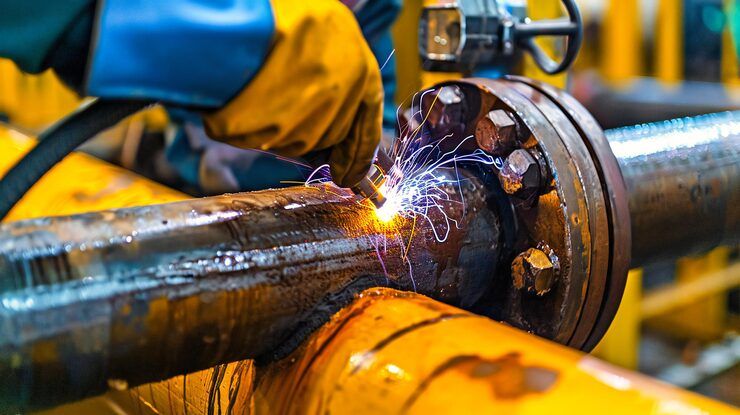
As manufacturing continues to adopt automation and digital technologies, welding systems have also evolved significantly. Modern industrial welding machines now include advanced controls, automated processes, and precision technologies that improve consistency while supporting complex production requirements.
This guide explains the fundamentals of industrial welding equipment, the major equipment types, common welding processes, automation technologies, selection considerations, maintenance practices, and future industry developments. Whether you are new to manufacturing or simply looking to understand welding systems better, this overview provides practical and educational information.
What Is Industrial Welding Equipment?
Industrial welding equipment refers to the machines, tools, and supporting systems used to permanently join metal materials by applying controlled heat, pressure, or both. The equipment is designed to create strong joints capable of withstanding mechanical loads, environmental conditions, and long-term use.
Unlike small workshop tools intended for occasional repairs, industrial welding equipment is built for continuous production environments where reliability, repeatability, and precision are essential.
Today, welding equipment supports manufacturing in industries such as:
- Automotive manufacturing
- Construction and structural fabrication
- Aerospace engineering
- Shipbuilding
- Energy and power generation
- Oil and gas infrastructure
- Railway manufacturing
- Heavy industrial equipment production
- Agricultural machinery
- Metal fabrication workshops
Each application requires different welding methods depending on the materials, joint design, production volume, and quality requirements.
Why Welding Is Essential in Manufacturing
Metal components often begin as separate parts that must be permanently joined to create complete products or structures. Welding provides one of the strongest and most efficient methods of accomplishing this task.
Industrial welding contributes to manufacturing by:
- Creating durable metal joints
- Supporting structural integrity
- Reducing assembly complexity
- Improving production efficiency
- Enabling large-scale manufacturing
- Joining a wide range of metal materials
- Supporting custom and automated production
Because welded joints often become part of load-bearing structures, consistent welding quality is a critical aspect of manufacturing.
Main Types of Industrial Welding Machines
Different manufacturing environments require different welding technologies. Selecting the appropriate equipment depends on production goals, material characteristics, and fabrication requirements.
Arc Welding Machines
Arc welding remains one of the most widely used industrial welding processes. These machines generate an electric arc between the electrode and the workpiece, producing sufficient heat to fuse metals together.
Arc welding is commonly used for:
- Structural steel fabrication
- Heavy equipment manufacturing
- Construction projects
- Industrial maintenance
- Pipeline fabrication
Its versatility makes it suitable for both small and large manufacturing operations.
MIG Welding Equipment
Metal Inert Gas (MIG) welding uses a continuously fed wire electrode along with shielding gas to create clean, consistent welds.
MIG welding is frequently selected for:
- Automotive production
- Sheet metal fabrication
- Manufacturing assembly lines
- General industrial fabrication
Its relatively high productivity makes it suitable for repetitive manufacturing environments.
TIG Welding Equipment
Tungsten Inert Gas (TIG) welding provides excellent precision and clean weld appearance.
Applications commonly include:
- Aerospace components
- Stainless steel fabrication
- Medical equipment
- Precision engineering
- Thin metal fabrication
Although typically slower than some other methods, TIG welding offers exceptional control and weld quality.
Laser Welding Equipment
Laser welding equipment uses highly concentrated laser energy to create extremely precise welds with minimal heat-affected areas.
Common applications include:
- Electronics manufacturing
- Medical devices
- Automotive components
- Battery manufacturing
- Precision mechanical assemblies
Laser welding has become increasingly important as manufacturers demand higher accuracy and reduced material distortion.
Components of Industrial Welding Equipment
A complete welding system involves more than the primary welding machine.
Typical components include:
| Component | Function |
|---|---|
| Power source | Generates welding energy |
| Welding torch | Directs heat to the workpiece |
| Wire feeder | Supplies filler material where applicable |
| Electrodes | Create the welding arc in many processes |
| Shielding gas system | Protects molten metal from contamination |
| Control panel | Adjusts welding parameters |
| Cooling system | Prevents equipment overheating |
| Safety equipment | Protects operators during welding |
Together, these components ensure consistent welding performance throughout production.
Understanding Welding Automation Systems
Manufacturing increasingly relies on welding automation systems to improve production efficiency and consistency.
Rather than replacing every manual process, automation is often introduced where repetitive welding tasks require uniform quality over long production runs.
Automated systems may include:
- Robotic welding cells
- Programmable welding controllers
- Automated material handling
- Vision-guided positioning systems
- Quality monitoring sensors
- Production data collection systems
Automation supports manufacturers by reducing variability while improving production consistency.
Benefits of Automated Welding Equipment
Automated welding equipment offers several operational advantages, particularly in high-volume manufacturing environments.
These advantages may include:
- Improved welding consistency
- Higher production efficiency
- Reduced repetitive manual tasks
- Greater process repeatability
- Better weld quality monitoring
- Increased manufacturing precision
- More consistent production scheduling
Automation is especially valuable where identical components must be produced repeatedly with minimal variation.
Common Industries That Use Industrial Welding Equipment
Industrial welding supports a wide variety of manufacturing sectors.
Automotive Manufacturing
Vehicle production depends on thousands of welded joints throughout the chassis, body panels, suspension systems, and structural components.
Automation plays a particularly important role in automotive assembly lines.
Construction and Infrastructure
Buildings, bridges, industrial facilities, and transportation infrastructure rely on welded steel structures capable of supporting significant loads.
Aerospace Manufacturing
Aircraft require highly precise welding processes capable of meeting strict quality and safety requirements while working with specialized materials.
Shipbuilding
Ships, offshore platforms, and marine structures involve extensive welding during hull assembly and structural fabrication.
Energy Production
Power plants, renewable energy facilities, pipelines, and industrial processing equipment all depend on reliable welded assemblies.
Factors to Consider When Selecting Welding Equipment
Choosing suitable industrial welding machines involves evaluating multiple technical and operational requirements.
Important considerations include:
- Material type
- Material thickness
- Production volume
- Required weld quality
- Available workspace
- Automation compatibility
- Maintenance requirements
- Operator skill level
- Power availability
- Future production expansion
Selecting equipment that matches manufacturing objectives helps improve both productivity and long-term operational efficiency.
Importance of Welding Quality Control
Consistent weld quality is essential because welded joints directly affect product performance and structural integrity.
Quality control often includes:
- Visual inspection
- Dimensional verification
- Weld appearance evaluation
- Process parameter monitoring
- Equipment calibration
- Documentation of production records
Maintaining consistent quality helps manufacturers achieve reliable production outcomes while minimizing rework.
Routine Maintenance of Welding Equipment
Regular maintenance helps industrial welding equipment perform efficiently throughout its service life.
Common maintenance activities include:
- Cleaning welding torches
- Inspecting electrical connections
- Replacing worn consumables
- Checking cooling systems
- Inspecting cables and hoses
- Calibrating equipment
- Updating control software where applicable
Preventive maintenance also helps reduce unexpected production interruptions.
Emerging Technologies in Welding Automation
Manufacturing continues to evolve through digital transformation, and welding technologies are advancing alongside it.
Recent developments include:
- Artificial intelligence-assisted welding
- Machine vision inspection systems
- Digital process monitoring
- Real-time production analytics
- Adaptive robotic welding
- Remote equipment diagnostics
- Smart manufacturing integration
These technologies support better production visibility while improving process control and operational efficiency.
Common Misconceptions About Industrial Welding Equipment
Several misconceptions exist regarding modern welding systems.
Automation Eliminates Every Manual Process
While automation handles many repetitive tasks, skilled professionals remain essential for programming, inspection, maintenance, quality assurance, and specialized fabrication work.
Laser Welding Replaces Every Other Welding Method
Laser welding equipment offers excellent precision but is not suitable for every manufacturing application. Different welding methods remain valuable depending on materials, production requirements, and fabrication objectives.
One Welding Machine Fits Every Application
Manufacturing requirements vary considerably. Equipment selection depends on factors such as material type, joint configuration, production speed, and quality expectations.
Future Trends in Industrial Welding
Industrial welding continues moving toward smarter, more connected manufacturing environments.
Several long-term trends include:
- Increased robotic automation
- Improved digital process control
- Greater integration with smart factories
- More energy-efficient equipment
- Enhanced quality monitoring
- Predictive maintenance technologies
- Advanced welding simulation software
- Expanded use of precision laser systems
These developments support manufacturers seeking greater efficiency, consistency, and flexibility.
Frequently Asked Questions
What is industrial welding equipment?
Industrial welding equipment includes machines, power sources, torches, control systems, and supporting components used to permanently join metal materials in manufacturing and fabrication environments.
What is the difference between industrial welding machines and standard welding equipment?
Industrial welding machines are designed for continuous production, higher workloads, improved durability, and integration into manufacturing systems, whereas standard equipment is generally intended for lighter-duty applications.
What industries commonly use laser welding equipment?
Laser welding equipment is widely used in automotive manufacturing, electronics production, aerospace engineering, medical device manufacturing, battery production, and precision engineering.
What are welding automation systems?
Welding automation systems combine robotic equipment, programmable controls, sensors, and monitoring technologies to perform welding operations with consistent accuracy and repeatability.
Why is equipment maintenance important?
Routine maintenance helps maintain welding quality, improves equipment reliability, reduces unexpected downtime, extends service life, and supports consistent manufacturing performance.
Conclusion
Industrial welding equipment forms the foundation of modern manufacturing and fabrication systems, enabling industries to create durable, high-quality metal structures and products with precision and efficiency. From traditional arc welding machines to advanced laser welding equipment and fully integrated welding automation systems, each technology serves a unique role in meeting diverse production requirements.
Understanding the different types of industrial welding machines, their components, automation capabilities, maintenance needs, and application areas helps manufacturers, engineers, students, and industry professionals better appreciate how welding supports today's industrial landscape. As manufacturing continues to embrace digital technologies and intelligent automation, industrial welding equipment will remain an essential part of efficient, reliable, and innovative production systems across the world.