
Injection molding machines are advanced manufacturing systems used to produce plastic parts and components in large volumes with consistent quality. These machines inject molten plastic material into specially designed molds, where it cools and solidifies into the desired shape.
The technology is widely used across industries because it enables precise production of complex parts while maintaining repeatability and efficiency. From automotive components and medical devices to consumer products and packaging materials, injection molding machines play a critical role in modern manufacturing.
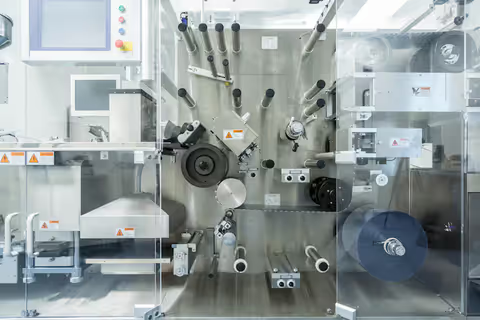
Understanding Injection Molding Machines
An injection molding machine is designed to transform plastic raw materials into finished products through a controlled manufacturing process. Plastic pellets are heated until they melt and are then injected under pressure into a mold cavity.
Once the material cools and hardens, the mold opens and the finished component is removed. The process repeats continuously, making it suitable for high-volume production environments.
The combination of automation, precision engineering, and process control has made injection molding one of the most widely used manufacturing methods worldwide.
How Injection Molding Machines Work
The injection molding process generally follows several steps:
Material Preparation
- Plastic pellets are loaded into a hopper
- Materials may include thermoplastics, engineering plastics, or specialty polymers
- Additives and colorants can be mixed with raw materials
Melting Process
- Pellets move into a heated barrel
- A rotating screw melts and mixes the material
- Temperature controls ensure consistent material properties
Injection Stage
- Molten plastic is pushed into the mold cavity
- High pressure ensures complete filling
- Precise controls maintain dimensional accuracy
Cooling Stage
- The material cools inside the mold
- Cooling channels regulate temperature
- Proper cooling minimizes defects
Ejection Stage
- The mold opens automatically
- Ejector systems remove the finished component
- The cycle begins again for the next part
Main Components of Injection Molding Machines
The performance of an injection molding machine depends on several critical components.
| Component | Function |
|---|---|
| Hopper | Stores and feeds plastic material |
| Barrel | Heats and melts plastic pellets |
| Screw | Mixes and injects molten material |
| Injection Unit | Controls material flow into the mold |
| Clamping Unit | Holds mold halves together during injection |
| Mold | Shapes the final product |
| Hydraulic or Electric System | Powers machine movements |
| Control System | Monitors and regulates machine operations |
Types of Injection Molding Machines
Different machine designs are available to meet varying production requirements.
Hydraulic Injection Molding Machines
- Operate using hydraulic cylinders
- Suitable for high clamping force applications
- Common in large-scale manufacturing
- Reliable for producing large components
Electric Injection Molding Machines
- Powered by electric servo motors
- Deliver high precision and repeatability
- Lower energy consumption
- Popular in electronics and medical manufacturing
Hybrid Injection Molding Machines
- Combine hydraulic and electric technologies
- Balance power and efficiency
- Suitable for diverse production environments
- Increasingly adopted in modern facilities
Importance in Modern Manufacturing
Injection molding machines contribute significantly to industrial productivity and product consistency.
Key advantages include:
Production Efficiency
- Rapid manufacturing cycles
- High-volume output capabilities
- Reduced material waste
- Consistent product quality
Design Flexibility
- Ability to create complex geometries
- Supports intricate details
- Compatible with various plastic materials
- Enables lightweight product designs
Quality Control
- Automated monitoring systems
- Precise process parameters
- Reduced human error
- Improved product consistency
Scalability
- Suitable for small and large production runs
- Adaptable to changing manufacturing requirements
- Supports automated production lines
Industrial Applications
Injection molding machines are used in numerous sectors.
Automotive Industry
- Interior trim components
- Dashboard assemblies
- Lighting housings
- Electrical connectors
Medical Industry
- Syringes
- Diagnostic equipment components
- Laboratory consumables
- Medical device housings
Consumer Goods
- Household products
- Storage containers
- Personal care items
- Kitchen accessories
Electronics Manufacturing
- Smartphone components
- Electrical enclosures
- Connectors
- Appliance parts
Packaging Industry
- Caps and closures
- Food containers
- Industrial packaging solutions
- Protective packaging components
Manufacturing Challenges Solved by Injection Molding Machines
Modern manufacturing requires solutions for precision, efficiency, and consistency.
Injection molding machines help address several common challenges.
High Production Demand
- Support continuous production schedules
- Reduce manufacturing bottlenecks
- Improve output consistency
Product Uniformity
- Maintain tight tolerances
- Deliver repeatable results
- Enhance quality assurance
Material Optimization
- Minimize waste generation
- Improve material utilization
- Support recycling initiatives
Complex Product Design
- Produce detailed shapes
- Integrate multiple design features
- Reduce assembly requirements
Key Features of Modern Machines
Today's equipment incorporates advanced technologies that improve manufacturing performance.
Intelligent Control Systems
- Touchscreen interfaces
- Real-time monitoring
- Process data analysis
- Automated parameter adjustments
Energy-Efficient Operations
- Servo-driven systems
- Optimized power consumption
- Reduced operational impact
- Improved sustainability performance
Advanced Automation
- Robotic part handling
- Automated material feeding
- Integrated quality inspection
- Production line connectivity
Precision Engineering
- Enhanced injection accuracy
- Stable clamping performance
- Consistent cycle times
- Improved dimensional control
Recent Trends and Developments (2025–2026)
The injection molding industry continues to evolve with new technologies and manufacturing priorities.
Smart Manufacturing Integration (2025–2026)
- Increased adoption of Industry 4.0 technologies
- Connected production systems
- Real-time machine monitoring
- Predictive maintenance capabilities
Artificial Intelligence Applications
- Process optimization through AI analytics
- Automated defect detection
- Machine performance forecasting
- Enhanced production planning
Sustainability Initiatives
- Greater use of recycled polymers
- Reduced material waste strategies
- Energy-efficient machine designs
- Support for circular manufacturing models
Advanced Automation Expansion
- Collaborative robotics integration
- Automated quality control systems
- Remote production management
- Digital production dashboards
Digital Twin Technology
- Virtual machine simulations
- Production process optimization
- Reduced downtime risks
- Improved manufacturing planning
Regulations and Industry Standards
Manufacturers often follow regulations and standards to ensure safety, quality, and environmental compliance.
ISO Standards
- ISO 9001 for quality management systems
- ISO 14001 for environmental management
- Standardized manufacturing practices
Workplace Safety Requirements
- Machine guarding systems
- Emergency stop mechanisms
- Operator safety procedures
- Maintenance protocols
Environmental Compliance
- Waste reduction initiatives
- Material traceability requirements
- Energy efficiency objectives
- Recycling and sustainability practices
Product-Specific Regulations
- Medical manufacturing standards
- Automotive quality requirements
- Consumer product safety regulations
- Electronics industry specifications
Useful Tools and Learning Resources
Professionals seeking knowledge about injection molding technology can benefit from various resources.
Industry Organizations
- Society of Plastics Engineers (SPE)
- Plastics Industry Association
- International Organization for Standardization (ISO)
Learning Resources
- Manufacturing engineering publications
- Technical training programs
- Industry conferences and exhibitions
- Equipment manufacturer documentation
Software Platforms
- Computer-Aided Design (CAD) software
- Mold flow simulation tools
- Manufacturing execution systems
- Industrial monitoring platforms
Technical Documentation
- Machine operation manuals
- Process optimization guides
- Material data sheets
- Industry standards documentation
FAQs
What is an injection molding machine used for?
An injection molding machine is used to manufacture plastic parts by injecting molten material into a mold. It is commonly used for automotive, medical, packaging, electronics, and consumer products.
What materials can be processed in injection molding machines?
Common materials include polypropylene, polyethylene, ABS, nylon, polycarbonate, and other engineering plastics. Specialty polymers may also be used depending on application requirements.
What is the difference between hydraulic and electric injection molding machines?
Hydraulic machines use hydraulic power for movement and clamping, while electric machines use servo motors. Electric models generally provide higher precision and improved energy efficiency.
Why is injection molding important in manufacturing?
It enables high-volume production, consistent quality, precise dimensions, and efficient use of materials, making it one of the most effective manufacturing methods for plastic products.
How are modern injection molding machines becoming more advanced?
Recent developments include artificial intelligence integration, predictive maintenance, smart factory connectivity, advanced automation, digital twin technology, and enhanced energy efficiency.
Conclusion
Injection molding machines are essential manufacturing systems that support the production of countless products used in everyday life and industrial operations. Their ability to deliver precision, repeatability, and high-volume output has made them a cornerstone of modern manufacturing.
With advancements in automation, artificial intelligence, digital monitoring, and sustainability initiatives during 2025 and 2026, these machines continue to evolve to meet growing industrial demands. As manufacturers pursue greater efficiency, quality, and environmental responsibility, injection molding technology remains a vital component of advanced production environments worldwide.