
Modern machines are an important part of manufacturing, construction, agriculture, transportation, energy, healthcare, and many other industries.
Machine equipment knowledge helps people understand how different machines work, what components they use, and how technology affects their operation.
Learning the basics of modern machines can also help operators, students, engineers, managers, and general readers understand technical information more clearly. From mechanical systems and electrical controls to automation and digital monitoring, machine equipment continues to evolve.
Context
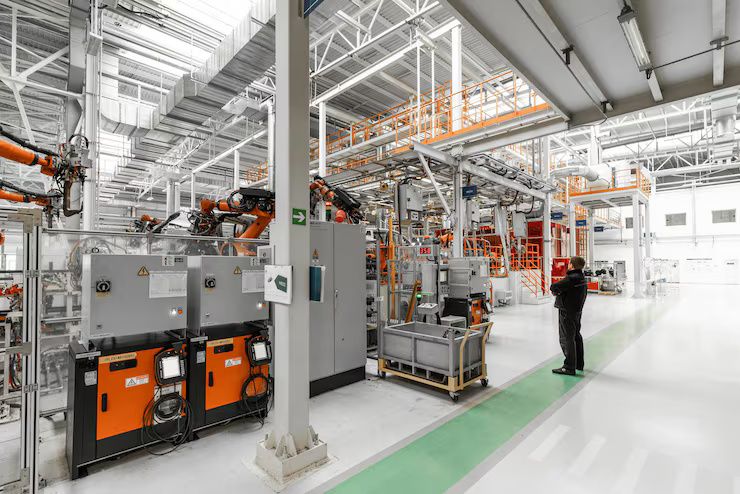
Machine equipment refers to mechanical, electrical, electronic, hydraulic, pneumatic, or computer-controlled equipment designed to perform specific physical or industrial tasks. Examples include CNC machines, industrial robots, pumps, compressors, conveyors, presses, agricultural equipment, packaging machinery, and construction equipment.
The basic purpose of a machine is to transform energy into controlled movement or another useful physical process. A typical machine may contain several connected systems, including a power source, transmission mechanism, control system, working components, sensors, and safety devices.
Modern machines are increasingly integrated with digital technologies. Programmable logic controllers, sensors, variable-speed drives, machine vision, and industrial networks can allow equipment to monitor operating conditions and respond to programmed instructions.
| Machine component | Main purpose |
|---|---|
| Motor or engine | Provides mechanical power |
| Transmission | Transfers or changes motion |
| Control system | Directs machine operation |
| Sensors | Detect operating conditions |
| Actuators | Produce controlled movement |
| Safety devices | Help reduce exposure to hazards |
| Frame or structure | Supports machine components |
Machine equipment knowledge therefore involves more than identifying a machine by name. It includes understanding its operating principle, applications, limitations, controls, maintenance requirements, and safety considerations.
Importance
Understanding modern machines matters because equipment can influence productivity, product quality, energy use, workplace safety, and operational reliability. Poor understanding of a machine can result in incorrect operation, unexpected downtime, or exposure to mechanical and electrical hazards.
This knowledge is relevant to several groups:
- Operators who interact directly with machinery
- Engineers who design or integrate machine systems
- Technicians who inspect and maintain equipment
- Students learning mechanical or industrial technology
- Managers responsible for production environments
- Researchers studying automation and industrial systems
Machine equipment knowledge also helps people interpret technical specifications. Important information may include rated power, operating speed, load capacity, dimensions, accuracy, pressure, temperature range, electrical requirements, and environmental limitations.
Safety is particularly important. Moving parts can create crushing, cutting, entanglement, impact, and other hazards. OSHA's machine-guarding requirements, for example, address hazards from points of operation, rotating parts, ingoing nip points, flying chips, and sparks.
Recent Updates
Modern machine development is increasingly connected with automation, data collection, robotics, artificial intelligence, and industrial connectivity. Equipment can use sensors to measure temperature, vibration, pressure, speed, position, or electrical conditions.
One important development is condition monitoring. Instead of relying only on fixed inspection schedules, connected equipment can collect operating data that helps identify unusual changes. This can support earlier investigation of potential mechanical or electrical problems.
Robotics is another major development. Industrial robots and collaborative robots can perform repetitive or precisely controlled activities. Their use requires consideration of movement zones, sensing systems, control logic, and risk reduction.
Digital control is also becoming more common. Modern programmable systems can coordinate motors, valves, sensors, safety circuits, and production sequences. This can make complex equipment more adaptable, but it also increases the importance of understanding software, networks, cybersecurity, and functional safety.
Machine safety standards are evolving alongside these technologies. ISO 12100:2010 remains a current international standard for machinery risk assessment and risk reduction, while a revised ISO 12100 document is currently under development.
Another development is greater attention to cybersecurity in connected machinery. BIS published a draft Indian Standard addressing security aspects related to functional safety of safety-related control systems, including cybersecurity considerations.
Laws or Policies
Machine regulations vary according to the country, industry, machine type, and workplace conditions. Organizations should consult the rules applicable to their location rather than assuming that one international standard applies everywhere.
In the United States, OSHA's 29 CFR 1910 Subpart O contains requirements covering machinery and machine guarding. Section 1910.212 establishes general machine-guarding requirements, including protection around hazardous points of operation. OSHA also identifies requirements relating to hazardous-energy control, electrical safety, and specific machine categories.
In the European Union, Regulation (EU) 2023/1230 replaces the earlier Machinery Directive framework. The regulation is scheduled to apply from 20 January 2027, with certain provisions applying earlier.
India has its own machinery safety framework through legislation, regulations, and Indian Standards. BIS maintains standards covering different categories of machine safety. Its published material includes standards for thermal cutting machines, machining centres, milling machines, mechanical presses, hydraulic presses, pneumatic presses, sawing machines, turning machines, and other equipment.
For machinery risk assessment, ISO 12100 provides a structured approach for identifying hazards, estimating and evaluating risks, reducing risks, and documenting the process.
Rules can differ substantially between jurisdictions, so technical teams should check current national requirements, applicable standards, workplace regulations, and machine-specific provisions before operating or modifying equipment.
Tools and Resources
Reliable technical resources can make machine equipment knowledge easier to develop. Official standards organizations, regulatory agencies, educational institutions, and equipment documentation are generally useful starting points.
Useful resources include:
- OSHA resources for U.S. workplace machinery requirements
- ISO publications for international machinery safety principles
- BIS publications for Indian Standards
- Manufacturer instruction manuals and technical documentation
- Engineering handbooks and technical reference materials
- Machine-specific risk assessment documentation
- Equipment diagrams and electrical schematics
- Technical calculators for power, torque, speed, pressure, and energy relationships
A basic learning process can begin by identifying the machine's purpose, studying its major components, understanding the energy flow, reviewing the control system, and then examining its hazards and operating limitations.
For risk assessment, ISO/TR 14121-2 provides practical guidance and examples of methods that can be used with ISO 12100 principles.
FAQs
What is machine equipment knowledge?
Machine equipment knowledge is an understanding of how machines are designed, powered, controlled, operated, and protected. It includes basic mechanical, electrical, hydraulic, pneumatic, and digital concepts.
Why is machine safety important?
Machine safety helps reduce exposure to hazards created by moving parts, electrical systems, stored energy, heat, pressure, and other operating conditions. Proper guarding and risk reduction are important parts of safe machine design and use.
What are examples of modern machines?
Examples include CNC machining systems, industrial robots, automated conveyors, packaging machines, hydraulic presses, agricultural machinery, construction equipment, compressors, pumps, and automated inspection systems.
How does automation affect modern machines?
Automation allows machines to perform sequences using programmed controls, sensors, actuators, and communication systems. It can increase consistency and reduce the need for manual intervention, while introducing additional control-system and cybersecurity considerations.
Which standards are relevant to machine safety?
Relevant standards depend on the machine and location. ISO 12100 provides general principles for machinery risk assessment and risk reduction, while national regulations and machine-specific standards may provide additional requirements.
Conclusion
Machine equipment knowledge provides a foundation for understanding how modern mechanical and automated systems function. It covers machine components, energy systems, controls, applications, safety, and emerging digital technologies.
As machinery becomes more connected and automated, basic technical knowledge is increasingly useful for operators, engineers, students, and other people working around industrial equipment.
A practical approach is to study each machine according to its purpose, components, operating principle, control system, hazards, and applicable standards. Official regulatory sources and recognized standards organizations should be used when specific compliance information is required.
Understanding these fundamentals can also make technical documentation easier to interpret and provide a clearer foundation for learning about advanced automation, robotics, machine monitoring, and industrial systems.