PET bottles are among the most widely used plastic containers for beverages, household products, personal care items, and various other applications.
Their popularity comes from a combination of lightweight construction, clarity, strength, recyclability, and flexible design possibilities. Behind the production of these containers is a specialized manufacturing process that transforms small plastic preforms into finished bottles through controlled heating and stretching.
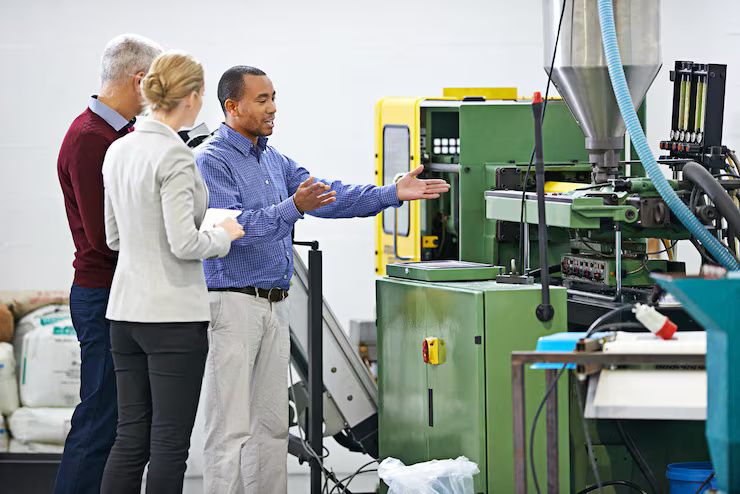
PET Blow Molding Machines are central to this process. These systems are designed to heat PET preforms to the appropriate forming temperature and then use controlled air pressure to expand them inside molds. The result is a bottle with a precise shape, consistent dimensions, and properties suited to its intended application.
Understanding how a PET Bottle Blow Molding Machine works provides useful insight into modern plastic packaging production. This guide explains the complete process, from preform preparation and heating to stretching, bottle formation, quality control, automation, and maintenance.
What Are PET Blow Molding Machines?
PET Blow Molding Machines are industrial systems used to manufacture bottles and containers from polyethylene terephthalate, commonly known as PET.
The process generally begins with a preform, which is a small, tube-shaped PET component that already contains the finished bottle's neck and threaded opening. The preform is heated and placed into a mold that represents the final container shape.
A stretching mechanism and compressed air then expand the heated PET material until it conforms to the internal walls of the mold. After cooling, the finished bottle is removed and transferred for inspection or subsequent packaging operations.
This process allows manufacturers to create containers in different sizes and shapes while maintaining consistent production quality.
Understanding PET Preforms
The preform is one of the most important components in PET bottle manufacturing.
A preform is produced through injection molding and resembles a small plastic tube. Its neck section is generally formed during injection molding and retains its final dimensions throughout the blow molding process.
The body of the preform, however, is designed to be reheated and stretched.
Preform characteristics influence the final bottle's performance. Important factors include:
- Preform weight
- Material distribution
- Wall thickness
- Neck dimensions
- PET material quality
- Moisture content
- Storage conditions
Proper preform design helps ensure consistent material distribution when the bottle is stretched inside the mold.
The PET Bottle Blow Molding Process
A typical PET bottle production process involves several carefully controlled stages.
Preform Loading
Preforms are loaded into the PET Bottle Production Machine through an automated feeding system. The preforms are oriented correctly before entering the heating section.
Preform Heating
The preforms pass through a heating system that raises the temperature of the PET body to a suitable forming range.
Heating must be carefully controlled. If the material is too cold, it may not stretch evenly. Excessive heating can affect material properties and lead to inconsistent bottle formation.
Stretching
Once heated, the preform enters a mold. A mechanical stretching rod extends the preform vertically.
This stretching process helps distribute the PET material along the length of the future bottle.
Blow Molding
High-pressure air is introduced into the heated preform. The air expands the material outward until it reaches the walls of the mold.
The combination of axial stretching and radial expansion creates the final bottle geometry.
Cooling and Ejection
After the bottle reaches the desired shape, the mold helps cool the material and stabilize its structure. The mold then opens, and the finished bottle is removed.
The bottle may then move to inspection, filling, labeling, or packaging operations depending on the manufacturing environment.
How Heating Affects Bottle Quality
Heating is one of the most technically important stages of PET bottle production.
PET must reach a suitable temperature range that allows it to stretch without losing the material characteristics required for the finished container.
Modern PET Bottle Manufacturing Machines use controlled heating zones to manage temperature distribution throughout the preform.
Factors that influence heating include:
- Preform thickness
- Preform color
- Bottle design
- Production speed
- Heating system configuration
- Environmental conditions
Uniform heating supports better material distribution and helps reduce defects such as uneven walls, deformation, or inconsistent transparency.
Stretching and Material Distribution
The final bottle's strength depends heavily on how PET molecules orient during stretching.
When the preform is stretched vertically and expanded horizontally, the material becomes oriented in multiple directions. This process can improve the mechanical properties of the finished container.
The stretching ratio must be carefully controlled because excessive or insufficient stretching can affect:
- Bottle strength
- Wall thickness
- Transparency
- Impact resistance
- Dimensional stability
For this reason, PET Bottle Production Equipment is designed to coordinate stretching and blowing with high precision.
Types of PET Blow Molding Systems
PET blow molding systems can generally be categorized according to their level of automation and production configuration.
| System Type | General Characteristics | Common Application |
|---|---|---|
| Semi-Automatic | Requires more manual handling | Smaller production environments |
| Automatic | Integrated preform handling and bottle formation | Continuous production |
| High-Speed Systems | Optimized for large production volumes | Large-scale packaging |
| Integrated Systems | Combines multiple production stages | Streamlined manufacturing |
The appropriate configuration depends on production requirements, bottle design, available infrastructure, and operational priorities.
PET Bottle Making Machine and Production Equipment
A PET Bottle Making Machine typically includes several interconnected components that work together throughout the forming process.
Key equipment may include:
- Preform feeding systems
- Infrared heating units
- Stretching mechanisms
- Blow molding stations
- Mold assemblies
- Compressed air systems
- Cooling systems
- Control panels
- Bottle discharge systems
Modern PET Bottle Production Equipment may also include sensors and digital monitoring technologies that track important operating conditions.
Integration between these components is essential for maintaining consistent production.
Automation and Digital Control
Automation has transformed modern PET bottle manufacturing.
A computerized control system can monitor variables such as heating conditions, air pressure, production timing, and equipment status.
Automated systems can help improve:
- Process consistency
- Production monitoring
- Changeover management
- Quality control
- Equipment diagnostics
- Data collection
Advanced systems may also use sensors to identify changes in operating conditions and alert operators to potential problems.
This combination of mechanical precision and digital control is a defining characteristic of modern PET Bottle Manufacturing Machines.
Quality Control in PET Bottle Manufacturing
Quality control is essential because small variations during production can affect the performance of finished containers.
Common inspection areas include:
- Bottle dimensions
- Wall thickness
- Weight
- Neck finish
- Transparency
- Shape consistency
- Leakage resistance
- Pressure performance
Automated inspection systems can examine bottles at high speed, identifying defects that may not be immediately visible during manual inspection.
Consistent quality control helps ensure that bottles meet the specifications required for their intended use.
Energy Efficiency and Sustainability
Energy consumption is an important consideration in PET bottle manufacturing.
Modern PET Bottle Production Machines increasingly incorporate technologies designed to improve energy efficiency. These may include optimized heating systems, improved air management, and efficient machine controls.
Material efficiency is also important. Lightweight bottle designs can reduce the amount of PET required for each container while maintaining appropriate strength.
PET itself is widely recyclable, making recycling infrastructure and responsible material management important parts of the broader packaging lifecycle.
Sustainable manufacturing therefore involves more than machine efficiency. It also includes thoughtful bottle design, material optimization, recycling, and responsible resource management.
Common Challenges in PET Blow Molding
Several factors can affect bottle quality during production.
Uneven Heating
Inconsistent preform temperature can result in uneven material distribution or deformation.
Incorrect Stretching
Improper stretching conditions may affect wall thickness and mechanical strength.
Mold Temperature Variations
Temperature differences within the mold can influence cooling and final bottle dimensions.
Moisture in PET
PET is sensitive to moisture during processing. Poor material handling can contribute to quality problems.
Equipment Wear
Regular use can gradually affect components such as heating elements, molds, seals, and mechanical systems.
Proper process monitoring and preventive maintenance help reduce these challenges.
Maintenance of PET Blow Molding Machines
Regular maintenance supports reliable operation and consistent bottle quality.
Important maintenance activities may include:
- Inspecting heating elements
- Cleaning molds
- Checking pneumatic systems
- Inspecting seals and valves
- Calibrating sensors
- Checking stretching mechanisms
- Monitoring compressed air quality
- Reviewing machine diagnostics
Preventive maintenance can help identify potential equipment problems before they significantly affect production.
Future Trends in PET Bottle Manufacturing
The future of PET bottle production is likely to focus on greater automation, efficiency, and sustainability.
Emerging developments include:
- Artificial intelligence-assisted quality monitoring
- Predictive maintenance
- Advanced machine vision
- Improved heating control
- Lightweight bottle designs
- Greater use of recycled PET
- Digital production analytics
- More efficient compressed air systems
These developments are expected to improve manufacturing consistency while supporting more responsible use of materials and energy.
Frequently Asked Questions
What is a PET Bottle Blow Molding Machine?
A PET Bottle Blow Molding Machine is equipment that transforms heated PET preforms into finished bottles by stretching the material and expanding it with compressed air inside a mold.
What is a PET preform?
A PET preform is a partially formed plastic component produced through injection molding. It contains the bottle neck and is later reheated and expanded into the final container.
Why is heating important in PET bottle production?
Heating makes the PET material sufficiently flexible for controlled stretching and expansion. Uniform temperature distribution is important for achieving consistent bottle quality.
What is the role of compressed air?
Compressed air expands the heated preform against the internal walls of the mold, creating the final bottle shape.
How can PET Bottle Production Equipment improve consistency?
Modern equipment uses controlled heating, precise stretching, automated blowing, sensors, and digital monitoring to maintain consistent production conditions and identify potential process variations.
Conclusion
PET Blow Molding Machines play a central role in converting PET preforms into lightweight, durable, and precisely shaped bottles. The process depends on careful coordination between preform design, controlled heating, mechanical stretching, high-pressure air expansion, cooling, and quality inspection.
Modern PET Bottle Making Machines increasingly combine automation, digital controls, advanced heating technologies, and intelligent monitoring to improve production consistency and operational efficiency. At the same time, sustainability is influencing bottle design, material usage, recycling, and energy management.
By understanding how PET preforms are heated, stretched, and formed inside molds, it becomes easier to appreciate the engineering behind everyday plastic packaging. As PET Bottle Manufacturing Machines continue to evolve, the industry is likely to place greater emphasis on automation, material efficiency, predictive maintenance, and environmentally responsible production.