River rafting expeditions are outdoor adventures in which participants travel along a river in an inflatable raft, navigating flowing water, rapids, and natural obstacles.
under the guidance of trained professionals or experienced expedition leaders. Depending on the river, an expedition may last a few hours, an entire day, or several days, combining water-based activity with camping, wildlife observation, and exploration of remote landscapes.
River rafting is commonly divided into different difficulty levels based on the speed of the current, the size of the waves, the presence of obstacles, and the technical skills required. Calm stretches of water may suit beginners, while powerful rapids demand experience, physical coordination, and specialized equipment.
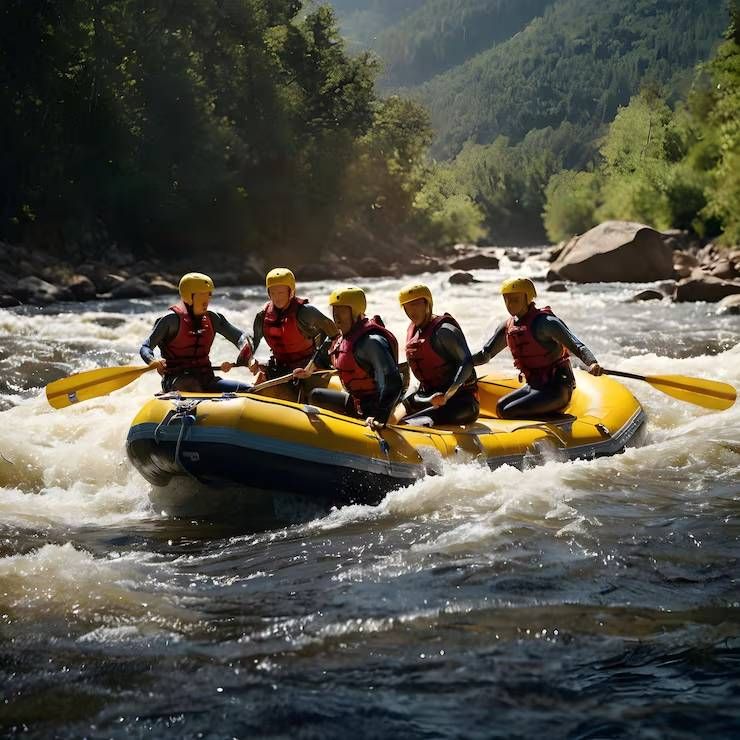
The International Scale of River Difficulty classifies rapids from Class I, representing relatively easy water, to Class VI, representing extremely difficult or potentially dangerous conditions. These classifications describe river features rather than guaranteeing a particular level of safety. Conditions can change with rainfall, water levels, seasonal flows, and local obstacles.
Rafting expeditions take place in mountain rivers, forested valleys, desert canyons, and remote wilderness areas. Popular destinations include the Colorado River in the United States, the Zambezi River in southern Africa, the Futaleufú River in Chile, and the Ganges River in northern India.
Beyond the excitement of navigating rapids, river rafting provides opportunities to observe natural landscapes, learn teamwork, and experience outdoor environments from a different perspective. A well-planned expedition combines adventure with preparation, environmental responsibility, and respect for the river's changing conditions.
Importance
River rafting expeditions have recreational, educational, environmental, and economic significance. They encourage outdoor participation while helping travelers understand the natural forces that shape river landscapes.
1. Encourages Physical Activity
Paddling requires coordination between the arms, shoulders, torso, and upper body. Participants may also need to maintain balance, follow instructions, and respond quickly to changes in the water.
The physical demands vary by route. Gentle rafting trips may involve moderate activity, while challenging rapids can require sustained effort and considerable concentration.
Participants should consider their physical condition and any relevant medical limitations before choosing an expedition. A suitable route and appropriate supervision help make the experience more manageable.
2. Develops Teamwork and Communication
Rafting usually involves several participants working together in one boat. Paddlers must listen to instructions, coordinate their movements, and respond promptly when the guide calls for a change in direction or paddling rhythm.
This shared responsibility can help develop communication, cooperation, and decision-making skills. Participants also learn that individual actions can influence the movement and stability of the entire raft.
For families, student groups, and organized teams, rafting can provide a practical setting for learning collaboration while enjoying an outdoor activity.
3. Provides Access to Natural Landscapes
Many rivers pass through environments that are difficult to explore entirely on foot. Rafting can provide views of steep cliffs, forested banks, mountain valleys, geological formations, and wildlife habitats.
Some expeditions pass through protected areas or remote landscapes where careful visitor behavior is essential. Travelers should follow local regulations, avoid disturbing wildlife, and respect restrictions on camping, fishing, and access to riverbanks.
4. Supports Local Tourism
River rafting can contribute to tourism in destinations with suitable rivers and natural scenery. Visitor activity may support local guides, accommodation providers, transport operators, food businesses, and equipment suppliers.
The benefits depend on how tourism is managed. Responsible planning should consider river conservation, community participation, waste management, and the long-term protection of natural resources.
5. Builds Confidence and Decision-Making Skills
Navigating moving water introduces participants to unfamiliar situations that require attention and cooperation. Following safety instructions, responding to changing conditions, and completing a route can create a sense of achievement.
However, confidence should not replace preparation. Participants need to recognize their limitations and follow the guide's decisions when conditions become unsuitable.
6. Encourages Environmental Awareness
Rivers are important ecological systems that support aquatic organisms, wildlife, agriculture, and human communities. Rafting expeditions can help travelers understand how river flow, water quality, vegetation, and surrounding landscapes interact.
Responsible rafting practices include carrying out all waste, avoiding damage to riverbank vegetation, and respecting wildlife habitats. These actions help reduce the environmental impact of outdoor recreation.
Recent Updates
River rafting continues to evolve through improvements in safety equipment, changing tourism preferences, weather monitoring, and increased attention to environmental protection. During 2025 and 2026, outdoor travel has continued to emphasize guided adventures, small-group experiences, and activities that connect visitors with natural environments. Availability and operating conditions vary by destination and season.
1. Greater Attention to River Conditions
Weather forecasts, river-level measurements, and local flow information are important parts of expedition planning. Water levels can rise rapidly after heavy rainfall, while snowmelt can change the strength and character of mountain rivers.
Guides and expedition planners may use official hydrological information and local observations to assess whether a route is suitable. Travelers should confirm current river conditions before departure because information from previous days may no longer reflect the situation.
2. Improvements in Safety Equipment
Modern rafting equipment commonly includes properly fitted personal flotation devices, protective helmets, paddles, throw ropes, and appropriate footwear. Some expeditions also carry communication equipment and first-aid supplies.
Equipment alone cannot eliminate risk. Proper fitting, participant instruction, guide experience, and the ability to respond to emergencies remain essential.
3. Growth in Beginner-Friendly Experiences
Some rafting destinations provide introductory routes on relatively gentle sections of rivers. These trips allow newcomers to learn basic paddling commands, understand raft positioning, and become familiar with moving water.
Beginner-friendly does not mean risk-free. Participants should check the actual rapid classification, minimum age, swimming requirements, and other conditions before selecting a route.
4. Technology in Expedition Planning
Digital maps, GPS devices, weather information, and river monitoring systems can help expedition leaders plan routes and communicate important details. However, remote river valleys may have limited mobile coverage, and digital tools may not provide complete or immediate information.
Professional judgment, local knowledge, and established emergency procedures remain important even when technology is available.
5. More Focus on Responsible Adventure Travel
Environmental responsibility is increasingly relevant to river-based tourism. Expedition planners may emphasize waste reduction, reusable equipment, responsible camping, and respect for local communities.
Travelers can support these efforts by choosing operators that explain their environmental practices, follow local access rules, and avoid activities that damage river ecosystems.
6. Seasonal and Weather-Related Changes
The best rafting period differs among destinations. Mountain rivers may experience stronger flows during snowmelt, while some rivers depend on seasonal rainfall. Extremely high or low water can make a route unsuitable.
A destination's usual rafting season should therefore be treated as a general guide rather than a guarantee of suitable conditions on a particular day.
Laws or Policies
River rafting is influenced by waterway regulations, environmental protection rules, tourism requirements, and general safety obligations. Specific requirements depend on the country, state, river, protected-area status, and type of expedition.
1. River Rafting Rules in India
In India, rafting activities may be governed by state-level tourism policies, river-access rules, local administrative requirements, and environmental restrictions. Requirements can differ between destinations and may change over time.
Before participating, travelers should check current guidance from the relevant state tourism department, district administration, or other responsible authority. They should also confirm that the operator follows applicable requirements for guide qualifications, equipment, and participant safety.
2. Safety Briefings and Protective Equipment
Organized rafting trips commonly require participants to wear a properly fitted personal flotation device and, where appropriate, a helmet. Guides generally explain paddling commands, raft positioning, emergency responses, and procedures for a participant who falls into the water.
Participants should follow the operator's instructions and ask questions whenever a procedure is unclear. Equipment should fit correctly and be appropriate for the river conditions.
3. Environmental Protection
Rivers and their surrounding habitats may be protected under national or local environmental laws. Certain areas may restrict camping, fires, waste disposal, vehicle access, or other activities.
In India, environmental requirements may involve relevant forest authorities, protected-area management, pollution-control rules, or local river-management measures. Travelers should follow all posted restrictions and avoid leaving rubbish along riverbanks.
4. International Standards and River Classification
The International Scale of River Difficulty is widely used to describe the technical challenge of rapids. It provides a useful reference when comparing routes, but it is not a substitute for local risk assessment.
A rapid's difficulty can change with water levels, debris, weather, and other conditions. Participants should not select a route based only on a classification without considering their experience and the guidance of qualified professionals.
5. Insurance and Participant Responsibilities
Travel insurance policies differ in their treatment of adventure activities. Some include recreational rafting, while others exclude specific rapid classifications or require additional coverage.
Participants should read policy terms carefully and check exclusions, medical evacuation provisions, and geographical restrictions. They should also provide accurate information about relevant medical conditions and follow the operator's participation requirements.
Tools and Resources
The following resources can help travelers research rafting destinations, evaluate conditions, and prepare for an expedition.
1. Local Tourism Departments
Official tourism departments can provide information about recognized rafting areas, seasonal access, permits, and local travel guidance. In India, state tourism departments and district administrations are useful starting points for destination-specific information.
2. Weather and Hydrological Information
National weather agencies and official water-monitoring authorities provide information about rainfall, river levels, flood warnings, and changing environmental conditions.
In India, the India Meteorological Department provides weather-related information, while relevant water authorities may publish hydrological data. These resources complement, rather than replace, the local knowledge and decisions of expedition leaders.
3. River Difficulty Guides
Educational materials describing the International Scale of River Difficulty help participants understand differences between easy water and technically demanding rapids.
Travelers should remember that a river's classification does not describe every hazard. Water temperature, remoteness, obstacles, and rescue access can also affect the overall risk.
4. Essential Rafting Equipment
Common equipment includes:
- A properly fitted personal flotation device.
- A suitable protective helmet.
- A paddle appropriate for the raft and participant.
- Secure footwear that remains attached to the feet.
- Clothing suitable for water temperature and weather.
- Drinking water and weather protection.
- Required personal medication stored appropriately.
- A change of dry clothing for use after the expedition.
Guides may carry additional equipment, including throw ropes, first-aid kits, repair materials, and communication devices.
5. Expedition Planning Checklist
Before departure, participants should confirm the meeting location, duration, expected conditions, equipment requirements, minimum age, swimming expectations, and cancellation procedures.
They should also share relevant medical information, follow weight and fitness requirements where applicable, and understand the emergency plan.
River Rafting Destinations to Explore
Rishikesh, India: The Ganges River near Rishikesh is a well-known rafting destination, with routes that vary in length and rapid difficulty. Operating periods and permitted sections depend on current local rules and river conditions.
Colorado River, United States: The Colorado River offers a variety of experiences, including multi-day journeys through the Grand Canyon. Some sections require advance permits and careful planning because of remoteness and challenging conditions.
Zambezi River, Zambia and Zimbabwe: Certain sections of the Zambezi are known for powerful rapids below Victoria Falls. These routes can be demanding and are not appropriate for every participant.
Futaleufú River, Chile: This Patagonian river is known for its striking mountain scenery and powerful whitewater. Participants should choose routes according to experience, seasonal conditions, and professional guidance.
Franklin River, Australia: Located in Tasmania's wilderness, the Franklin River is associated with remote, multi-day river expeditions. Trips require detailed preparation and attention to weather, equipment, and environmental protection.
FAQs
1. What is a river rafting expedition?
A river rafting expedition is a guided or organized journey along a river using an inflatable raft. Depending on the route, it may include paddling through rapids, exploring river valleys, camping, and observing natural landscapes.
2. Is river rafting suitable for beginners?
Yes, some routes are designed for beginners and use relatively gentle sections of river. Participants should choose a route suited to their experience and follow the operator's age, swimming, fitness, and safety requirements.
3. Do participants need to know how to swim?
Requirements vary by operator and location. Swimming ability can be helpful, but it does not eliminate the risks of moving water. Participants should disclose their swimming ability and follow the specific requirements for the selected expedition.
4. What should someone wear for river rafting?
Suitable clothing depends on water temperature, weather, and local conditions. Quick-drying clothing, secure footwear, and appropriate thermal protection may be necessary. Cotton clothing can become uncomfortable when wet in cool conditions.
5. What is the best season for river rafting?
The best season depends on the river and its water source. Some destinations have favorable conditions during snowmelt, while others depend on rainfall. Travelers should confirm the current operating season and water conditions with local authorities or qualified guides.
6. How dangerous is river rafting?
Risk depends on rapid difficulty, river flow, weather, equipment, participant experience, and access to emergency assistance. Even easy routes have potential hazards. Appropriate equipment, trained guides, careful planning, and compliance with safety instructions help reduce risk.
7. What does Class III rafting mean?
Class III generally describes rapids with moderate, irregular waves and obstacles that require maneuvering and following instructions. The actual challenge depends on local conditions, and the classification does not guarantee safety.
8. Can children participate in rafting expeditions?
Some operators accept children on suitable routes, while others impose minimum-age or other restrictions. The requirements depend on water conditions, local rules, equipment, and the operator's safety assessment. Families should verify these details before planning a trip.
9. What happens if someone falls out of the raft?
Guides generally teach participants how to respond if they enter the water. Procedures may include maintaining a safe body position, following guide instructions, and using an established rescue technique. Participants should learn the operator's specific emergency procedures during the safety briefing.
10. What should be checked before choosing a rafting operator?
Review the operator's experience, guide training, safety equipment, route classification, emergency procedures, weather policies, and applicable permissions. Ask how river conditions are assessed and what happens if the trip must be postponed or changed.
Conclusion
River rafting expeditions combine outdoor recreation, teamwork, physical activity, and exploration of natural landscapes. From beginner-friendly river journeys to demanding whitewater routes, the activity offers different experiences depending on water conditions, location, and participant ability.
Successful preparation involves selecting an appropriate route, understanding rapid classifications, checking seasonal conditions, and using suitable safety equipment. Travelers should also review local rules, insurance conditions, and the environmental practices of their chosen operator.
River conditions can change rapidly, so no destination or rapid classification should be treated as a guarantee of safety. By following qualified guidance, respecting environmental restrictions, and recognizing personal limitations, participants can approach river rafting with greater awareness and responsibility.