
Single-screw extrusion machines are industrial systems that process raw materials by conveying them through a heated barrel using a rotating screw. They are widely used to manufacture plastic pipes, films, sheets, profiles, insulation, and various other products. The process combines material feeding, heating, mixing, pressurization, and shaping into a continuous production operation.
Single-screw extrusion is an established technology in polymer processing. It is commonly used with thermoplastic materials, which soften when heated and solidify when cooled. Depending on the material and machine configuration, the same basic principle can support a wide range of product shapes and dimensions.
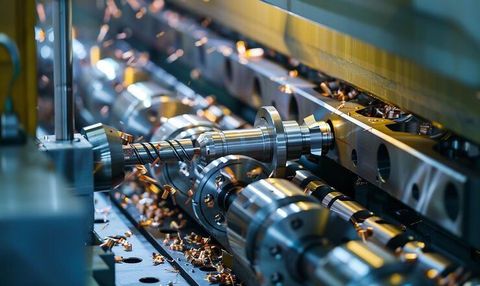
The central component is a screw positioned inside a cylindrical barrel. As the screw rotates, it transports material toward a forming tool called a die. Heating elements and mechanical energy generated through friction and material deformation help bring the material to the required processing condition. The die shapes the material before it passes through downstream equipment for cooling, sizing, cutting, or winding.
How a single-screw extruder works
A typical single-screw extrusion line operates through several connected stages.
Material feeding: Pellets, granules, powder, or other suitable feedstock enter the machine through a hopper.
Conveying: The rotating screw moves the material along the barrel.
Heating and melting: Barrel heaters and mechanical energy help soften or melt thermoplastic materials.
Mixing and pressurization: The screw promotes material flow and develops the pressure needed to push the material through the die.
Die shaping: The material passes through an opening designed to produce the required cross-sectional shape.
Cooling and finishing: The extruded product is cooled, sized, pulled, cut, or wound according to the application.
The exact sequence varies by product. Pipe extrusion, for example, generally uses sizing and cooling equipment, while film production may require rollers, air cooling, or winding systems.
Main Types of Single-Screw Extrusion Machines
Single-screw extruders are classified according to their intended products, screw design, processing conditions, and production arrangement. Machine capacity and configuration depend on the material's flow properties, required output, product dimensions, and quality specifications.
Plastic pipe extrusion machines
These machines produce pipes and tubing used in water distribution, drainage, irrigation, electrical protection, and industrial fluid handling. The extrusion die determines the pipe's basic shape, while downstream sizing and cooling systems help maintain its dimensions.
The equipment must be configured for the selected polymer, pipe diameter, wall thickness, and production requirements. Additional systems may control pipe marking, cutting, and haul-off speed.
Plastic film extrusion machines
Single-screw extruders supply molten polymer to film-forming equipment. Depending on the process, the material may pass through a flat die to produce film or sheet, or through an annular die to produce blown film.
Film extrusion is used in packaging, agricultural films, protective coverings, and industrial liners. Thickness control, melt stability, cooling conditions, and winding tension are important factors in product consistency.
Sheet and profile extrusion machines
Sheet extruders produce continuous flat polymer sheets that may later undergo thermoforming or fabrication. Profile extruders produce products with specific cross-sectional shapes, such as channels, trims, frames, and protective strips.
These systems rely on suitable die geometry and downstream calibration to maintain the required dimensions. Material shrinkage and cooling behavior must be considered during process design.
Cable insulation extrusion machines
Cable extrusion equipment applies an insulating or protective polymer layer around a conductor or cable core. The extrusion head is designed to guide the core through the die while the polymer forms a continuous covering.
Applications include electrical wiring, communication cables, and industrial cables. The process requires control over insulation thickness, surface finish, concentricity, and material condition.
Recycling and reprocessing extruders
Single-screw extruders can also process certain recycled polymers into pellets or other intermediate forms. Feedstock may need sorting, washing, drying, shredding, or melt filtration before extrusion.
The suitability of a single-screw machine depends on the recycled material's consistency, contamination level, moisture content, and flow characteristics. Some recycling processes require additional mixing or filtration equipment to meet the intended product specifications.
Manufacturing Processes and Machine Components
The performance of a single-screw extrusion machine depends on the interaction between its mechanical components, heating system, screw geometry, and control equipment. Each component influences how material moves through the machine and how consistently it reaches the die.
Main components of an extrusion machine
Hopper and feeding system: The hopper stores feedstock before it enters the barrel. Gravimetric or volumetric feeders may regulate the quantity of material entering the machine.
Screw and barrel: The screw transports and compresses the material while the barrel supports the screw and provides a controlled processing passage. Both components must withstand operating temperatures, pressure, and wear.
Heating and cooling systems: Electric heaters supply heat to different barrel zones, while cooling arrangements help control temperatures. The balance between external heating and mechanical energy affects melt conditions.
Drive and gearbox: The motor supplies rotational power, and the gearbox transfers torque to the screw. Drive capacity influences the machine's operating range and ability to process particular materials.
Die and extrusion head: The die directs the processed material into its intended shape. Die design influences flow distribution, dimensions, and surface quality.
Control system: Sensors and controllers monitor variables such as barrel temperature, screw speed, motor load, and melt pressure. These controls help operators maintain consistent processing conditions.
Screw design and operating principles
A typical extrusion screw contains three functional zones, although their geometry varies by machine and application.
Feed zone: Receives solid material and conveys it forward.
Compression or transition zone: Reduces the available channel volume and supports melting and material compression.
Metering zone: Helps establish a more uniform melt flow and develops pressure for passage through the die.
Not every screw follows the same geometry. Barrier screws, mixing sections, and specialized channel designs may be used when particular melting or mixing characteristics are required.
Screw diameter, length-to-diameter ratio, rotational speed, channel depth, and compression ratio all influence processing behavior. These parameters must be matched to the polymer and the intended production process.
Materials processed by single-screw extruders
Single-screw machines commonly process thermoplastics, including polyethylene (PE), polypropylene (PP), polyvinyl chloride (PVC), polystyrene (PS), and acrylonitrile butadiene styrene (ABS). Other materials may be processed when the screw design, temperature range, and equipment configuration are suitable.
Material selection depends on the required flexibility, stiffness, chemical resistance, temperature tolerance, and intended application. Some polymers require careful drying before processing, while others may be sensitive to excessive heat or prolonged residence time.
Factors influencing extrusion quality
Several operating conditions affect the final product:
Temperature distribution along the barrel and die.
Screw speed and material feed rate.
Melt pressure and flow consistency.
Raw material moisture and contamination.
Die design and downstream cooling conditions.
Screw and barrel wear over time.
Poor control of these variables can contribute to surface defects, dimensional variation, incomplete melting, discoloration, or unstable output. Regular inspection and documented process settings help manufacturers identify changes in production conditions.
Industrial Applications and Market Participants
Single-screw extrusion machines support production across plastics processing, construction, electrical manufacturing, packaging, agriculture, and other industrial sectors. Machine manufacturers, component producers, automation specialists, and material suppliers each contribute to the extrusion supply chain.
Industrial applications
Construction: Extruders produce plastic pipes, window profiles, cable conduits, seals, and building sheets.
Packaging: Film and sheet extrusion support packaging materials, protective layers, liners, and other converted plastic products.
Electrical manufacturing: Cable insulation and protective polymer coatings are produced using specialized extrusion lines.
Agriculture: Extrusion equipment manufactures irrigation pipes, greenhouse films, and certain agricultural tubing products.
Automotive manufacturing: Extruded polymer profiles, protective strips, tubing, and selected interior or exterior components are used in vehicles.
Recycling: Suitable extrusion systems convert prepared plastic waste or recycled polymers into intermediate materials for further manufacturing.
Global manufacturers and suppliers
The industrial extrusion market includes companies that manufacture complete extrusion lines, specialize in screw and barrel assemblies, or supply downstream equipment and control systems. Their product ranges differ by material, output capacity, process type, and intended industry.
Examples of established equipment manufacturers in the broader extrusion industry include KraussMaffei, Reifenhäuser, battenfeld-cincinnati, Davis-Standard, and Coperion. Their areas of specialization vary, and not every company or product range is focused exclusively on single-screw extruders.
When comparing equipment, technical specifications are more informative than company names alone. Important factors include processing capability, compatibility with the intended polymer, control-system features, installation requirements, spare-part availability, and maintenance arrangements.
Recent Developments in Single-Screw Extrusion
Developments across 2024–2026 have focused on process monitoring, energy management, automation, and the processing of recycled materials. These trends reflect broader changes in manufacturing rather than a single new extrusion technology.
Automation and digital process monitoring
Modern extrusion lines increasingly use programmable controllers, touchscreen interfaces, sensors, and data-recording systems. Operators can monitor temperatures, screw speed, pressure, motor load, and production output from a central control interface.
Some systems use historical process data to identify unusual operating patterns and help investigate defects. Automated controls can improve consistency when correctly configured, but they cannot eliminate the need for material checks, maintenance, and operator oversight.
Energy efficiency and material recycling
Manufacturers continue to examine heater insulation, drive efficiency, barrel temperature management, and process optimization to reduce unnecessary energy use. The actual effect depends on the machine design, production rate, polymer, and operating conditions.
Recycled polymer processing is another area of development. Improved feeding arrangements, filtration, and process monitoring can help manage variations in recycled feedstock. However, material contamination, degradation, and inconsistent composition remain important technical challenges.
Manufacturing flexibility
Some production lines are designed to handle different products through changes to dies, screw configurations, and downstream equipment. Such flexibility depends on whether the materials share compatible processing conditions and whether changeovers can be completed without compromising product requirements.
Laws, Standards, and Safety Requirements
Single-screw extrusion machines are subject to requirements related to machinery safety, electrical equipment, worker protection, and environmental management. The applicable rules depend on the country, machine design, materials being processed, and the conditions in which the equipment operates.
Regulatory considerations in India
Indian manufacturing facilities must consider applicable occupational safety requirements, factory regulations, electrical safety provisions, and environmental rules. The Occupational Safety, Health and Working Conditions Code, 2020, forms part of India's workplace safety framework, with applicable obligations depending on commencement provisions and implementing requirements.
Machinery operators may face risks from hot surfaces, rotating components, high-pressure polymer melt, and electrical equipment. Appropriate guarding, emergency stops, temperature controls, lockout procedures, and operator training are important elements of safe operation.
International standards and technical guidance
Relevant standards and frameworks may include:
ISO 12100: Machinery safety principles and risk assessment.
IEC 60204-1: Electrical equipment requirements for machinery.
ISO 9001: Quality management systems.
ISO 14001: Environmental management systems.
The applicability of each standard depends on the machine and jurisdiction. Manufacturers and facility operators must determine which legal requirements and technical specifications apply to their equipment.
Tools and Resources
Several engineering tools support the selection, installation, operation, and maintenance of extrusion machinery.
Common technical resources
Extrusion process simulation: Helps evaluate material flow, temperature distribution, pressure, and die behavior under specified conditions.
Machine monitoring software: Records operating temperatures, screw speed, pressure, output, and alarms to support process control.
Material datasheets: Provide information about polymer processing temperatures, moisture sensitivity, mechanical properties, and other relevant characteristics.
Maintenance records: Track screw and barrel wear, gearbox inspections, heater condition, and replacement intervals.
Quality inspection instruments: Measure wall thickness, diameter, film thickness, profile dimensions, and other product characteristics.
What to evaluate when selecting an extruder
Factor | Technical consideration |
|---|---|
Material | Polymer type, additives, moisture sensitivity |
Output | Required production rate and operating range |
Screw design | Melting, conveying, and mixing requirements |
Temperature control | Heating zones and cooling capacity |
Die compatibility | Required product shape and dimensions |
Automation | Sensors, controls, alarms, and data recording |
Maintenance | Access to wear parts and inspection points |
Machine selection requires matching these factors to the production process. A machine designed for pipe production, for example, may require a different screw, die, cooling arrangement, and downstream configuration from a film extrusion line.
Frequently Asked Questions
What is a single-screw extrusion machine used for?
It processes suitable materials, particularly thermoplastics, into continuous products such as pipes, films, sheets, profiles, tubing, and cable insulation.
What is the difference between single-screw and twin-screw extruders?
A single-screw extruder uses one rotating screw and is widely used for continuous melting, conveying, and shaping. A twin-screw extruder uses two screws and can provide different mixing, conveying, and compounding capabilities, depending on its configuration.
Which materials can a single-screw extruder process?
Common materials include polyethylene, polypropylene, PVC, polystyrene, and ABS. The appropriate machine configuration depends on the polymer's processing characteristics and the intended product.
What factors affect extrusion product quality?
Important factors include material condition, barrel temperature, screw speed, melt pressure, die design, and cooling conditions. Variations in these factors can affect dimensions, surface finish, and material consistency.
What industries use single-screw extrusion machines?
Construction, packaging, agriculture, electrical manufacturing, automotive production, and plastics recycling use single-screw extrusion technology for different products and processing requirements.
Conclusion
Single-screw extrusion machines convert suitable raw materials into continuous products through controlled feeding, heating, conveying, and shaping. Their design and operating conditions determine their suitability for applications such as pipes, films, profiles, and cable insulation. Automation, process monitoring, and recycling technologies continue to influence extrusion manufacturing. Material compatibility, machine configuration, product specifications, maintenance, and safety requirements remain central to reliable operation.