
Industrial water treatment involves processes that remove unwanted substances from water so it can be used in manufacturing, cleaning, cooling, processing, or other industrial activities. These systems may remove suspended solids, dissolved minerals, organic compounds, oils, microorganisms, and specific chemical contaminants. The treatment method depends on the incoming water quality and the intended use of the treated water.
Zero Liquid Discharge (ZLD) is an advanced water management approach designed to prevent routine liquid wastewater discharge from a facility. It combines treatment, water recovery, concentration, and residue management to recover reusable water while separating dissolved substances into concentrated brine or solid residues. ZLD is used in industries where water reuse, wastewater restrictions, or local environmental conditions make extensive treatment necessary.
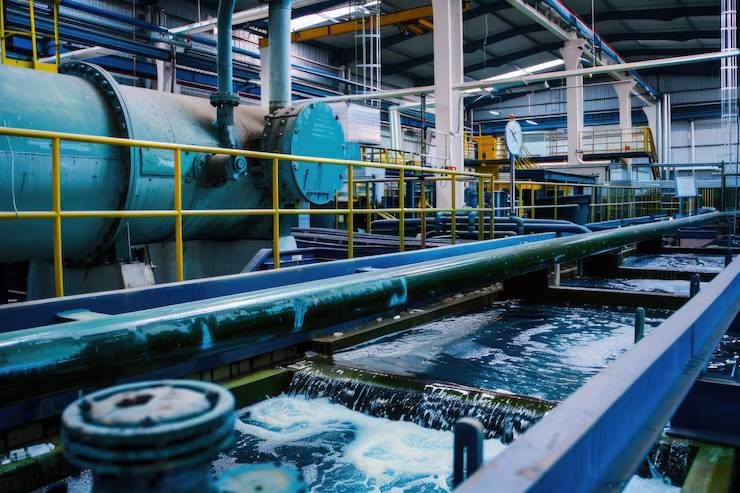
Industrial water treatment and ZLD systems are related but have different objectives. Conventional treatment may prepare water for a production process or meet a discharge standard, whereas ZLD systems aim to recover water while minimizing or eliminating liquid discharge from the defined process boundary.
Why industries treat water
Water quality can directly affect production equipment, product consistency, and industrial operations. Dissolved minerals may create scale inside boilers and heat exchangers, suspended particles can block filters, and certain contaminants can interfere with chemical reactions or damage membranes.
Industrial water treatment helps address these challenges by matching water quality to operational requirements. Some facilities treat incoming freshwater, while others recover water from wastewater streams for reuse.
Common objectives include:
Removing suspended particles and unwanted chemicals.
Reducing hardness and controlling scale formation.
Preparing water for boilers, cooling towers, and process equipment.
Recovering water from industrial wastewater.
Reducing pollutant concentrations before discharge.
Managing concentrated brine and other treatment residues.
The required treatment level varies significantly between industries. Water suitable for equipment washing may not meet the requirements for high-pressure boiler feedwater or sensitive manufacturing processes.
Major Industrial Water Treatment Technologies
Industrial treatment plants often use several technologies in sequence. The arrangement depends on the source water, the contaminants present, the required water quality, and the quantity of wastewater generated.
Physical treatment
Physical processes remove particles, oils, and other materials through separation techniques.
Screening: Removes larger debris before water enters downstream equipment.
Sedimentation: Allows suspended solids to settle under gravity, reducing the solids load on later treatment stages.
Filtration: Uses sand, multimedia beds, cartridge filters, or other filter media to capture particles.
Oil-water separation: Separates free oil from water in applications such as metalworking, petrochemical processing, and equipment cleaning.
Physical treatment is often used as an initial stage because it protects sensitive equipment and reduces the load on subsequent processes.
Chemical treatment
Chemical processes alter contaminants so they can be removed more easily or rendered less harmful.
Coagulation and flocculation: Chemicals help destabilize small suspended particles and bring them together into larger aggregates that can be separated.
pH adjustment: Acids or alkalis are used to control water acidity or alkalinity for treatment and process requirements.
Chemical precipitation: Selected dissolved substances react with added chemicals to form solids that can be separated from the water.
Disinfection: Appropriate chemical agents or other methods reduce microorganisms when required by the application.
Chemical treatment must be carefully controlled because overdosing, incompatible chemicals, or poorly managed residues can affect water quality and downstream equipment.
Membrane treatment
Membrane technologies separate substances from water through selective barriers. They are widely used for desalination, water reuse, and the removal of dissolved contaminants.
Microfiltration: Removes many suspended particles and microorganisms, depending on membrane characteristics.
Ultrafiltration: Separates fine particles, colloids, and many larger organic substances.
Nanofiltration: Removes many multivalent ions and selected dissolved organic compounds.
Reverse osmosis: Uses pressure to separate water from a substantial portion of dissolved salts and other contaminants.
Membrane systems require suitable pretreatment and monitoring. Fouling, scaling, membrane degradation, and concentrated reject streams must be managed to maintain reliable operation.
Biological treatment
Biological treatment uses microorganisms to break down biodegradable organic matter in wastewater. Common systems include activated sludge, moving bed biofilm reactors, sequencing batch reactors, and membrane bioreactors.
These technologies are particularly relevant to wastewater containing biodegradable organic pollutants, including wastewater from food processing, pulp and paper operations, and certain chemical manufacturing processes. Biological treatment is less suitable for contaminants that microorganisms cannot readily degrade or that inhibit biological activity.
Zero Liquid Discharge (ZLD) Systems
ZLD systems combine multiple treatment stages to recover water and manage the remaining concentrated waste. They are often used where wastewater contains high levels of dissolved salts or where liquid discharge must be minimized or eliminated under applicable requirements.
How a ZLD system works
A typical ZLD installation follows several stages, although the exact arrangement varies by industry and wastewater composition.
Initial wastewater treatment: Screening, filtration, oil separation, and chemical treatment remove contaminants that could interfere with later processes.
Biological or advanced treatment: Organic pollutants and other targeted contaminants are reduced where necessary. Additional membrane treatment may be used to improve water quality.
Reverse osmosis: Pressure-driven membranes recover a portion of the water while concentrating dissolved salts in a smaller volume of reject water.
Brine concentration: Further treatment reduces the remaining liquid volume. Depending on the wastewater, this may involve specialized membranes, thermal concentration, or other evaporation technologies.
Crystallization and solids separation: Concentrated brine is processed to produce solid salts or other residues, which are separated from the remaining liquid.
Water recovery and reuse: Recovered water is tested and directed to suitable applications, such as cooling, washing, or other industrial processes. Its quality must match the intended use.
Not every ZLD plant uses the same equipment or sequence. High-salinity wastewater, heat-sensitive compounds, scaling substances, and hazardous contaminants can require specialized treatment arrangements.
Main equipment used in ZLD plants
Equipment | Primary function |
|---|---|
Equalization tanks | Balance wastewater flow and composition |
Clarifiers | Separate settled solids from water |
Chemical dosing systems | Control pH and support contaminant removal |
Membrane filtration units | Remove particles or separate dissolved substances |
Reverse osmosis units | Recover water and concentrate dissolved salts |
Evaporators | Remove water from concentrated liquid streams |
Crystallizers | Produce crystals from concentrated solutions |
Filter presses or centrifuges | Separate solids from liquid |
Storage and monitoring systems | Manage recovered water and track operating conditions |
ZLD systems can also include heat exchangers, pumps, vacuum equipment, condensate treatment units, and automated control systems. Equipment selection depends on the wastewater characteristics and the required recovery performance.
Benefits and limitations of ZLD
ZLD can reduce liquid wastewater discharge and increase water reuse within an industrial facility. This can be particularly important in water-stressed regions or industries that generate saline wastewater.
However, ZLD is technically demanding. Evaporation and crystallization can require substantial thermal energy, while membrane systems consume electricity and require periodic maintenance. Concentrated salts and other residues must also be characterized and managed appropriately.
The overall environmental performance depends on the energy source, chemical use, water recovery, residue composition, and final disposal or reuse arrangements. ZLD does not automatically make every waste stream harmless, and recovered water is not necessarily suitable for every application.
Industrial Applications
Industrial water treatment and ZLD technologies are used in industries with substantial water requirements or complex wastewater streams. The treatment configuration depends on the production process and the contaminants generated.
Power generation
Power stations use treated water for boilers, steam systems, cooling towers, and auxiliary operations. Demineralization and other advanced treatment methods help control dissolved substances that could cause scaling, corrosion, or deposits.
Some power facilities use ZLD or partial wastewater recovery to manage cooling-tower blowdown and other process streams. Treatment requirements depend on plant design, fuel type, water source, and local environmental rules.
Textile and dyeing operations
Textile wastewater may contain dyes, suspended solids, salts, detergents, and organic compounds. Treatment commonly combines equalization, chemical treatment, biological processes, and membrane filtration.
Where high water reuse or strict discharge limits apply, additional concentration and evaporation stages may be used. The ability to reuse treated water depends on color removal, salt concentration, and the requirements of the next production stage.
Pharmaceuticals and chemical manufacturing
These facilities may generate wastewater containing solvents, organic compounds, salts, cleaning chemicals, or process-specific contaminants. Segregating wastewater streams can help prevent incompatible materials from entering the same treatment system.
Advanced treatment may include specialized oxidation, adsorption, membrane separation, or thermal processing. The selected technology depends on the substances present and their behavior during treatment.
Food and beverage production
Food processing wastewater often contains biodegradable organic matter, fats, oils, suspended solids, and cleaning residues. Biological treatment is commonly used to reduce organic pollution, with physical and chemical processes providing additional treatment where needed.
Water reuse may be possible for selected non-product-contact applications after appropriate treatment and risk assessment. Requirements are more stringent when recovered water could contact ingredients, equipment surfaces, or finished products.
Electronics and semiconductor manufacturing
These industries can require high-purity water for rinsing, cleaning, and specialized production processes. Treatment systems may combine pretreatment, reverse osmosis, electrodeionization, ion exchange, and polishing technologies.
Wastewater may contain dissolved minerals, cleaning chemicals, acids, alkalis, or process-specific substances. Recovery systems must be designed to protect product quality while managing concentrated waste streams.
Mining and metal processing
Mining and metal-processing facilities may generate wastewater containing suspended solids, dissolved minerals, metals, and process chemicals. Treatment can involve sedimentation, filtration, chemical precipitation, and membrane processes.
Water recovery can reduce demand for new water supplies, while specialized treatment may be needed for high-salinity or metal-bearing streams. Residues must be assessed according to their chemical composition and applicable waste-management requirements.
Manufacturing Processes and System Design
Industrial water treatment equipment is manufactured through mechanical fabrication, material processing, instrumentation, and system integration. ZLD installations are generally assembled from multiple equipment packages rather than produced as a single machine.
How treatment equipment is manufactured
Material selection: Engineers select stainless steel, carbon steel, suitable plastics, specialized alloys, or membrane materials according to pressure, temperature, chemical compatibility, and corrosion risks.
Mechanical fabrication: Tanks, pipework, pressure vessels, filter housings, and structural supports are formed, machined, welded, and assembled according to their design requirements.
Membrane production and assembly: Membranes are manufactured using materials suited to the intended separation process. They are incorporated into modules and pressure housings designed for the operating conditions.
Evaporator and crystallizer fabrication: Thermal equipment requires carefully designed heat-transfer surfaces, vapor-handling arrangements, and systems for managing concentrated solutions and deposited solids.
Instrumentation and automation: Flow meters, pressure sensors, temperature instruments, conductivity meters, and control systems are integrated to monitor operating conditions and manage treatment sequences.
Testing and commissioning: Equipment may undergo pressure testing, leak checks, electrical testing, control-system verification, and performance testing as applicable. Once installed, the complete plant must be commissioned under defined operating conditions.
Important design considerations
A treatment plant must be designed around actual wastewater data rather than general assumptions. Key considerations include:
Average and peak wastewater flow rates.
Dissolved salts, suspended solids, organic compounds, and other contaminants.
Temperature, pH, and chemical compatibility.
Membrane fouling, scaling, and corrosion potential.
Energy and chemical requirements.
Sludge, brine, and solid residue management.
Maintenance access, automation, and operator training.
Pilot testing or treatability studies may be appropriate when wastewater composition is variable or when a proposed process has uncertain performance.
Recent Developments in Industrial Water Treatment
Developments from 2024 through 2026 reflect increasing interest in industrial water reuse, digital monitoring, energy-efficient treatment, and improved management of concentrated wastewater. Actual adoption varies by industry, region, and project requirements.
Energy-efficient ZLD technologies
Industrial facilities continue to evaluate improved evaporation methods, mechanical vapor recompression, heat recovery, and membrane-based concentration. Mechanical vapor recompression reuses vapor energy to support evaporation, potentially reducing additional heating requirements under suitable operating conditions.
Hybrid treatment systems can combine membrane processes with thermal concentration to reduce the volume of liquid entering energy-intensive equipment. Their effectiveness depends on wastewater chemistry, operating conditions, energy availability, and maintenance requirements.
Digital monitoring and automation
Modern treatment plants increasingly use sensors and supervisory control systems to track flow, pressure, conductivity, pH, temperature, and equipment status. Data analysis can help operators identify membrane fouling, abnormal chemical consumption, and changes in treatment performance.
Automated monitoring does not eliminate the need for sampling, laboratory analysis, maintenance, or trained operators. Sensor readings must be checked and interpreted in the context of the treatment process.
Water reuse and resource recovery
Industrial facilities are examining ways to recover usable water and, where practical, recover selected salts or other materials from concentrated streams. However, recovered materials may contain impurities that limit their reuse.
Water reuse planning increasingly considers the full treatment chain, including the original water source, energy requirements, concentrate management, and the quality needed for the intended application.
Laws, Regulations, and Environmental Requirements
Industrial water treatment requirements depend on national legislation, local permits, industry-specific rules, and the characteristics of the wastewater. A facility may need to meet discharge limits, obtain environmental approvals, maintain monitoring records, and manage sludge or other residues according to applicable requirements.
Regulatory framework in India
In India, industrial wastewater management is shaped by the Water (Prevention and Control of Pollution) Act, 1974, the Environment (Protection) Act, 1986, and applicable rules, standards, and directions issued by the relevant authorities.
The Central Pollution Control Board (CPCB) and State Pollution Control Boards (SPCBs) have roles in pollution control, monitoring, and regulatory implementation. Depending on the facility, consent requirements and industry-specific discharge conditions may apply.
Zero Liquid Discharge requirements are not identical for every industry or location. Whether ZLD is mandatory depends on applicable directions, regulatory conditions, industrial category, and the specific facility. Installing a ZLD system does not by itself establish compliance; operation, monitoring, residue handling, and recordkeeping also matter.
International standards and guidance
Several international frameworks may support water management and treatment planning.
ISO 46001: Water efficiency management systems.
ISO 14001: Environmental management systems.
ISO 24516 series: Guidance on asset management for water and wastewater systems.
Applicable local wastewater discharge standards: Define requirements for specific pollutants and discharge conditions.
These standards and guidance documents have different scopes and legal status. Their applicability should be assessed against the facility's regulatory obligations and operational needs.
Tools and Resources for Industrial Water Treatment
Engineers and plant operators use technical tools to evaluate water quality, select treatment equipment, and monitor system performance. The appropriate resources depend on the type of wastewater and the required treatment outcome.
Common tools and technologies
Water quality testing instruments: pH meters, conductivity meters, turbidity meters, and dissolved oxygen sensors help monitor key water characteristics. Laboratory testing may also be needed to identify specific chemicals, metals, salts, and organic compounds.
Process simulation software: Engineering software helps model water flows, treatment stages, material balances, and operating conditions.
Membrane monitoring systems: Measurements of pressure, flow, conductivity, and recovery help identify changes in reverse osmosis performance.
Energy monitoring systems: These track electricity and thermal energy use by pumps, membranes, evaporators, and other equipment.
Plant control systems: Programmable logic controllers and supervisory control and data acquisition systems coordinate pumps, valves, sensors, alarms, and treatment sequences.
Information needed when evaluating a treatment plant
Parameter | Purpose |
|---|---|
Wastewater flow rate | Establishes treatment capacity requirements |
Total dissolved solids | Indicates the concentration of dissolved substances |
Chemical oxygen demand | Helps assess the amount of chemically oxidizable material |
pH | Indicates acidity or alkalinity |
Hardness and alkalinity | Help evaluate scaling potential |
Suspended solids | Indicates the need for solids removal |
Energy consumption | Supports operational efficiency analysis |
Residue composition | Helps determine appropriate waste handling |
No single parameter provides a complete picture of wastewater quality. Representative sampling and appropriate laboratory analysis are important, especially when the wastewater contains complex industrial chemicals.
Frequently Asked Questions
What is an industrial water treatment system?
An industrial water treatment system removes or reduces unwanted substances in water to make it suitable for manufacturing, equipment operation, reuse, or regulated discharge. It may combine physical, chemical, biological, membrane, and thermal processes.
What is a Zero Liquid Discharge system?
A Zero Liquid Discharge system is designed to recover water from industrial wastewater while eliminating routine liquid discharge from the defined treatment process. It typically combines wastewater pretreatment, membrane separation or concentration, evaporation, and crystallization or solids separation.
Which equipment is used in industrial ZLD plants?
Common equipment includes clarifiers, filtration units, chemical dosing systems, reverse osmosis membranes, evaporators, crystallizers, pumps, and residue separation equipment. The exact arrangement depends on wastewater composition and recovery objectives.
Which industries use ZLD systems?
ZLD systems are used in selected textile, chemical, pharmaceutical, power generation, mining, and other industrial facilities. Their suitability depends on water availability, wastewater characteristics, regulatory requirements, and the technical feasibility of managing concentrated residues.
What are the main challenges of ZLD implementation?
Common challenges include high energy demand, membrane fouling, scaling, corrosion, chemical consumption, equipment maintenance, and the handling of concentrated brine or solid residues. These factors must be considered when designing and operating the treatment plant.
Conclusion
Industrial water treatment protects equipment, supports manufacturing processes, and helps manage wastewater in accordance with applicable requirements. ZLD systems extend these functions by recovering water and minimizing or eliminating liquid discharge from a defined process. Treatment technologies range from conventional filtration and biological processes to advanced membranes, evaporation, and crystallization. Effective system design depends on accurate wastewater characterization, suitable equipment selection, energy management, regulatory compliance, and responsible residue handling.