
Thermal oil heaters are industrial heating systems that transfer heat through a circulating liquid, commonly called thermal oil or heat transfer fluid. They are used when manufacturing processes require controlled and consistent temperatures without relying directly on steam or high-pressure water.
A thermal oil heating system typically consists of a heater, circulation pump, heat transfer fluid, piping network, expansion tank, and temperature control equipment. A fuel source or electrical heating element heats the fluid, which then circulates through process equipment to transfer thermal energy where it is needed.
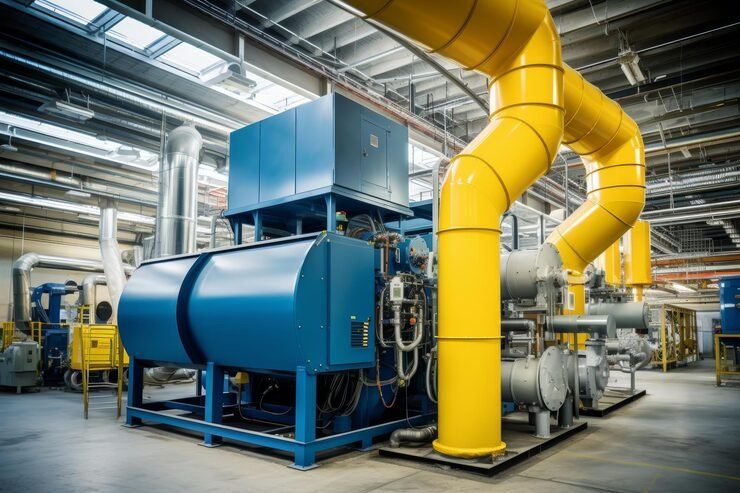
Unlike steam-based heating systems, thermal oil systems can operate at relatively high temperatures while maintaining lower operating pressure than a comparable pressurized-water system. Actual pressure requirements depend on the fluid, system design, elevation, and operating conditions.
How thermal oil heaters work
The process begins when a burner or electrical element heats the thermal fluid inside a heating unit. A circulation pump moves the hot fluid through pipes and heat exchangers connected to production equipment. After transferring heat, the cooler fluid returns to the heater to be reheated.
A typical thermal oil heating system includes several main components:
Heater unit: Transfers energy from fuel combustion or electricity to the circulating fluid.
Thermal oil: Carries heat through the system and must be suitable for the required temperature range.
Circulation pump: Maintains the flow needed for effective heat transfer.
Expansion tank: Accommodates changes in fluid volume as its temperature changes.
Temperature controls: Monitor and regulate heating conditions.
Piping and insulation: Carry the fluid while limiting unwanted heat loss.
Safety equipment: Includes appropriate temperature and pressure monitoring, shutdown controls, and other protective devices.
The system is designed around the required process temperature, heat demand, fluid characteristics, and operating schedule. Correct fluid selection and circulation are important because overheating or inadequate flow can damage the fluid and heating equipment.
Main types of thermal oil heaters
Thermal oil heaters differ according to their heat source, construction, and intended application.
Fuel-fired thermal oil heaters: Use fuels such as natural gas, diesel, or other suitable fuels to generate heat through combustion. They are used in facilities that require substantial thermal output.
Electric thermal oil heaters: Use electrical resistance elements to heat the circulating fluid. Their suitability depends on available electrical capacity, required temperature, and the facility's energy arrangements.
Biomass-fired heating systems: Use suitable biomass fuels to generate heat. These systems require fuel-handling equipment and controls appropriate to combustion, ash, and emissions.
Waste heat recovery heaters: Capture heat from another industrial process, such as hot exhaust gases, to provide useful thermal energy where temperature and process conditions permit.
Packaged thermal oil systems: Integrate the heater, controls, pumps, and related components into a coordinated unit. The degree of integration varies with the equipment design and application.
Importance
Thermal oil heaters are important in manufacturing processes that require stable heating, indirect heat transfer, and precise temperature management. Many industrial materials need to be heated within a defined range to achieve the required texture, viscosity, chemical reaction, or physical properties. Temperature fluctuations can affect product consistency, production time, and equipment reliability.
These systems can also supply heat to several pieces of equipment through a shared circulation network. Depending on the layout, one heater may support reactors, drying equipment, mixing vessels, presses, or other production machinery. The arrangement must account for the different heating requirements of each process.
Industrial applications of process heating systems
Thermal oil heating and related process heating technologies are used in several industrial sectors.
Chemical manufacturing: Heat reactors, mixing vessels, and process equipment that require controlled indirect heating.
Textile production: Supply heat for certain dyeing, finishing, drying, and textile processing operations.
Plastics manufacturing: Provide thermal energy for molds, processing equipment, and specialized production lines.
Food processing: Heat suitable processing vessels, cooking equipment, and certain drying systems, subject to hygiene and fluid-contact requirements.
Pharmaceutical manufacturing: Maintain process temperatures in equipment used for controlled heating and material preparation.
Wood processing: Support industrial drying, panel production, and other operations that require circulating heat.
Asphalt and bitumen processing: Maintain the temperature of viscous materials and associated storage or transfer equipment.
Paper manufacturing: Supply heat for selected drying and process applications.
The choice of heating technology depends on the process. Thermal oil is not suitable for every application, particularly where direct steam contact, very rapid heating, or specialized sanitary requirements are necessary.
Thermal oil heating compared with steam heating
Feature | Thermal oil system | Steam system |
|---|---|---|
Heat transfer medium | Thermal oil or another heat transfer fluid | Water converted into steam |
Heat transfer method | Circulating hot fluid | Steam condensation or direct steam use |
Operating pressure | Depends on system design and fluid conditions | Depends on steam pressure and temperature |
Fluid management | Fluid condition and degradation must be monitored | Water quality, condensate, and steam quality must be managed |
Common applications | Reactors, presses, dryers, and indirect process heating | Process heating, sterilization, and steam-based operations |
Key considerations | Fluid stability, circulation, leakage, and fire protection | Boiler safety, pressure control, condensate return, and water treatment |
Neither system is universally preferable. The appropriate choice depends on process temperature, heat-transfer requirements, equipment design, energy availability, and safety considerations.
Energy efficiency and heat management
The overall performance of a process heating system depends on more than the heater itself. Insulation, burner performance, fluid circulation, heat exchanger condition, and control settings all influence energy consumption.
Heat losses may occur through uninsulated pipes, equipment surfaces, exhaust gases, or poorly matched heating loads. Regular inspection and monitoring can help identify areas where energy is being wasted. Heat recovery may also be possible when a facility has a suitable source of exhaust or process heat.
Recent Updates
Developments in industrial process heating from 2024 through 2026 reflect growing attention to energy efficiency, electrification, automated control, and emissions management. Manufacturers are assessing how heating systems can fit into changing energy infrastructure while maintaining the temperature stability required for industrial production.
Electrification and alternative heat sources
Electric process heating is receiving increased attention as industrial facilities evaluate alternatives to combustion-based heating. Electric thermal oil heaters can be appropriate where electrical infrastructure supports the required heating load. Their overall environmental impact depends on the electricity source, system efficiency, and operating profile.
Some facilities are also evaluating hybrid arrangements that combine conventional burners with electric heating or recovered thermal energy. These configurations can provide operational flexibility, but their practicality depends on the site's energy supply and process requirements.
Digital monitoring and automated controls
Modern process heating systems can incorporate digital temperature sensors, flow monitoring, programmable logic controllers, and supervisory control systems. These technologies allow operators to observe operating conditions and adjust heating output in response to production demand.
Monitoring can also help identify abnormal temperature changes, circulation problems, or declining heat-transfer performance. Data-based maintenance planning may support earlier investigation of developing faults, although physical inspections and equipment testing remain important.
Thermal fluid management
Thermal fluids gradually change under operating conditions. Oxidation, contamination, excessive temperatures, and thermal degradation can affect fluid properties and system performance.
Industrial operators increasingly emphasize fluid sampling, condition analysis, filtration where appropriate, and adherence to manufacturer-specified operating limits. The fluid must be selected for its thermal stability, viscosity, compatibility with system materials, and intended service temperature.
Laws or Policies
Thermal oil heaters and industrial process heating equipment may be subject to requirements covering workplace safety, combustion systems, pressure equipment, electrical installations, emissions, and fire prevention. Applicable rules vary according to the equipment design, fuel type, location, and industry.
Regulatory considerations in India
Industrial facilities in India must consider applicable factory safety requirements, environmental permissions, fire safety provisions, and electrical installation rules. Fuel-fired systems may also be subject to relevant air pollution control requirements, depending on the fuel, capacity, location, and applicable regulatory conditions.
The Boilers Act, 2025, and related rules are relevant to equipment falling within the legal definition and scope of regulated boilers. A thermal oil heater should not automatically be classified as a steam boiler; its regulatory status depends on its design and applicable law. Pressure-containing components and associated equipment may have separate requirements.
Where industrial heating systems affect emissions or regulated industrial operations, facilities may need to meet applicable conditions established by the relevant pollution control authorities. Requirements should be assessed for the specific installation rather than assumed to be identical across all industrial sites.
Safety standards and operational controls
Important safety considerations include protection against overheating, adequate fluid circulation, leak detection, suitable ventilation, burner safeguards, and emergency shutdown arrangements. Thermal oil leaks can create fire hazards when hot fluid contacts ignition sources or unsuitable surfaces.
Industrial operators commonly use documented maintenance procedures, equipment inspections, operating instructions, and personnel training to manage these risks. Relevant technical standards may address combustion equipment, electrical safety, pressure systems, and industrial control systems. Their applicability depends on the equipment and jurisdiction.
Tools and Resources
Thermal oil heating system design involves heat-load assessment, fluid selection, circulation calculations, equipment sizing, and safety evaluation. Engineers use technical documentation and specialized software to assess these requirements.
Common engineering tools
Heat-load calculation tools: Estimate the thermal energy needed to heat materials, vessels, or production equipment.
Thermal fluid property data: Provide information on viscosity, heat capacity, thermal conductivity, and recommended operating temperatures.
Process simulation software: Helps evaluate heating requirements and interactions between connected process units.
Temperature and flow instruments: Monitor operating conditions and help identify circulation or heat-transfer problems.
Energy monitoring systems: Track fuel or electricity consumption and support comparisons between operating periods.
Maintenance management systems: Record inspections, fluid sampling, equipment repairs, and scheduled maintenance.
Factors used in system selection
A preliminary technical assessment generally considers the required operating temperature, total heating load, fluid compatibility, heat source, circulation requirements, installation conditions, and applicable safety rules. Engineers also assess startup behavior, standby operation, future capacity needs, and the maintenance access required for critical components.
Manufacturing processes for thermal oil heaters may include steel fabrication, tube and coil forming, welding, machining, insulation installation, burner assembly, electrical integration, and control-system testing. Depending on the design, inspection may include weld examinations, pressure or leak tests, functional checks, and verification of protective controls.
FAQs
What is a thermal oil heater used for?
A thermal oil heater heats a circulating fluid that transfers thermal energy to industrial equipment. It is commonly used for reactors, presses, dryers, mixing vessels, and other processes requiring controlled indirect heating.
What is the difference between a thermal oil heater and a boiler?
A thermal oil heater heats a heat transfer fluid, while a conventional steam boiler produces steam from water. Their operating characteristics and regulatory classifications differ according to their design and intended use.
Which industries use thermal oil heating systems?
Chemical, textile, plastics, food processing, pharmaceutical, wood processing, and asphalt-related industries use thermal oil heating in suitable applications. The required temperature, process conditions, and equipment compatibility determine whether the technology is appropriate.
How is thermal oil heater efficiency maintained?
Efficiency depends on proper combustion or electrical heating, adequate fluid circulation, effective insulation, clean heat-transfer surfaces, and suitable control settings. Routine maintenance and fluid condition monitoring help maintain safe operating performance.
What safety precautions are important for thermal oil heaters?
Important precautions include preventing fluid overheating, maintaining circulation, inspecting pipes and connections for leaks, using appropriate fire protection, and testing shutdown controls. Operating procedures and maintenance must follow the system design and relevant safety requirements.
Conclusion
Thermal oil heaters provide indirect heating for industrial processes that require controlled and consistent temperatures. Fuel-fired, electric, biomass, and heat recovery systems serve different applications according to energy availability and process needs. Proper fluid management, equipment maintenance, automated controls, and safety measures are essential to reliable operation. Regulatory requirements depend on the equipment design, industrial application, and location.