
Switchgear is one of the most important components of modern electrical power systems. It protects electrical equipment from faults, controls the flow of electricity, and ensures the safe distribution of power across industrial facilities, commercial buildings, utility substations, and infrastructure projects. Without reliable switchgear, electrical systems would be vulnerable to overloads, short circuits, and equipment failures that could interrupt operations and damage valuable assets.
Modern switchgear has evolved far beyond simple switching devices. Today's systems integrate intelligent protection relays, digital monitoring platforms, automation technologies, and communication networks that improve power reliability, operational safety, and maintenance efficiency. These innovations support the growing demand for smart grids, renewable energy integration, and automated industrial facilities.
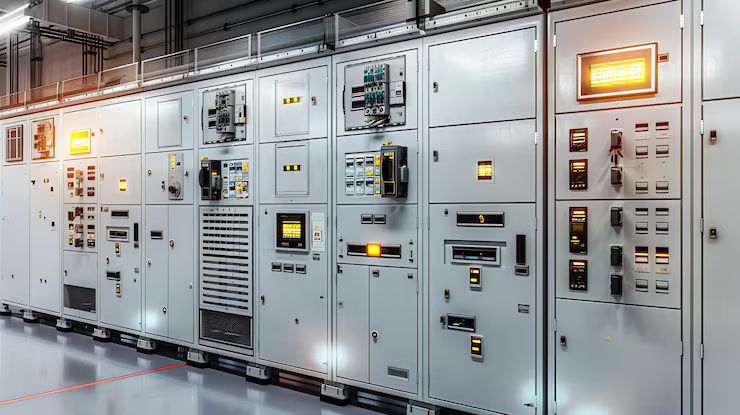
As industries continue to modernize their electrical infrastructure, switchgear remains a critical part of power generation, transmission, distribution, and industrial automation. This guide explains how switchgear works, the different technologies available, protection systems, voltage classifications, and industrial applications.
What Is Switchgear?
Switchgear is a collection of electrical devices used to control, protect, isolate, and distribute electrical power within an electrical system. It detects abnormal operating conditions such as overloads or short circuits and disconnects faulty circuits before damage spreads throughout the network.
Switchgear is installed in power plants, substations, manufacturing facilities, commercial buildings, hospitals, renewable energy projects, and utility distribution systems to ensure safe and reliable electricity supply.
A typical switchgear system consists of several important components:
- Circuit breakers
- Disconnect switches
- Protective relays
- Busbars
- Instrument transformers
- Control panels
- Monitoring and communication systems
Together, these components provide comprehensive electrical protection and efficient power management.
Why Switchgear Is Important
Electrical systems experience varying loads and occasional fault conditions during operation. Switchgear continuously monitors these conditions and responds quickly to protect equipment, maintain power quality, and improve operational safety.
By automatically isolating faulty sections of a power network, switchgear minimizes equipment damage and helps maintain continuous service for unaffected circuits.
Some important advantages include:
- Reliable electrical protection
- Safe power distribution
- Reduced equipment damage
- Improved operational continuity
These benefits make switchgear indispensable in modern electrical infrastructure.
Types of Switchgear
Different electrical systems require different switchgear designs depending on voltage levels, installation environments, and operational requirements.
Low-Voltage Switchgear
Low-voltage switchgear is commonly used in commercial buildings, factories, hospitals, and residential infrastructure.
It typically operates at voltages up to 1,000 volts and protects electrical distribution panels, motors, lighting systems, and industrial equipment.
Medium-Voltage Switchgear
Medium-voltage switchgear is designed for electrical systems operating between approximately 1 kV and 36 kV.
It is widely installed in industrial plants, renewable energy facilities, utility substations, and large commercial complexes.
High-Voltage Switchgear
High-voltage switchgear operates in transmission and utility networks carrying voltages above 36 kV.
These systems provide protection for transmission lines, transformers, substations, and power generation facilities.
Gas-Insulated Switchgear (GIS)
Gas-insulated switchgear uses sulfur hexafluoride (SF₆) or alternative insulating gases inside sealed enclosures to provide excellent electrical insulation.
GIS systems require less installation space and are commonly used in urban substations, offshore platforms, and locations where space is limited.
Air-Insulated Switchgear (AIS)
Air-insulated switchgear uses atmospheric air as the primary insulating medium.
AIS installations are widely used in outdoor substations because of their relatively simple construction and ease of maintenance.
How Switchgear Works
Switchgear continuously monitors electrical circuits to maintain safe operating conditions.
Power Distribution
Electrical power enters the switchgear through incoming feeders and is distributed to various circuits using busbars and switching devices.
The system ensures controlled delivery of electricity throughout the network.
Fault Detection
Protective relays continuously monitor voltage, current, frequency, and other electrical parameters.
When abnormal conditions occur, the relays immediately identify the fault.
Circuit Isolation
After detecting a fault, the protection system sends a signal to the circuit breaker.
The breaker disconnects the affected circuit within milliseconds, preventing equipment damage and limiting the spread of faults.
System Restoration
Once maintenance personnel resolve the problem, the affected circuit can be safely restored to normal operation using the switchgear control system.
Electrical Protection Technologies
Modern switchgear incorporates advanced protection technologies that improve electrical system reliability.
Circuit Breakers
Circuit breakers automatically interrupt electrical current during overloads, short circuits, or equipment failures.
They are one of the most important protective devices within any switchgear system.
Protective Relays
Digital protective relays analyze electrical conditions in real time.
They detect faults, coordinate protection sequences, and trigger circuit breakers when necessary.
Current and Voltage Transformers
Instrument transformers reduce high electrical values into measurable levels for monitoring and protection equipment.
They improve measurement accuracy while protecting control systems.
Arc Protection Systems
Arc flash protection systems detect dangerous electrical arcs and isolate affected equipment almost instantly.
These systems improve workplace safety while minimizing equipment damage.
Power Distribution Technologies
Modern switchgear supports advanced power management and automation technologies.
Intelligent Electronic Devices
Intelligent Electronic Devices (IEDs) collect operational data and provide communication between switchgear and supervisory control systems.
These devices improve monitoring and system diagnostics.
Supervisory Control and Data Acquisition
SCADA systems allow engineers to monitor and control switchgear remotely.
Real-time information improves operational visibility while supporting faster response during electrical events.
Smart Grid Integration
Modern switchgear supports bidirectional power flow and communication required for smart electrical grids.
This enables better coordination between utilities, renewable energy systems, and industrial facilities.
Industrial Internet of Things
IIoT technology connects switchgear with digital monitoring platforms that continuously analyze equipment performance and operating conditions.
This supports predictive maintenance and improves overall system reliability.
Comparison of Common Switchgear Types
Different switchgear technologies are designed for different operating environments.
| Switchgear Type | Voltage Range | Insulation Medium | Typical Applications |
|---|---|---|---|
| Low-Voltage Switchgear | Up to 1 kV | Air | Buildings, factories |
| Medium-Voltage Switchgear | 1–36 kV | Air or Gas | Industrial plants, substations |
| High-Voltage Switchgear | Above 36 kV | Air or Gas | Power transmission |
| Gas-Insulated Switchgear (GIS) | Medium to High Voltage | SF₆ or alternative gas | Urban substations, offshore facilities |
| Air-Insulated Switchgear (AIS) | Medium to High Voltage | Air | Outdoor substations |
Industrial Applications
Switchgear supports reliable electrical operation across numerous industries.
Manufacturing
Factories use switchgear to distribute electricity safely to production lines, industrial motors, robotics, conveyors, and automated machinery.
Power Generation
Power plants rely on switchgear to protect generators, transformers, and electrical distribution systems while maintaining grid stability.
Renewable Energy
Solar farms, wind power facilities, and battery energy storage systems use switchgear to manage power generation, protection, and grid connection.
Oil and Gas
Switchgear provides reliable electrical protection for drilling operations, processing facilities, refineries, and offshore platforms operating in demanding environments.
Commercial Infrastructure
Hospitals, airports, shopping centers, data centers, and office complexes depend on switchgear to maintain uninterrupted electrical service and protect critical equipment.
Benefits of Switchgear
Modern switchgear provides numerous operational advantages.
Some important benefits include:
- Improved electrical safety
- Reliable fault protection
- Enhanced power distribution
- Reduced equipment downtime
- Better system monitoring
These advantages help industries maintain stable electrical operations while protecting valuable infrastructure.
Challenges in Switchgear Operation
Although switchgear is designed for long-term reliability, proper maintenance remains essential.
Common challenges include insulation aging, moisture ingress, mechanical wear, overheating, arc flash risks, and component degradation.
Routine inspections, thermal imaging, insulation testing, and protection relay verification help maintain reliable operation while minimizing unexpected electrical failures.
Recent Developments (2024–2026)
Recent advancements have significantly improved switchgear technology.
Manufacturers are increasingly introducing environmentally friendly switchgear that uses alternatives to SF₆ gas to reduce greenhouse gas emissions. Digital switchgear equipped with intelligent sensors now provides continuous monitoring of temperature, humidity, partial discharge, and equipment health.
Artificial intelligence and predictive maintenance software analyze operational data to identify potential faults before failures occur. Modular switchgear designs are also becoming more popular because they simplify installation, reduce maintenance time, and support future system expansion.
The continued growth of renewable energy and smart grids is accelerating the adoption of intelligent switchgear capable of supporting distributed energy resources and advanced power management.
Safety Standards and Industry Guidelines
Switchgear must comply with recognized electrical safety and performance standards to ensure reliable operation.
Important safety practices include:
- Proper equipment grounding
- Arc flash protection measures
- Routine insulation testing
- Scheduled maintenance inspections
- Lockout and isolation procedures
Manufacturers generally design switchgear according to internationally recognized standards such as the IEC 62271 series, IEC 60947, and IEEE guidelines where applicable. In India, installation and operation commonly follow applicable Bureau of Indian Standards (BIS), the Central Electricity Authority (CEA) regulations, and national electrical safety requirements.
Tools and Resources
Several technologies help improve switchgear performance and maintenance.
Common resources include:
- SCADA monitoring software
- Protective relay testing equipment
- Thermal imaging cameras
- Partial discharge monitoring systems
- Power quality analyzers
- Asset management software
These tools help improve equipment reliability, reduce maintenance requirements, and support continuous electrical system performance.
Frequently Asked Questions
What is switchgear used for?
Switchgear controls, protects, isolates, and distributes electrical power while safeguarding equipment against overloads, short circuits, and other electrical faults.
What is the difference between switchgear and circuit breakers?
A circuit breaker is one component of a switchgear system. Switchgear includes circuit breakers, protective relays, switches, busbars, control equipment, and monitoring systems that work together to manage electrical power safely.
What are the main types of switchgear?
The main types include low-voltage, medium-voltage, high-voltage, gas-insulated (GIS), and air-insulated (AIS) switchgear.
Why is digital switchgear becoming more popular?
Digital switchgear provides real-time monitoring, predictive maintenance, remote operation, and better integration with smart electrical networks and industrial automation systems.
Which industries use switchgear?
Switchgear is widely used in manufacturing, utilities, renewable energy, mining, oil and gas, transportation, healthcare, commercial buildings, and data centers.
Future Trends in Switchgear
Switchgear technology continues to advance through intelligent automation, digital communication, and sustainable engineering.
Future systems will increasingly incorporate artificial intelligence, cloud-based monitoring, edge computing, and self-diagnostic capabilities that improve reliability while reducing maintenance costs. Eco-friendly insulation technologies will continue replacing high global warming potential gases, supporting cleaner electrical infrastructure.
As smart grids, renewable energy, and industrial automation expand worldwide, switchgear will remain a vital part of safe, efficient, and intelligent power distribution systems.
Conclusion
Switchgear is a fundamental element of modern electrical infrastructure, providing the protection, control, and power distribution needed to keep industrial facilities, commercial buildings, and utility networks operating safely and efficiently. Through advanced protection technologies, intelligent monitoring systems, and automated control capabilities, modern switchgear improves electrical reliability while reducing equipment damage and operational downtime.
As electrical networks become more connected, automated, and sustainable, switchgear will continue evolving through digital innovation, smart protection systems, and environmentally responsible technologies. Its role in supporting reliable power distribution and industrial automation will remain essential for the future of modern energy systems.