
Welding machines are essential tools in modern manufacturing and construction. From building structures to repairing machinery, welding plays a key role in joining materials, especially metals, with strength and precision.
What makes welding important is not just the process itself, but the equipment used to perform it. Different welding machines are designed for specific tasks, materials, and environments.
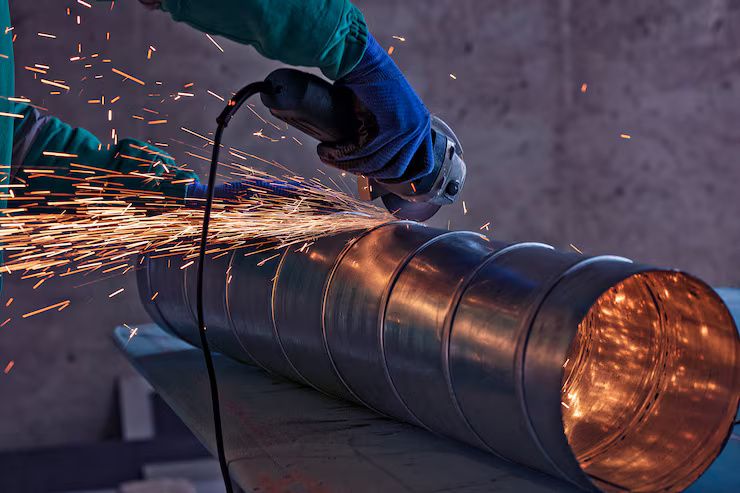
In this guide, we’ll explore how welding machines work, the different types available, the technologies behind them, and their role in industrial fabrication.
What Are Welding Machines?
Welding machines are devices used to join two or more materials, usually metals, by applying heat, pressure, or both. The goal is to create a strong and permanent bond between the materials.
These machines generate the energy required to melt and fuse materials together. Depending on the method used, they may also involve filler materials to strengthen the joint.
To perform effectively, welding machines must provide:
- Controlled heat and power output
- Stable operation for consistent results
- Compatibility with different materials
- Safety during operation
These features ensure reliable and high-quality welding results.
How Welding Machines Work
At a basic level, welding machines create heat to melt the edges of the materials being joined. Once melted, the materials fuse together and solidify as they cool.
Some methods also use pressure or filler material to strengthen the joint. The exact process depends on the type of welding machine being used.
For example, in arc welding, an electric current creates an arc between the electrode and the material, producing intense heat for fusion.
Types of Welding Machines
Different welding tasks require different types of machines. Each type is suited for specific materials and applications.
1. Arc Welding Machines
Arc welding machines use an electric arc to generate heat. They are widely used in construction and heavy fabrication.
Common features include strong weld joints and suitability for thick materials.
2. MIG Welding Machines
MIG (Metal Inert Gas) welding machines use a continuous wire electrode and shielding gas. They are easy to use and suitable for beginners.
They are commonly used in automotive and general fabrication work.
3. TIG Welding Machines
TIG (Tungsten Inert Gas) welding machines provide high precision and clean welds. They are ideal for thin materials and detailed work.
This method is often used in industries requiring high-quality finishes.
4. Spot Welding Machines
Spot welding machines are used to join thin metal sheets. They apply pressure and heat at specific points.
They are commonly used in automotive manufacturing and assembly lines.
Technologies Used in Modern Welding Machines
Welding technology has advanced significantly, improving efficiency and ease of use.
Inverter Technology
Modern welding machines use inverter technology to provide better control over power output. This makes machines more energy-efficient and portable.
Digital Control Systems
Digital controls allow operators to adjust settings precisely. This improves consistency and reduces errors.
Automation and Robotics
In industrial settings, welding is often automated. Robotic systems perform repetitive tasks with high accuracy.
These technologies enhance productivity and ensure consistent weld quality.
Industrial Fabrication Applications
Welding machines are used across various industries where metal joining is required.
Construction Industry
Welding is used to create structural frameworks for buildings, bridges, and infrastructure projects.
Automotive Manufacturing
Vehicles rely on welding for assembling body parts and structural components.
Heavy Machinery and Equipment
Industrial machines and tools are often built using welded components for strength and durability.
Shipbuilding and Aerospace
Welding is essential in building ships and aircraft, where precision and strength are critical.
These applications highlight the importance of welding in modern industries.
Advantages of Welding Machines
Welding machines provide several benefits that make them essential in fabrication work.
They enable strong and permanent joints that can withstand heavy loads and stress.
Key Advantages
- Strong and durable connections
- Suitable for a wide range of materials
- Efficient and reliable process
- Adaptable to different industrial needs
These benefits make welding a preferred method for joining materials.
Challenges in Welding Operations
Despite its advantages, welding comes with certain challenges.
One major challenge is maintaining consistent quality, especially in large-scale production. Skilled operation is often required to achieve the best results.
Safety is another important concern. Welding involves high temperatures and requires proper precautions.
Material compatibility can also affect the outcome, making proper selection important.
Future Trends in Welding Technology
Welding technology continues to evolve with new innovations and improved techniques.
Emerging Trends
- Increased use of robotic welding systems
- Advanced inverter-based machines
- Improved safety and monitoring systems
- Integration with smart manufacturing
These trends are helping improve efficiency and reduce manual effort in welding operations.
Practical Example of Welding in Use
Consider a construction project where steel beams are joined to form a building framework. Welding machines are used to create strong connections between these beams.
The quality of these welds directly affects the stability and safety of the structure.
This example shows how critical welding is in real-world applications.
Tips for Understanding Welding Machines
If you’re new to welding, start by learning the basic types of machines and their uses.
Understanding how each machine works and where it is applied can help build a strong foundation.
Observing real-world applications can also make the learning process easier.
Conclusion
Welding machines are essential tools in industrial fabrication and construction. They enable strong, reliable connections that support modern infrastructure and manufacturing.
From simple repairs to complex industrial projects, welding plays a key role in shaping the world around us. As technology advances, welding machines are becoming more efficient, precise, and easier to use.
Understanding their types, technologies, and applications helps highlight their importance in modern industry and future development.