Coffee roasting machines are specialized pieces of equipment used to transform raw green coffee beans into roasted beans with the aroma, color, and flavor characteristics associated with brewed coffee.
During roasting, green beans are exposed to controlled heat, causing physical and chemical changes that influence acidity, sweetness, bitterness, body, and fragrance.
The roasting process is an important stage in coffee production because the same green beans can develop different flavor profiles depending on temperature, roasting duration, airflow, and cooling methods. Light roasting often preserves more of a bean's original characteristics, while medium and dark roasting generally produce deeper roasted flavors and different levels of bitterness.
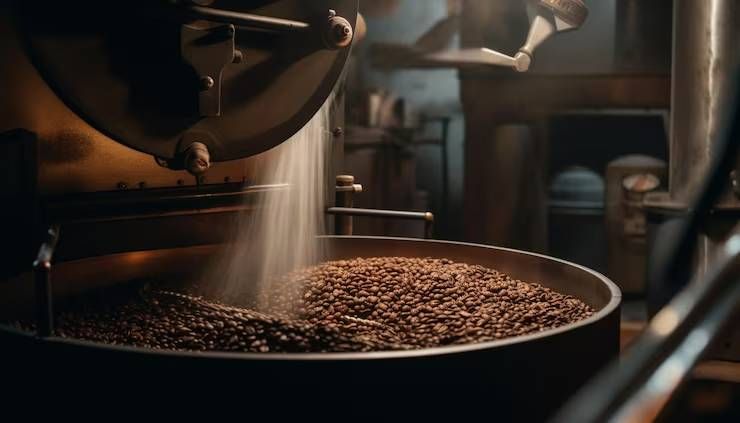
Coffee roasting machines are used by commercial roasteries, coffee shops, specialty coffee producers, beverage manufacturers, and industrial food-processing facilities. Their capacity ranges from small countertop equipment for experimentation to large production systems capable of processing substantial quantities of coffee.
Modern machines may use gas burners, electric heating elements, or other heating technologies. Many also include temperature sensors, digital controls, programmable roasting profiles, and integrated cooling systems. These features help operators repeat roasting conditions and maintain consistent results across batches.
As demand for specialty coffee and traceable coffee production grows, roasting equipment has become an important investment for businesses seeking greater control over flavor development, production planning, and quality management.
Importance
Consistent Coffee Quality
Consistency is a major objective in coffee roasting. Variations in heat application, airflow, batch size, and roasting time can produce noticeable differences in flavor. A well-designed roasting machine allows operators to monitor and adjust these variables throughout the process.
Digital temperature readings and programmable controls can help reproduce established roasting profiles. However, consistency also depends on green bean quality, machine calibration, operator experience, and environmental conditions.
Flavor Development and Roasting Control
Roasting changes the chemical composition of coffee beans and creates many of the compounds responsible for their characteristic aroma and flavor. Operators use roasting profiles to control how quickly beans heat and how long they remain at particular stages.
Important variables include bean temperature, environmental temperature, airflow, drum speed, and total roasting time. Experienced roasters use these measurements alongside bean color, aroma, sound, and tasting results to assess the final product.
Production Efficiency
Commercial roasting machines help businesses process coffee in controlled batches. Depending on their design, they can reduce manual handling, improve production scheduling, and simplify the transition between different coffee varieties.
Larger facilities may use automated weighing, bean loading, roasting, cooling, and packaging equipment. Integrating these processes can improve workflow and help production teams manage demand more effectively.
Supporting Specialty Coffee Businesses
Specialty coffee producers often work with beans from different regions, farms, elevations, and processing methods. Each lot may respond differently to heat, making adjustable roasting controls particularly useful.
Smaller machines allow coffee shops and independent roasters to experiment with limited batches. Larger systems support regular production for cafés, retail distribution, hospitality businesses, and other commercial customers.
Recent Updates
Digital Roasting Profiles
Digital controls have become a common feature of many modern roasting systems. Depending on the model, software may record temperature curves, roasting duration, airflow settings, and other operating data.
These records help operators compare batches and identify changes that affect flavor. Some systems allow users to save profiles for particular bean varieties and repeat them during later production runs.
Nevertheless, a saved profile does not guarantee identical results. Differences in green bean moisture, ambient temperature, machine condition, and batch size can require adjustments.
Automation and Data Monitoring
Automation is increasingly used to simplify repetitive roasting tasks. Depending on the equipment, automated functions may include temperature regulation, burner control, timed stages, cooling cycles, and batch records.
More advanced systems can connect roasting data with production management software. Such integration can help businesses track batch histories, plan output, and identify process variations.
The availability of these features differs among manufacturers and machine categories. Buyers should check whether a model supports the required controls and software integrations rather than assuming every machine provides full automation.
Energy Efficiency and Heat Recovery
Energy consumption is an important consideration in commercial roasting because machines require heat for bean roasting and may also operate exhaust, ventilation, and afterburner systems.
Manufacturers have developed different approaches to improving thermal efficiency, including better insulation, burner control, airflow management, and heat recovery in suitable installations. The practical benefits depend on the roasting system, operating schedule, fuel type, and facility design.
Businesses should compare overall energy requirements rather than evaluating a machine solely by its advertised heating efficiency.
Emissions and Smoke Management
Coffee roasting produces smoke, fine particles, odors, and volatile compounds. Depending on the roasting capacity and local requirements, facilities may need exhaust treatment, filtration, or thermal oxidation equipment.
Growing attention to air quality has made emissions management an important part of roastery planning. As of 2026, specific obligations depend on the jurisdiction, equipment, fuel, production volume, and facility location.
Roastery operators should review current environmental requirements before installation and confirm that ventilation and emissions-control systems are appropriate for the planned operation.
Laws or Policies
Factory and Workplace Safety
Commercial roasting involves hot surfaces, moving components, fuel systems, electrical equipment, and potentially combustible dust. Operators should establish safety procedures for startup, shutdown, cleaning, maintenance, and emergency situations.
In India, applicable workplace requirements may depend on the type of establishment, state rules, equipment installation, and the current occupational safety framework. Businesses should consult the relevant authorities and qualified safety professionals to determine their obligations.
Fire and Gas Safety
Gas-fired roasting machines require suitable fuel connections, ventilation, ignition controls, and protective systems. Electrical models also require appropriate electrical protection and installation practices.
Roasteries should maintain suitable fire-prevention procedures, keep combustible materials away from hot equipment, and ensure that staff understand emergency shutdown arrangements. Equipment should be installed and inspected according to manufacturer instructions and applicable local requirements.
Environmental Compliance
Roasting facilities may need to address smoke, particulate emissions, odors, fuel use, and waste disposal. Requirements vary according to location, production capacity, and the type of pollution-control equipment installed.
In India, businesses should check the relevant State Pollution Control Board and applicable Central Pollution Control Board guidance to establish whether consent, monitoring, or emissions-control measures are required.
Food Safety and Hygiene
Roasted coffee intended for human consumption should be handled, stored, and packaged under appropriate hygienic conditions. Facilities should protect beans from contamination, moisture, pests, and unsuitable storage environments.
Indian coffee businesses should determine the applicable Food Safety and Standards Authority of India requirements, including any relevant registration or licensing obligations. They should also verify current packaging and labeling requirements for their particular business model.
Tools and Resources
Drum Roasters
Drum roasters heat coffee beans inside a rotating metal drum. Heat transfer occurs through a combination of conduction, convection, and radiation, with the balance depending on the machine's design.
These machines are widely used by specialty and commercial roasters because they offer control over roasting development and can accommodate a range of batch sizes. They are available in gas-fired and electric configurations.
Fluid-Bed Roasters
Fluid-bed roasters use heated air to lift and circulate coffee beans during roasting. This design relies heavily on convective heat transfer and can provide relatively rapid, responsive roasting.
Fluid-bed equipment may suit businesses seeking a different roasting approach from traditional drum systems. Results depend on airflow, heating capacity, bean characteristics, and the machine's operating controls.
Sample Roasters
Sample roasters are compact machines designed for testing small quantities of green coffee. Coffee buyers and quality-control teams use them to compare bean lots, assess flavor potential, and develop preliminary roasting profiles.
They are particularly useful when evaluating several origins or processing methods before committing larger quantities to production.
Industrial Roasting Systems
Industrial coffee roasting systems are designed for higher output and may incorporate automated bean feeding, temperature monitoring, cooling, exhaust management, and production data collection.
When evaluating these systems, businesses should consider usable batch capacity, hourly throughput, energy requirements, cleaning access, emissions controls, and compatibility with downstream packaging equipment.
Quality-Control Equipment
A roasting machine is only one part of coffee quality management. Supporting tools may include precision scales, temperature probes, moisture meters, bean-color measurement devices, grinders, and brewing equipment.
Cupping bowls, tasting spoons, and standardized evaluation procedures help teams assess aroma, acidity, sweetness, bitterness, body, and aftertaste. These tools support decisions about roasting profiles and batch consistency.
Maintenance and Technical Documentation
Regular maintenance helps protect roasting performance and equipment reliability. Depending on the design, maintenance tasks may include cleaning chaff collectors, inspecting exhaust ducts, checking burners or heating elements, and examining moving components.
Manufacturers such as Probat, Giesen, and Diedrich publish information about different roasting equipment ranges. Operators should consult the documentation for their exact model and follow the recommended maintenance schedule.
FAQs
1. What is a coffee roasting machine?
A coffee roasting machine heats green coffee beans under controlled conditions to develop their color, aroma, and flavor. It allows operators to manage variables such as temperature, airflow, and roasting duration.
2. What are the main types of coffee roasting machines?
The main types include drum roasters, fluid-bed roasters, sample roasters, and industrial roasting systems. They differ in heating method, capacity, airflow design, automation, and intended application.
3. Are gas or electric coffee roasters better?
Neither option is universally better. Gas-fired machines may suit facilities with appropriate fuel infrastructure, while electric models can provide precise electronic control and may simplify certain installations. The best choice depends on capacity, energy availability, operating requirements, ventilation, and local regulations.
4. What capacity should a coffee roasting machine have?
Capacity depends on production volume, batch frequency, operating hours, and future growth plans. Small sample machines are suitable for testing beans, while commercial and industrial models support progressively larger production requirements. Buyers should distinguish nominal batch capacity from actual hourly output.
5. How does roasting temperature affect coffee flavor?
Temperature influences the speed of chemical reactions and the development of aroma and flavor compounds. However, flavor cannot be predicted from temperature alone. Roasting duration, airflow, bean density, moisture, and the complete roasting profile also play important roles.
6. How often should a coffee roasting machine be cleaned?
Cleaning frequency depends on usage, machine design, and the manufacturer's recommendations. Chaff collection areas and other locations where combustible material accumulates require particular attention. Exhaust ducts and emissions-control equipment should also be inspected and maintained appropriately.
7. Do coffee roasting machines require special ventilation?
Most commercial roasting operations require suitable ventilation and exhaust management. The system must account for heat, smoke, odors, and combustion gases where applicable. Requirements depend on the machine, facility, fuel type, and local regulations.
8. What should businesses consider before selecting a roaster?
Important factors include batch capacity, expected output, heating method, energy consumption, temperature control, airflow, cleaning requirements, emissions management, operator training, and technical support. Businesses should also consider available space and compatibility with weighing, cooling, grinding, and packaging equipment.
Conclusion
Coffee roasting machines play a central role in transforming green coffee beans into a finished product with defined flavor and aroma characteristics. From compact sample roasters to large industrial systems, the available equipment supports different production volumes and roasting approaches.
Digital controls, programmable profiles, automation, and improved energy management are expanding the capabilities of modern roasting equipment. At the same time, consistent results depend on suitable green beans, accurate process control, skilled operators, and routine maintenance.