
Modern manufacturing depends on machine tools capable of producing accurate, repeatable, and high-quality components. Among the most widely used equipment in precision machining are drilling and milling machines, both of which play essential roles in shaping materials for industries ranging from automotive and aerospace to medical devices and industrial manufacturing.
As product designs become more complex and production tolerances become increasingly stringent, these machines continue evolving through improved mechanical engineering, computer control, and advanced tooling technologies. Their versatility allows manufacturers to produce everything from simple holes to intricate three-dimensional features with remarkable consistency.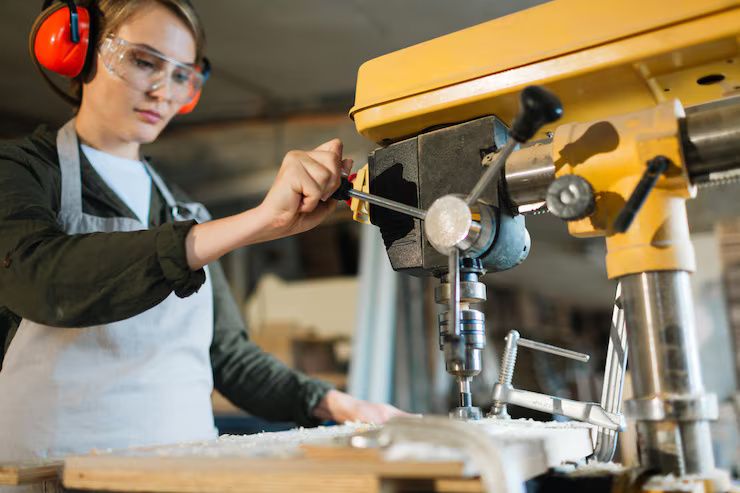
Understanding how drilling and milling machines operate helps engineers, technicians, students, and manufacturing professionals appreciate their importance within modern production systems. Each machine performs specialized operations, yet together they form the backbone of precision machining across countless industrial sectors.
Precision Machining Relies on Specialized Machine Tools
Precision machining involves removing material in a controlled manner to create components that meet exact dimensional specifications. Achieving consistent accuracy requires machines capable of maintaining stable cutting conditions while minimizing vibration and positioning errors.
Drilling machines primarily create round holes with precise diameters and depths, while milling machines remove material using rotating cutting tools that produce flat surfaces, slots, contours, pockets, and complex geometries.
Although their primary functions differ, both machines contribute to manufacturing workflows where dimensional accuracy, surface finish, and repeatability are critical quality requirements.
Drilling Machines and Their Primary Functions
Drilling machines are designed to produce accurately positioned holes in a wide variety of materials, including metals, plastics, composites, and engineered materials.
The cutting process occurs as a rotating drill bit advances into the workpiece while controlled feed mechanisms regulate cutting depth and speed. Modern drilling equipment supports operations beyond simple hole creation, making it suitable for multiple manufacturing tasks.
Common drilling operations include:
- Hole drilling
- Reaming
- Tapping
- Counterboring
- Countersinking
- Spot drilling
- Deep-hole drilling
Industrial drilling machines range from manually operated bench models to fully automated computer-controlled systems capable of producing hundreds of identical components with consistent precision.
Milling Machines Create Complex Component Geometry
Unlike drilling machines, milling equipment uses rotating multi-edge cutting tools to remove material from different directions. This capability allows manufacturers to produce complex shapes that would be difficult or impossible using drilling alone.
Milling machines perform numerous machining operations, including surface machining, slot cutting, contour generation, pocket machining, chamfering, and profile finishing.
The movement of the cutting tool and worktable enables precise material removal across multiple axes, allowing highly detailed components to be manufactured with excellent dimensional accuracy.
Modern machining centers frequently combine several milling operations into a single setup, reducing production time while improving overall consistency.
Key Components That Influence Machining Accuracy
The performance of drilling and milling machines depends on the precision of their mechanical assemblies and control systems.
Several critical components work together to ensure accurate machining:
- Machine base and frame
- Spindle assembly
- Worktable
- Linear guideways
- Ball screws
- Feed mechanisms
- Tool holders
- Coolant systems
- Digital control units
- Measurement systems
High structural rigidity minimizes vibration during cutting, while precision guideways and motion systems maintain accurate positioning throughout the machining process.
Proper machine alignment and maintenance also play significant roles in sustaining machining accuracy over extended production cycles.
CNC Technology Has Expanded Machining Capabilities
Computer Numerical Control (CNC) technology has transformed drilling and milling operations by allowing machines to execute programmed machining sequences with exceptional precision.
CNC systems coordinate spindle speed, feed rate, tool movement, and cutting paths automatically. This level of control improves repeatability while reducing manual intervention during production.
Manufacturers can also simulate machining programs before production begins, helping identify potential collisions or machining errors before actual material is processed.
The integration of automation has made CNC drilling and milling machines essential for industries requiring complex components with consistent dimensional quality.
Material Selection Influences Machining Performance
Different materials respond differently during machining, making cutting parameter selection an important part of the manufacturing process.
Steel and stainless steel require tooling capable of handling higher cutting forces, while aluminum allows faster machining speeds because of its lower hardness. Titanium and nickel-based alloys demand carefully controlled cutting conditions due to their strength and heat generation characteristics.
Engineered plastics, composites, and specialty materials also require appropriate cutting tools and machining strategies to achieve smooth surface finishes while minimizing material damage.
Selecting suitable tooling, spindle speed, feed rate, and coolant application helps improve machining quality across diverse materials.
Industrial Applications Across Multiple Sectors
Drilling and milling machines support manufacturing operations in nearly every industrial sector.
Typical applications include:
| Industry | Common Machined Components |
|---|---|
| Automotive | Engine blocks, transmission housings, brake components |
| Aerospace | Structural brackets, turbine components, precision assemblies |
| Medical Devices | Surgical instruments, implant components, diagnostic equipment |
| Industrial Manufacturing | Machine frames, tooling, production fixtures |
| Energy | Pump housings, valve bodies, compressor components |
These industries depend on precision machining to manufacture components that must meet demanding performance and safety requirements.
Best Practices for Efficient Machining
Consistent machining quality depends not only on machine capability but also on disciplined manufacturing practices.
Effective machining operations typically include proper tool selection, optimized cutting parameters, routine machine calibration, preventive maintenance, and continuous inspection throughout production.
Coolant management also contributes significantly by reducing cutting temperatures, extending tool life, and improving surface finish.
Regular monitoring of spindle condition, machine alignment, and cutting tool wear helps maintain machining accuracy while reducing unexpected production interruptions.
Emerging Developments in Precision Machining
Manufacturing technologies continue advancing alongside improvements in digital engineering and industrial automation.
Modern drilling and milling machines increasingly incorporate intelligent monitoring systems capable of tracking spindle performance, vibration levels, tool wear, and machining conditions in real time. These capabilities support predictive maintenance while improving production efficiency.
Advanced software, digital twins, automated tool changers, and integrated quality measurement systems further enhance machining accuracy and production flexibility, particularly in high-volume manufacturing environments.
Conclusion
Drilling and milling machines remain fundamental to precision machining because they provide the accuracy, flexibility, and repeatability required for modern manufacturing. Their ability to produce reliable components across numerous industries makes them indispensable within today's production systems.
As machining technology continues to evolve through automation, intelligent control systems, and improved manufacturing practices, these machines will remain central to producing increasingly sophisticated products with the precision demanded by modern industry.