
Heating is one of the biggest energy expenses in industrial operations, whether it's for processing food, drying materials, or maintaining precise temperatures in a chemical plant. For decades, factories relied heavily on gas boilers and electric heaters to get the job done. But a quieter shift has been happening across manufacturing: more facilities are turning to industrial heat pumps.
Unlike traditional heating systems that generate heat directly, heat pumps move existing heat from one place to another, which makes them dramatically more efficient. In this article, we'll explain how industrial heat pumps work, the technologies behind them, their energy efficiency advantages, and where they're being used across manufacturing today.
What Is an Industrial Heat Pump?
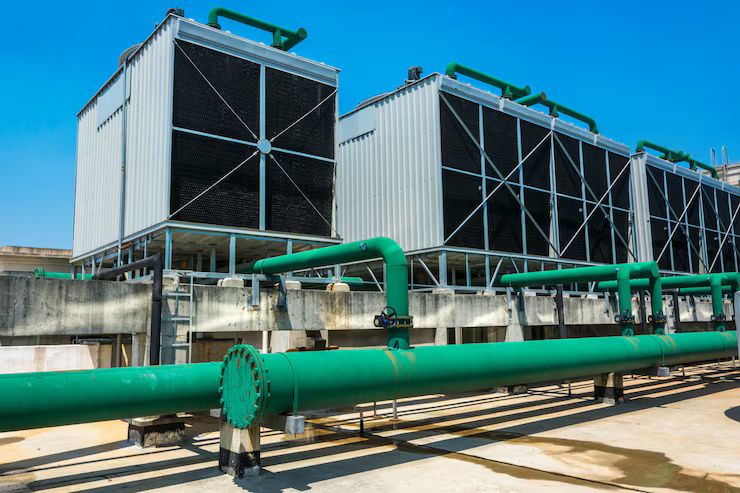
An industrial heat pump is a large-scale system that extracts heat from a lower-temperature source, such as ambient air, wastewater, or exhaust gases, and transfers it to a higher-temperature application. Instead of burning fuel to create heat, it essentially recycles heat that already exists in the surrounding environment.
This might sound similar to the heat pumps used in homes, and the underlying principle is the same. The difference is scale. Industrial units are engineered to handle much higher temperatures, larger volumes, and continuous operation demands found in manufacturing environments.
Common heat sources used by industrial heat pumps include:
- Ambient outdoor air
- Industrial wastewater
- Exhaust or flue gases
- Geothermal energy
- Waste heat from other manufacturing processes
How Do Industrial Heat Pumps Work?
At the core of every heat pump is a refrigeration cycle, the same basic principle used in refrigerators, just running in reverse to produce heat instead of cooling.
The Basic Cycle
- Heat absorption – A refrigerant fluid absorbs low-grade heat from the source, causing it to evaporate into a gas
- Compression – A compressor raises the pressure and temperature of that gas significantly
- Heat release – The now hot, high-pressure gas passes through a condenser, releasing usable heat to the target process or facility
- Expansion – The refrigerant passes through an expansion valve, cooling back down before starting the cycle again
This continuous loop allows the system to deliver far more heat energy than the electrical energy it consumes, which is where the efficiency advantage comes from.
Coefficient of Performance (COP)
One of the most important metrics for evaluating a heat pump is its Coefficient of Performance, or COP. This measures how much heat output is produced per unit of electricity consumed. A COP of 3, for example, means the system delivers three units of heat for every one unit of electrical energy used. Industrial heat pumps often achieve COP values between 3 and 6, depending on the technology and application.
Types of Industrial Heat Pump Technologies
Different industrial processes require different heat pump designs, depending on temperature needs and available heat sources.
1. Air-Source Heat Pumps
These systems extract heat from outdoor air. They're relatively simple to install and are commonly used in facilities where ambient air provides a consistent enough heat source year-round.
2. Water-Source Heat Pumps
Water-source systems draw heat from a water body, industrial wastewater, or a cooling tower loop. Because water holds heat more efficiently than air, these systems often achieve higher performance levels.
3. Ground-Source (Geothermal) Heat Pumps
These systems pull heat from underground, where temperatures remain stable throughout the year. While installation involves more upfront work, geothermal systems offer consistent performance regardless of outdoor weather conditions.
4. High-Temperature Heat Pumps
Standard heat pumps typically top out around 80 to 90 degrees Celsius. High-temperature industrial heat pumps, however, are engineered to reach outputs of 100 to 160 degrees Celsius or higher, making them suitable for demanding processes like pasteurization, sterilization, and certain chemical reactions.
5. Vapor Compression Heat Pumps
This is the most common technology used industrially, relying on mechanical compression to move heat through the refrigeration cycle described earlier.
6. Absorption Heat Pumps
Instead of a mechanical compressor, absorption heat pumps use a heat-driven process involving a refrigerant and absorbent fluid pair. These are particularly useful in facilities that already generate excess heat or steam, which can power the absorption cycle directly.
Energy Efficiency Benefits
The biggest reason industrial facilities are adopting heat pumps comes down to energy performance.
- Higher efficiency than combustion-based heating – Since heat pumps move heat rather than generate it from fuel, they typically consume far less primary energy for the same heating output
- Reduced reliance on fossil fuels – Many industrial heat pumps run on electricity, allowing facilities to shift away from gas or oil-based heating systems
- Lower operational energy demand – Because of high COP values, facilities often see a noticeable drop in energy consumption once a heat pump system replaces older heating equipment
- Waste heat recovery – Many systems are designed to capture heat that would otherwise be lost from industrial processes, turning it into a usable energy resource instead
A Practical Example
Consider a food processing plant that previously used a gas boiler to heat water for pasteurization. By installing a high-temperature heat pump that recovers waste heat from refrigeration systems elsewhere in the facility, the plant can meet its heating needs while significantly reducing the energy required to generate that heat from scratch.
Industrial Applications of Heat Pumps
Industrial heat pumps are used across a wide range of sectors, each with different temperature and process requirements.
Food and Beverage Processing
Used for pasteurization, drying, and cleaning processes, where consistent, controlled heat is essential for food safety and quality.
Chemical Manufacturing
Heat pumps support various chemical reactions and distillation processes that require precise, stable temperatures.
Textile Industry
Used in dyeing, drying, and finishing processes, where maintaining consistent heat directly affects fabric quality.
Pulp and Paper Manufacturing
Heat pumps assist with drying processes, which are traditionally among the most energy-intensive stages of paper production.
District Heating Systems
Some industrial facilities integrate heat pumps into larger district heating networks, supplying recovered or generated heat to nearby buildings and facilities.
Pharmaceutical Manufacturing
Precise temperature control supported by heat pump systems helps maintain the strict environmental conditions required during drug production.
Environmental and Regulatory Considerations
Beyond energy savings, industrial heat pumps align well with sustainability goals many manufacturers are now working toward.
- Lower carbon emissions compared to fossil fuel-based heating systems
- Reduced dependence on natural gas, which can also improve energy security for facilities
- Compliance support for tightening environmental regulations across many regions
- Potential eligibility for government incentives or rebate programs aimed at industrial decarbonization
Challenges to Consider
While the benefits are significant, industrial heat pumps aren't without their limitations.
- Upfront investment can be substantial, particularly for high-temperature or large-capacity systems
- Retrofitting existing facilities may require significant engineering and infrastructure changes
- Performance can vary depending on the temperature and consistency of the available heat source
- Skilled technicians are needed for installation, calibration, and ongoing maintenance
How to Evaluate a Heat Pump for Industrial Use
A few factors matter most when assessing whether a heat pump fits a specific industrial application.
1. Required Temperature Range
Match the system type to the process temperature needed, since standard and high-temperature heat pumps serve very different applications.
2. Available Heat Source
Identify what waste heat or ambient heat sources exist on-site, since this directly determines which heat pump technology will perform best.
3. Facility Energy Profile
Understanding current energy consumption patterns helps estimate the potential efficiency gains and payback period of switching to a heat pump system.
4. Integration with Existing Systems
Consider how easily the heat pump can integrate with current heating, cooling, or process equipment without requiring a complete overhaul.
5. Long-Term Maintenance Needs
Evaluate the availability of technical support and replacement components to ensure reliable long-term operation.
Final Thoughts
Industrial heat pumps represent one of the more practical shifts happening in manufacturing energy use today. By moving heat instead of generating it from fuel, these systems offer a genuinely efficient alternative to traditional industrial heating equipment.
As energy prices fluctuate and sustainability expectations continue rising, more manufacturers across food processing, chemicals, textiles, and beyond are likely to explore heat pump technology as part of their broader energy strategy. Understanding how these systems work and where they fit best is the first step toward making an informed decision for any industrial heating application.