
Industrial chillers play an important role in maintaining controlled temperatures for manufacturing processes, machinery, storage environments, and large facilities.
A well-managed chiller system can maintain stable cooling conditions while using energy efficiently. Understanding basic industrial chiller tips can help operators recognize performance issues and improve day-to-day operation.
Better chiller performance depends on several factors, including water temperature, refrigerant conditions, heat-transfer surfaces, airflow or water flow, controls, and operating schedules. Regular monitoring is therefore important for maintaining reliable and consistent cooling performance.
Context
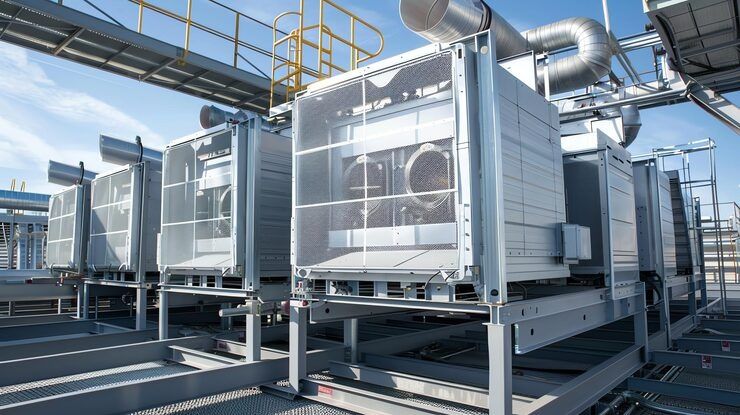
An industrial chiller is a refrigeration system designed to remove heat from a process or building environment. Depending on the application, the system may use chilled water, glycol mixtures, air, or another circulating fluid to transfer heat away from equipment or processes.
Industrial chillers are commonly used in manufacturing, plastics processing, pharmaceuticals, food production, chemical processing, data facilities, and other temperature-sensitive environments. The basic refrigeration cycle involves an evaporator, compressor, condenser, and expansion device.
Performance is influenced by both the chiller itself and the surrounding system. Pumps, cooling towers, filters, piping, controls, heat exchangers, and operating conditions can all affect overall efficiency.
Useful industrial chiller tips include:
- Keep chilled-water flow within the manufacturer's specified range.
- Monitor entering and leaving water temperatures.
- Keep condenser surfaces clean and unobstructed.
- Check for unusual vibration, noise, or temperature changes.
- Record operating data regularly to identify gradual performance changes.
- Avoid unnecessary starts and stops when operating conditions do not require them.
A simple performance record can include cooling load, entering water temperature, leaving water temperature, condenser temperature, compressor power, and operating hours.
Importance
Chiller performance matters because cooling equipment can represent a significant portion of industrial electricity use. Poor heat transfer, incorrect flow rates, fouled surfaces, unsuitable temperature settings, or poorly coordinated controls can increase energy consumption and reduce cooling capacity.
Stable performance is particularly important for processes where temperature changes can affect product quality, equipment operation, or production consistency.
Operators can improve system performance by paying attention to the relationship between cooling demand and chiller operation. Running equipment at unnecessarily high capacity can increase energy use, while insufficient capacity can cause process temperatures to rise.
| Performance area | What to monitor | Possible indication |
|---|---|---|
| Chilled-water temperature | Entering and leaving temperatures | Cooling-load changes |
| Condenser temperature | Entering and leaving conditions | Heat-rejection performance |
| Flow rate | Water or fluid circulation | Pump or restriction issues |
| Compressor power | Electrical consumption | Load and efficiency changes |
| Pressure | Refrigerant operating pressures | Refrigeration-cycle changes |
| Vibration | Compressor and pump behavior | Mechanical abnormalities |
Regular trend analysis is often more useful than looking at a single measurement. A gradual increase in compressor power or a growing temperature difference across a heat exchanger can provide an early indication that investigation is needed.
Recent Updates
Recent developments in industrial chiller technology increasingly focus on energy efficiency, advanced controls, lower-impact refrigerants, and system-level monitoring.
Variable-speed compressors and pumps can adjust capacity according to cooling demand. Instead of operating continuously at a fixed speed, these components can respond to changing loads when the system design and controls support variable operation.
Digital monitoring is another important development. Modern control systems can collect temperature, pressure, flow, power, and operating-status information. Historical data can then help operators identify performance trends and unusual conditions.
Refrigerant selection is also receiving increased attention. In the United States, EPA technology-transition rules under the American Innovation and Manufacturing Act include restrictions on higher-GWP refrigerants for several chiller categories. For example, the current EPA schedule lists a GWP limit of 700 for comfort-cooling chillers beginning January 1, 2025, and for certain industrial-process chillers with exiting fluid above −30°C beginning January 1, 2026.
For industrial facilities, this means future equipment planning should consider refrigerant requirements alongside capacity, temperature range, efficiency, controls, and operating conditions.
Other developments include:
- Automated fault detection and diagnostics
- Improved variable-speed drive technology
- Heat-recovery applications
- More detailed energy-performance measurement
- Integration with building or industrial automation systems
- Greater attention to refrigerant leakage reduction
In India, the Bureau of Energy Efficiency continues to publish material covering cooling efficiency, energy conservation, and chiller performance. Its current resources include the Energy Conservation & Sustainable Building Code 2024 and district-cooling guidance.
Laws or Policies
Chiller regulations depend on the country, application, refrigerant, capacity, and type of facility. Operators should therefore check the rules applicable to their location rather than assuming that one standard applies everywhere.
In India, BEE materials reference minimum chiller efficiency requirements under energy-efficiency and building-code frameworks. Earlier ECBC guidance specifies performance requirements using measures such as coefficient of performance (COP) and integrated part-load value (IPLV).
BEE's chiller star-rating framework also references testing under IS 16590 and includes measurements such as cooling capacity, power consumption, COP at different load levels, and Indian Seasonal Energy Efficiency Ratio (ISEER).
The United States has a different regulatory framework. EPA's HFC technology-transition requirements establish refrigerant GWP limits and compliance dates for specific equipment categories. These requirements should be reviewed when selecting or modifying equipment in the U.S.
Important areas to review include:
- Refrigerant regulations
- Energy-efficiency requirements
- Electrical and mechanical safety requirements
- Pressure-equipment requirements
- Environmental reporting requirements
- Local building and industrial regulations
Regulations can change, so the applicable government authority or current technical standard should be checked before making equipment or refrigerant decisions.
Tools and Resources
Several resources can help operators understand and monitor industrial chiller performance.
BEE provides information on industrial energy efficiency, cooling, energy conservation, and related standards in India. Its website also contains resources such as the Energy Conservation & Sustainable Building Code 2024 and district-cooling materials.
For U.S. facilities, the U.S. Environmental Protection Agency provides current information on HFC restrictions, technology transitions, and refrigerant management.
Useful operational tools include:
- Chiller performance logs
- Temperature and pressure monitoring sheets
- Energy-metering dashboards
- Cooling-load calculation worksheets
- Manufacturer operating manuals
- Refrigerant documentation
- Preventive inspection checklists
- Trend-analysis spreadsheets
A basic performance calculation can compare electrical energy consumption with cooling output. Common engineering indicators include kW per ton of refrigeration, COP, and IPLV or seasonal efficiency measures where applicable.
Measurements should always be taken under clearly defined operating conditions because weather, cooling load, condenser-water temperature, and system configuration can influence results.
FAQs
What is the most important industrial chiller tip?
Maintaining appropriate water flow and temperature conditions is one of the most important practices. Operators should also monitor trends in power consumption, temperatures, pressures, and cooling performance.
How can chiller efficiency be improved?
Efficiency can often be improved through clean heat-transfer surfaces, appropriate flow rates, suitable temperature settings, effective controls, and operation that matches actual cooling demand.
Why is condenser maintenance important?
The condenser transfers heat away from the refrigeration cycle. Dirt, scale, fouling, or inadequate airflow or water flow can reduce heat transfer and increase the workload on the refrigeration system.
How often should chiller performance be monitored?
Critical operating measurements can be recorded regularly, while more detailed performance reviews can be performed periodically. The appropriate frequency depends on the equipment, process, operating environment, and manufacturer's guidance.
What should be checked when chiller performance declines?
Start by reviewing temperatures, flow rates, pressures, heat-transfer surfaces, filters, pumps, condenser conditions, controls, and refrigerant-related indicators. Significant abnormalities should be investigated by appropriately qualified personnel.
Conclusion
Good industrial chiller performance depends on more than the refrigeration unit alone. Stable temperatures, appropriate flow, clean heat-transfer surfaces, effective controls, and regular monitoring all contribute to dependable operation.
Recent developments are placing greater emphasis on variable-speed operation, digital monitoring, energy efficiency, and refrigerant selection. Understanding applicable regulations and maintaining accurate operating records can help industrial facilities manage their cooling systems more effectively.
A practical approach is to establish normal operating ranges and track important measurements over time. This makes it easier to identify gradual changes before they become major operational problems.
Facilities should also review current regulatory requirements and technical guidance for their location and application. Manufacturer documentation and applicable engineering standards should remain the primary references for equipment-specific operating limits and maintenance procedures.