
Industrial elevators are essential material handling systems designed to transport goods, raw materials, equipment, and bulk products vertically within manufacturing facilities, warehouses, processing plants, and distribution centers. Unlike passenger elevators, industrial elevators are engineered to handle heavy loads, operate continuously, and withstand demanding industrial environments while maintaining safety and operational efficiency.
Modern industrial elevators incorporate advanced lifting technologies, intelligent control systems, high-strength mechanical components, and automated monitoring capabilities. These systems improve productivity by reducing manual material handling, optimizing floor space, and supporting efficient movement between multiple production levels.
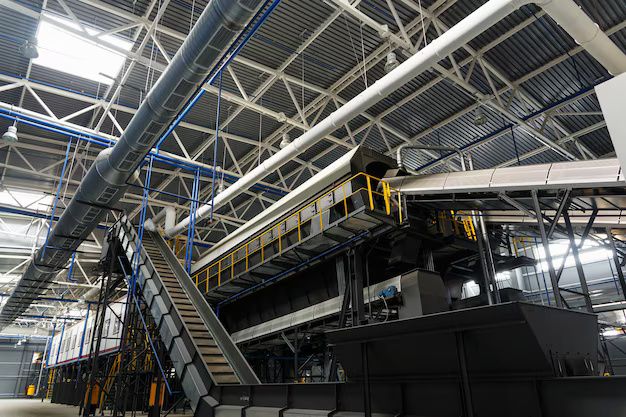
As manufacturing facilities continue adopting Industry 4.0 and automated logistics, industrial elevators have become smarter, safer, and more energy-efficient. This guide explains how industrial elevators work, the different lifting technologies available, vertical material handling systems, and their industrial applications.
What Are Industrial Elevators?
Industrial elevators are heavy-duty vertical transportation systems designed to move materials, machinery, pallets, containers, and industrial products between different levels of a facility. They are commonly installed in factories, warehouses, mining operations, food processing plants, pharmaceutical facilities, and logistics centers.
Unlike conventional elevators, industrial elevators are specifically engineered for high load capacities, continuous operation, and demanding industrial conditions.
A typical industrial elevator system consists of several important components:
- Elevator platform or cabin
- Hoisting mechanism
- Guide rails
- Drive motor
- Counterweight (where applicable)
- Steel wire ropes or lifting chains
- Control panel
- Safety braking system
- Position sensors
Together, these components provide reliable and controlled vertical transportation for industrial operations.
Why Industrial Elevators Are Important
Modern manufacturing facilities often operate across multiple floors where raw materials, work-in-progress products, and finished goods must move efficiently between production stages.
Industrial elevators reduce manual lifting, improve workflow, and enhance workplace safety while increasing overall productivity.
Some important advantages include:
- Efficient vertical transportation
- Higher material handling capacity
- Improved workplace safety
- Better space utilization
- Continuous production support
These benefits make industrial elevators a critical part of modern industrial infrastructure.
Types of Industrial Elevators
Different industries require different elevator designs depending on load capacity, material type, and operational requirements.
Freight Elevators
Freight elevators transport pallets, machinery, containers, and heavy industrial goods between floors.
They are widely used in factories, warehouses, and distribution centers because of their high load capacities and durable construction.
Goods Lifts
Goods lifts are compact vertical lifting systems designed exclusively for transporting materials rather than personnel.
They are commonly installed in manufacturing plants, restaurants, retail facilities, and storage buildings.
Bucket Elevators
Bucket elevators transport bulk materials vertically using a continuous series of buckets attached to belts or chains.
They are widely used for grains, cement, fertilizers, minerals, coal, and powders.
Hydraulic Industrial Elevators
Hydraulic elevators use pressurized hydraulic fluid to raise and lower heavy platforms.
They are suitable for medium-rise industrial applications requiring smooth lifting and precise positioning.
Traction Elevators
Traction elevators use electric motors, pulleys, and steel ropes to lift loads efficiently.
They are commonly installed in multi-story industrial buildings where higher lifting speeds are required.
Continuous Vertical Conveyors
Continuous vertical conveyors move products between different levels without stopping, making them ideal for automated production lines and distribution centers.
How Industrial Elevators Work
Although elevator designs vary, most industrial lifting systems follow a similar operating sequence.
Material Loading
Materials are placed onto the elevator platform manually or through automated conveyor systems.
Proper load distribution ensures safe operation.
Lift Activation
The control system receives a command to move the platform to the required level.
Modern systems use programmable controllers for precise movement.
Vertical Transportation
The drive system lifts or lowers the platform using hydraulic cylinders, wire ropes, chains, or belts depending on the elevator design.
Guide rails maintain smooth and stable movement.
Material Unloading
Upon reaching the destination level, materials are unloaded manually or transferred automatically to conveyors or storage systems.
Return Cycle
The elevator returns to its starting position, ready for the next lifting operation.
Lifting Technologies
Industrial elevators employ several lifting technologies depending on application requirements.
Hydraulic Lifting
Hydraulic systems generate lifting force using pressurized fluid.
These elevators provide excellent lifting power and smooth operation for heavy loads.
Traction Drive Technology
Electric motors rotate drive sheaves that move steel wire ropes connected to the elevator platform.
This technology is widely used for higher lifting heights and faster operation.
Chain Drive Systems
Chain-driven elevators use heavy-duty chains to lift platforms or buckets.
They are commonly used in material handling and bulk processing industries.
Belt Drive Systems
Reinforced belts transport bulk materials or packaged products vertically.
Bucket elevators frequently use belt drive systems for continuous material movement.
Vertical Material Handling Systems
Industrial elevators are often integrated with broader material handling systems.
Conveyor Integration
Elevators connect with conveyor systems to create automated product flow between different production levels.
Automated Storage Systems
Vertical elevators transport materials into automated storage and retrieval systems (ASRS), improving warehouse efficiency.
Robotic Material Handling
Industrial robots load and unload elevator platforms, reducing manual handling while improving productivity.
Smart Warehouse Systems
Modern logistics facilities integrate elevators with warehouse management software to optimize inventory movement.
Comparison of Common Industrial Elevators
Different industrial elevators are designed for specialized applications.
| Elevator Type | Primary Function | Typical Applications | Lifting Technology |
|---|---|---|---|
| Freight Elevator | Heavy material transport | Warehouses, factories | Traction or hydraulic |
| Goods Lift | General material movement | Manufacturing, storage | Hydraulic or traction |
| Bucket Elevator | Bulk material transport | Agriculture, mining, cement | Belt or chain |
| Hydraulic Elevator | Heavy lifting | Manufacturing plants | Hydraulic |
| Traction Elevator | Multi-floor transport | Industrial buildings | Electric traction |
| Continuous Vertical Conveyor | Continuous product flow | Packaging, logistics | Motor-driven conveyor |
Automation Technologies in Industrial Elevators
Modern industrial elevators increasingly incorporate intelligent automation.
Programmable Logic Controllers
Programmable Logic Controllers (PLCs) coordinate elevator movement, conveyors, safety devices, and production equipment.
This improves efficiency while minimizing manual operation.
Smart Sensors
Sensors continuously monitor load weight, platform position, motor performance, vibration, and operating conditions.
Real-time monitoring improves equipment reliability.
Variable Frequency Drives
Variable Frequency Drives (VFDs) regulate motor speed, providing smoother acceleration, reduced energy consumption, and precise positioning.
Industrial Internet of Things
IIoT platforms collect operational data from elevators, enabling remote monitoring, predictive maintenance, and performance analysis.
Industrial Applications
Industrial elevators support numerous industries through efficient vertical material transportation.
Manufacturing Industry
Factories use industrial elevators to transport raw materials, components, and finished products between production levels.
Warehousing and Distribution
Distribution centers use freight elevators and continuous vertical conveyors for inventory movement and order fulfillment.
Food Processing
Food processing facilities transport ingredients, packaged products, and bulk materials safely between processing areas.
Pharmaceutical Manufacturing
Pharmaceutical plants use enclosed goods lifts for hygienic movement of materials, packaging, and production equipment.
Mining Industry
Mining operations use bucket elevators and heavy-duty lifting systems to transport minerals, ores, and processed materials.
Cement and Aggregate Production
Cement plants use bucket elevators to transport limestone, clinker, cement powder, and other bulk materials during production.
Benefits of Industrial Elevators
Modern industrial elevator systems provide numerous operational advantages.
Some important benefits include:
- Faster material transportation
- Increased production efficiency
- Improved worker safety
- Better utilization of vertical space
- Reduced manual handling
These advantages help manufacturers improve operational performance while supporting continuous production.
Challenges in Industrial Elevator Operations
Although industrial elevators are highly reliable, they require regular inspection and maintenance to ensure safe and efficient operation.
Heavy loads, continuous usage, component wear, improper loading, and environmental conditions can affect performance over time.
Routine maintenance, lubrication, inspection of lifting components, and regular safety testing help minimize downtime and extend equipment life.
Recent Developments (2024–2026)
Recent years have seen significant advances in industrial elevator technology.
Manufacturers are increasingly integrating artificial intelligence into elevator monitoring systems to optimize performance and predict maintenance requirements. Smart load management systems automatically balance loads and improve lifting efficiency while reducing mechanical stress.
Energy-efficient motors, regenerative drive systems, and compact machine-room-less designs have become more common, helping reduce electricity consumption and installation requirements. Wireless sensors and cloud-based monitoring platforms now provide real-time operational data, enabling faster diagnostics and improved maintenance planning.
Automation integration with warehouse management systems and robotic material handling equipment continues to improve productivity in manufacturing and logistics facilities.
Safety Standards and Industry Guidelines
Industrial elevators are designed and operated according to recognized machinery and workplace safety standards.
Important safety practices include:
- Overload protection systems
- Emergency braking mechanisms
- Door interlock systems
- Routine inspection and maintenance
- Emergency stop controls
Manufacturers generally design industrial elevators to comply with applicable international machinery safety standards. In India, installations also consider relevant Bureau of Indian Standards (BIS) requirements together with occupational safety regulations governing lifting equipment and material handling systems.
Tools and Resources
Several technologies support efficient industrial elevator operation and maintenance.
Common resources include:
- Elevator monitoring software
- Predictive maintenance platforms
- Load monitoring systems
- PLC programming software
- Equipment diagnostics tools
- Warehouse management systems
These tools help improve operational efficiency, equipment reliability, and maintenance planning.
Frequently Asked Questions
What are industrial elevators used for?
Industrial elevators transport heavy materials, pallets, equipment, and bulk products vertically within factories, warehouses, processing plants, and logistics facilities.
What is the difference between a freight elevator and a goods lift?
Both transport materials, but freight elevators generally have higher load capacities and are designed for larger industrial operations, while goods lifts are often used for smaller material handling tasks.
What is a bucket elevator?
A bucket elevator is a vertical conveyor that uses attached buckets to transport bulk materials such as grains, cement, fertilizers, minerals, and powders.
Why are industrial elevators important in manufacturing?
They improve material flow, reduce manual handling, increase worker safety, optimize floor space, and support continuous production.
Which industries commonly use industrial elevators?
Industrial elevators are widely used in manufacturing, warehousing, food processing, pharmaceuticals, mining, agriculture, cement production, logistics, and material handling operations.
Future Trends in Industrial Elevators
Industrial elevator technology continues to evolve through automation, digital connectivity, and energy-efficient engineering.
Future systems are expected to incorporate autonomous diagnostics, AI-driven traffic optimization, digital twins, and advanced predictive maintenance capabilities. Greater integration with collaborative robots, automated guided vehicles (AGVs), and warehouse automation platforms will further improve production efficiency and logistics performance.
As smart factories continue expanding, industrial elevators will remain a key component of integrated material handling systems, supporting safer, faster, and more intelligent vertical transportation across industrial facilities worldwide.
Conclusion
Industrial elevators have become indispensable for modern manufacturing and logistics by providing safe, reliable, and efficient vertical transportation of materials and products. Through advanced lifting technologies, intelligent automation, and integrated material handling systems, these elevators help improve productivity, optimize facility space, and enhance workplace safety.
As Industry 4.0 technologies continue to reshape industrial operations, industrial elevators will become even more connected, energy-efficient, and intelligent. Their integration with automated production systems and digital monitoring platforms will ensure they remain a vital part of modern industrial infrastructure for years to come.