
Industrial heat pumps are systems that transfer heat from a lower-temperature source to a higher-temperature location for use in industrial processes. They use electrical energy to move heat rather than generating all the required heat through direct fuel combustion. These systems are increasingly relevant to industries that need reliable heating for manufacturing, cleaning, drying, evaporation, and other thermal operations.
Heat pump technology has existed for decades, with applications in residential heating, commercial buildings, and industrial facilities. Industrial heat pumps differ from conventional domestic systems in their capacity, operating temperatures, system configuration, and integration with production equipment. They may recover heat from wastewater, exhaust streams, cooling systems, ambient air, or other available sources.
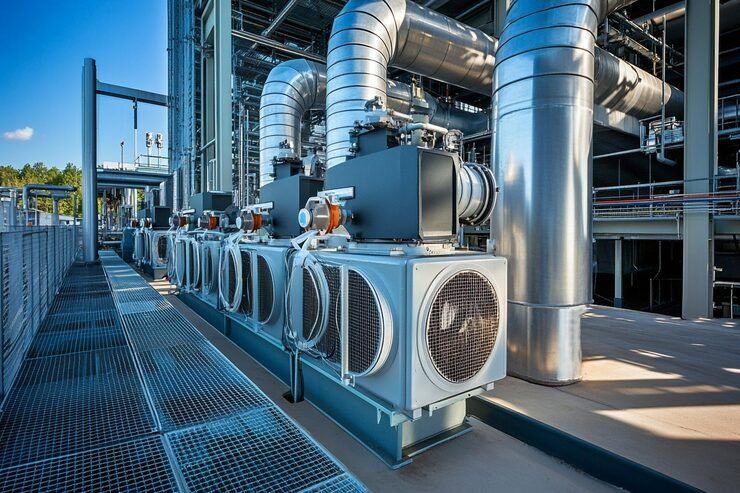
The basic operating principle involves a refrigerant or another suitable working fluid circulating through a closed or specialized thermodynamic cycle. The fluid absorbs heat at a lower temperature, is compressed to increase its pressure and temperature, releases heat to the required process, and then returns to a lower-pressure state. Electricity generally powers the compressor and associated equipment.
Main industrial heat pump technologies
Different heat pump technologies are designed for different heat sources, temperature requirements, and operating conditions.
Vapor-compression heat pumps: Use a compressor and refrigerant to transfer heat between two temperature levels. They are widely used in industrial heating and heat recovery.
High-temperature heat pumps: Designed to deliver heat at elevated temperatures for processes that require hotter water, steam, or other heating media.
Absorption heat pumps: Use a heat-driven thermodynamic cycle involving a refrigerant and an absorbent. Depending on the configuration, they can recover or upgrade heat using thermal energy.
Water-source heat pumps: Extract heat from water streams, cooling water, or other suitable water sources.
Air-source heat pumps: Transfer heat between ambient air and the industrial heating system, with performance influenced by outdoor conditions.
Heat recovery heat pumps: Capture otherwise unused heat from one process and transfer it to another process that requires heating.
The suitability of each type depends on the available heat source, required output temperature, operating hours, energy supply, and process design.
Main components of an industrial heat pump
A typical vapor-compression system includes several essential components. The evaporator absorbs heat from the source, while the compressor raises the working fluid's pressure and temperature. The condenser transfers heat to the process, and an expansion device reduces the fluid's pressure before the cycle begins again.
Additional equipment may include pumps, heat exchangers, control systems, sensors, filters, storage tanks, and safety devices. The overall system may also require piping, insulation, electrical controls, and connections to existing industrial heating or cooling infrastructure.
Importance
Industrial heat pumps matter because many manufacturing processes require heat at temperatures that can potentially be supplied by recovered energy or electrically driven heating systems. At the same time, industrial facilities often produce waste heat through refrigeration, cooling water, exhaust air, wastewater, and other operations. Recovering this heat can reduce the amount of additional energy needed to maintain production temperatures.
Industries such as food processing, chemicals, pharmaceuticals, paper production, textiles, and metal finishing use heat for different purposes. Heat pumps can support some of these requirements when the temperature range and process conditions are suitable. They can also complement boilers, electric heaters, and other thermal equipment rather than replacing them entirely.
Industrial applications of heat pumps
Industrial heat pumps can be integrated into a variety of processes.
Food and beverage processing: Heating cleaning water, supporting pasteurization stages, and providing hot water for production operations.
Chemical manufacturing: Supplying process heat or recovering energy from suitable cooling streams.
Pharmaceutical production: Supporting temperature-controlled washing, facility heating, and selected process operations.
Paper and pulp production: Providing heat for water heating, drying-related systems, and other suitable thermal requirements.
Textile manufacturing: Heating process water used in washing, dyeing, and finishing operations.
Industrial drying: Supplying heated air or another heat-transfer medium for compatible drying processes.
District heating: Upgrading heat from wastewater, industrial waste heat, or other sources for distribution through a heating network.
Not every process is suitable for heat pump integration. Some operations require temperatures that exceed the capabilities of available systems, while others involve corrosive materials, variable heat demand, or strict process conditions.
Benefits and practical limitations
Heat pumps can transfer more thermal energy than the electrical energy they consume because much of the delivered heat comes from the source. This relationship is commonly expressed through the coefficient of performance (COP), which compares useful heat output with energy input under specified conditions.
For example, a heat pump delivering 300 kilowatts of heat while consuming 100 kilowatts of electrical power has a heating COP of 3 under those operating conditions. Actual performance varies with source temperature, output temperature, equipment design, and auxiliary energy use.
Potential advantages include:
Recovery of heat that might otherwise be discarded.
Reduced dependence on direct fuel combustion for suitable heating processes.
Improved integration of heating and cooling operations.
Opportunities to reduce operational emissions when electricity has a lower emissions intensity than the displaced energy source.
More controlled delivery of heat in processes with stable temperature requirements.
However, industrial heat pumps also have limitations. High-temperature applications may require specialized equipment, and performance can decline when the temperature difference between the heat source and heat sink increases. Installation can involve changes to piping, electrical infrastructure, process controls, and production schedules.
Recent Updates
Industrial heat pump technology continues to develop as manufacturers and industrial operators explore electrification, heat recovery, and lower-emission production methods. Recent developments have focused on higher output temperatures, improved compressor designs, alternative refrigerants, and more effective integration with existing factory systems.
High-temperature heat pump development
High-temperature heat pumps are receiving increased attention because many industrial processes require heat above the range typically associated with conventional building heat pumps. Newer system designs aim to support higher-temperature hot water, thermal oil, and selected steam applications.
The achievable temperature depends on the specific technology and operating conditions. Some systems can supply heat at temperatures suitable for industrial hot-water processes, while specialized designs can reach higher ranges. Manufacturers must evaluate the complete process requirements rather than relying on a single maximum-temperature specification.
Refrigerants and system efficiency
Refrigerant selection is an important part of modern heat pump development. Manufacturers assess thermal performance, operating pressure, safety characteristics, environmental effects, and compatibility with system components.
Natural refrigerants, including ammonia, carbon dioxide, and certain hydrocarbons, are used in some industrial applications. Their suitability depends on the operating temperature, system configuration, and applicable safety requirements. Synthetic refrigerants are also used, although environmental regulations are influencing refrigerant selection in various markets.
Digital monitoring is another developing area. Sensors and control software can track operating temperatures, pressure, energy consumption, and equipment conditions. These measurements help operators evaluate system performance, identify irregularities, and plan maintenance.
Integration with industrial energy systems
Industrial heat pumps are increasingly considered alongside thermal storage, waste heat recovery, electric boilers, and other heating technologies. Thermal storage can help balance differences between the availability of recovered heat and the timing of production demand.
Some facilities also examine whether heat pumps can operate with existing cooling systems. A single industrial process may need cooling in one area and heating in another, creating opportunities to transfer energy between the two. The feasibility depends on the timing, temperature, and quantity of heat available.
Laws or Policies
Industrial heat pump projects are influenced by energy efficiency regulations, electrical safety requirements, environmental legislation, refrigerant rules, and industrial workplace standards. The applicable requirements vary according to the country, industry, equipment design, and installation location.
Regulations and policies in India
In India, industrial heat pump installations may need to comply with applicable electrical safety requirements, factory regulations, environmental rules, and building or mechanical installation requirements. Facilities must consider the safety of pressure-containing equipment, refrigerant handling, electrical connections, and any integration with steam or hot-water systems.
The Energy Conservation Act, 2001, provides a framework for energy conservation, while the Bureau of Energy Efficiency develops and supports energy efficiency initiatives. Requirements applicable to a particular facility depend on its classification, the relevant regulations, and any notified obligations.
Environmental requirements may also apply when an installation uses refrigerants that are subject to applicable controls or when the project affects emissions, wastewater, or industrial operations. Businesses should verify current national and state-level requirements before finalizing a design.
International standards and safety considerations
Several technical standards and regulatory frameworks may be relevant to industrial heat pumps.
ISO 50001: Provides a framework for establishing and improving an energy management system.
ISO 5149: Addresses safety and environmental requirements for refrigeration systems and heat pumps.
IEC electrical standards: Cover relevant electrical equipment, protection, and installation considerations.
Pressure equipment regulations: Apply to certain pressure-containing components, depending on the jurisdiction and equipment classification.
These references serve different purposes and are not automatically mandatory in every location. Applicable legislation, recognized standards, equipment certification, and installation requirements must be assessed for the specific project.
Tools and Resources
Industrial heat pump planning involves thermal calculations, process analysis, equipment evaluation, and energy monitoring. Engineers typically begin by examining the temperature and quantity of heat available, the temperature required by the process, and the operating schedule.
Tools for evaluating industrial heat pumps
Commonly used resources include:
Heat load calculations: Estimate the thermal energy needed for a production process, including heating requirements and operating hours.
COP analysis: Compares useful heat delivered with the energy consumed by the heat pump under stated conditions.
Heat exchanger calculations: Help assess heat transfer between the source, working fluid, and process.
Energy monitoring systems: Record electricity consumption, heat output, temperature, and operating conditions.
Process integration software: Helps evaluate how heat pumps may connect with existing heating and cooling systems.
Equipment selection tools: Allow engineers to compare operating ranges, refrigerants, capacity, and system configurations.
Manufacturers such as Siemens Energy, MAN Energy Solutions, GEA, Johnson Controls, and Mitsubishi Heavy Industries have participated in industrial heating, heat pump, or related thermal technology markets. Their product portfolios differ, and specific industrial capabilities should be evaluated against the intended application.
Information required before system selection
A preliminary technical assessment generally includes the following information:
Available heat source and its temperature range.
Required process temperature and heating capacity.
Daily and seasonal operating patterns.
Existing boilers, chillers, cooling systems, and heat exchangers.
Electricity supply and infrastructure limitations.
Refrigerant safety requirements and environmental considerations.
Space, maintenance access, and integration constraints.
A clear assessment of these factors helps determine whether a heat pump can operate independently or should be combined with other heating equipment.
FAQs
What is an industrial heat pump used for?
An industrial heat pump transfers heat from a lower-temperature source to a higher-temperature process. Applications include process-water heating, drying, heat recovery, food processing, and selected chemical and pharmaceutical operations.
What is the difference between an industrial heat pump and a boiler?
A boiler generates heat by burning fuel or using another energy source to heat a fluid. A heat pump primarily moves existing heat using electrical energy, although additional heating equipment may be needed when temperatures or operating conditions exceed its capabilities.
How efficient are industrial heat pumps?
Efficiency depends on the heat source, required output temperature, system design, and operating conditions. The coefficient of performance expresses the ratio of useful heat delivered to energy consumed, so a single efficiency figure does not apply to every installation.
Which industries use high-temperature heat pumps?
Food processing, chemical manufacturing, paper production, textiles, and some pharmaceutical operations may use high-temperature heat pumps. Suitability depends on the required process temperature, heat demand, and available equipment technology.
Which refrigerants are used in industrial heat pumps?
Industrial heat pumps may use ammonia, carbon dioxide, hydrocarbons, or synthetic refrigerants. Selection depends on operating conditions, equipment design, safety considerations, environmental requirements, and applicable regulations.
Conclusion
Industrial heat pumps transfer heat for manufacturing processes while creating opportunities to recover energy from existing industrial operations. Technologies range from conventional vapor-compression systems to specialized high-temperature and absorption heat pumps. Their suitability depends on process temperatures, heat availability, energy consumption, safety requirements, and integration with existing equipment. Continued development in refrigerants, controls, and heat recovery is expanding the range of industrial applications.