
Manufacturing is undergoing a major transformation driven by digital technologies, automation, and real-time connectivity. Traditional production facilities are evolving into intelligent environments where machines, systems, and processes communicate continuously to improve efficiency and productivity. At the center of this transformation are Industrial Internet of Things (IIoT) technologies and smart factories.
Industrial IoT enables machines, sensors, and industrial equipment to collect and exchange data across manufacturing environments. When combined with intelligent automation systems, advanced analytics, and connected infrastructure, these technologies create smart factories capable of making data-driven decisions and optimizing operations in real time.
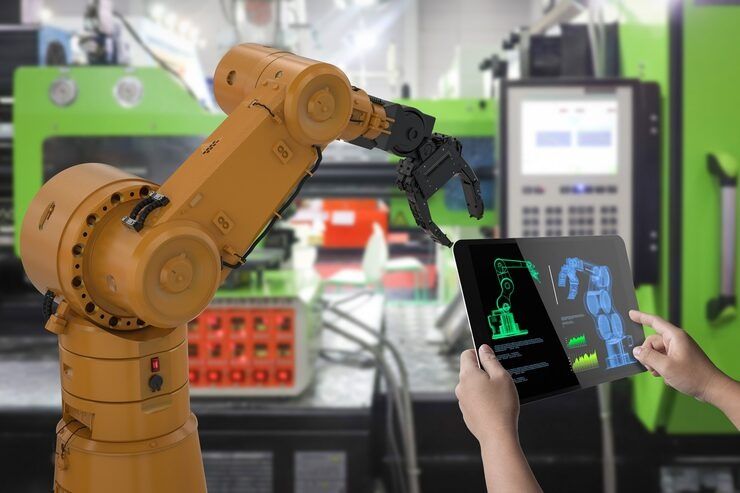
As industries embrace digital transformation, Industrial IoT and smart manufacturing systems are becoming essential components of modern production strategies.
What Is Industrial IoT?
Industrial Internet of Things (IIoT) refers to the use of connected devices, sensors, machines, and software systems within industrial environments. These technologies collect operational data and transmit it through connected networks for monitoring, analysis, and decision-making.
Unlike consumer IoT applications, Industrial IoT focuses on improving manufacturing efficiency, operational performance, equipment reliability, and production visibility.
An Industrial IoT ecosystem typically includes:
- Smart sensors
- Connected machinery
- Communication networks
- Data analytics platforms
Together, these components create a highly connected industrial environment capable of generating valuable operational insights.
What Are Smart Factories?
A smart factory is a manufacturing facility that uses connected technologies, automation systems, and real-time data to improve production processes.
Rather than relying solely on manual monitoring and traditional production methods, smart factories continuously collect information from equipment and production systems.
This allows manufacturers to identify inefficiencies, optimize workflows, and respond quickly to changing production conditions.
Smart factories are designed to be:
- Highly connected
- Data-driven
- Automated
- Adaptable
These characteristics help improve overall manufacturing performance and operational flexibility.
Why Connected Manufacturing Is Growing
Modern manufacturers face increasing pressure to improve productivity while maintaining quality and operational efficiency.
Connected manufacturing technologies provide greater visibility into production activities and help organizations make more informed decisions.
Several factors are driving the adoption of Industrial IoT solutions:
- Growing demand for automation
- Need for operational efficiency
- Expansion of digital manufacturing
- Increased focus on predictive maintenance
These trends continue to accelerate investment in smart factory technologies across industries.
Key Components of Industrial IoT Systems
Industrial IoT environments depend on several interconnected technologies that work together to support intelligent manufacturing.
Smart Sensors
Sensors serve as the foundation of Industrial IoT systems.
They continuously collect information from equipment and production processes, including temperature, pressure, vibration, energy usage, and machine performance.
This real-time data provides valuable insights into operational conditions.
Industrial Connectivity
Reliable communication networks allow devices and systems to exchange information efficiently.
Connected infrastructure ensures that data flows seamlessly between equipment, control systems, and monitoring platforms.
Strong connectivity is essential for maintaining visibility across manufacturing operations.
Data Analytics Platforms
Industrial IoT systems generate large amounts of operational data.
Analytics platforms process this information and transform it into actionable insights that support decision-making.
Manufacturers can use these insights to improve productivity, reduce downtime, and optimize resource utilization.
Cloud-Based Infrastructure
Many modern IIoT solutions use cloud technologies to store and manage operational data.
Cloud platforms provide scalability and accessibility while supporting collaboration across multiple facilities and locations.
How Smart Factories Operate
Smart factories use connected technologies to create a more intelligent and responsive manufacturing environment.
Unlike traditional facilities, smart factories continuously monitor production activities and adjust operations based on real-time information.
Real-Time Monitoring
Manufacturing equipment continuously generates data that can be monitored in real time.
This visibility allows operators to identify issues quickly and respond before they affect production performance.
Real-time monitoring helps improve operational awareness across the facility.
Automated Decision-Making
Advanced systems can analyze operational data and automatically adjust production parameters when necessary.
For example, equipment settings may be modified to improve efficiency or maintain product quality.
This capability supports more consistent manufacturing outcomes.
Production Optimization
Smart factories use data to identify opportunities for improvement throughout the production process.
Manufacturers can optimize workflows, reduce inefficiencies, and improve resource allocation based on actual operating conditions.
These improvements contribute to greater productivity and performance.
Intelligent Automation Systems in Manufacturing
Automation plays a critical role in smart factory environments. Modern systems combine robotics, sensors, software, and analytics to perform complex manufacturing tasks with minimal manual intervention.
Industrial Robotics
Robotic systems are widely used in smart manufacturing facilities.
Common applications include:
- Assembly operations
- Material handling
- Welding processes
- Quality inspections
Robots help improve consistency while supporting high-volume production requirements.
Machine Learning Applications
Machine learning technologies enable systems to identify patterns within operational data.
These insights help manufacturers improve forecasting, optimize processes, and enhance equipment performance.
As systems learn from historical information, they can support more effective decision-making.
Predictive Maintenance
Predictive maintenance is one of the most valuable applications of Industrial IoT.
By analyzing equipment performance data, manufacturers can identify potential maintenance requirements before failures occur.
This approach helps reduce unplanned downtime and improve equipment reliability.
Benefits of Industrial IoT and Smart Factories
The adoption of connected manufacturing technologies provides several significant advantages for industrial organizations.
Key benefits include:
- Improved operational visibility
- Enhanced production efficiency
- Better equipment utilization
- Reduced maintenance disruptions
These benefits help organizations improve competitiveness and support long-term growth objectives.
Industrial Applications of Smart Manufacturing
Industrial IoT technologies are used across a wide range of sectors, helping organizations improve efficiency and operational performance.
Automotive Manufacturing
Automotive facilities use connected technologies to monitor production lines, improve quality control, and support automated assembly operations.
Real-time visibility helps maintain consistent manufacturing standards.
Electronics Production
Electronics manufacturers rely on precision and efficiency throughout production processes.
Smart factory technologies help improve accuracy while supporting high-volume manufacturing requirements.
Pharmaceutical Manufacturing
Pharmaceutical facilities use connected systems to monitor production conditions, maintain process consistency, and improve operational oversight.
Data-driven monitoring supports quality-focused manufacturing environments.
Food and Beverage Processing
Connected manufacturing systems help monitor equipment performance, production efficiency, and environmental conditions throughout processing operations.
This visibility contributes to more reliable production outcomes.
Challenges in Smart Factory Implementation
While the benefits of Industrial IoT are substantial, implementation requires careful planning and coordination.
Manufacturers must address factors such as system integration, workforce training, data management, and infrastructure requirements.
Successful implementation often involves gradual adoption strategies that align technology investments with operational goals.
As digital technologies continue to mature, these challenges are becoming easier to manage through improved platforms and industry expertise.
Future Trends in Industrial IoT
The future of Industrial IoT is closely connected to advances in artificial intelligence, automation, and digital transformation.
Emerging innovations include autonomous production systems, advanced analytics platforms, digital twins, and intelligent decision-support technologies.
These developments are expected to further improve manufacturing efficiency, flexibility, and operational resilience.
Sustainability initiatives are also influencing future smart factory designs, encouraging more efficient use of energy, materials, and industrial resources.
Conclusion
Industrial IoT and smart factories are transforming modern manufacturing through connected technologies, intelligent automation systems, and real-time data insights. By enabling machines, equipment, and production processes to communicate and collaborate, these technologies help manufacturers improve efficiency, productivity, and operational performance.
From automotive and electronics production to pharmaceutical and food processing facilities, connected manufacturing solutions are becoming essential across industrial sectors. As digital transformation continues to accelerate, Industrial IoT and smart factories will remain at the forefront of innovation, shaping the future of intelligent manufacturing worldwide.