Industrial packaging machines play a central role in modern manufacturing by helping businesses prepare products for storage, transportation, distribution, and end use.
From food and beverages to pharmaceuticals, chemicals, cosmetics, and consumer goods, packaging systems help maintain product quality while improving consistency and production efficiency.
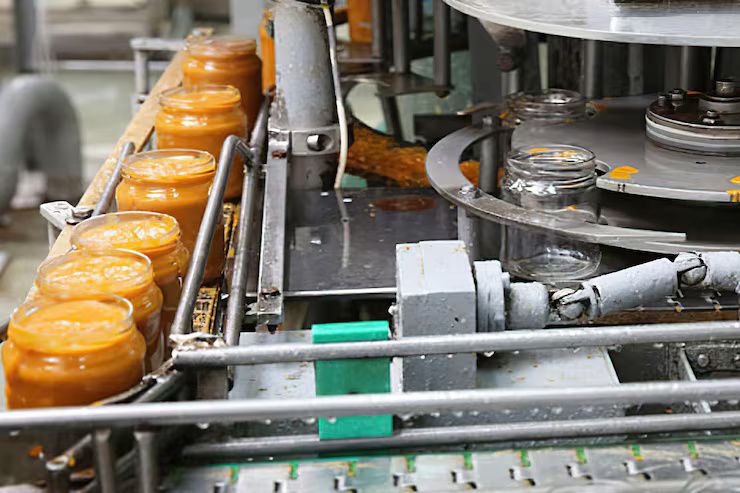
As manufacturing environments become more automated, companies increasingly use integrated industrial packaging equipment that combines filling, sealing, wrapping, labeling, inspection, and material handling functions. These systems can reduce repetitive manual work while supporting consistent packaging standards across high-volume production environments.
Understanding how packaging machines work and how different technologies fit together is useful for manufacturers, engineers, production managers, and anyone researching modern packaging operations. This guide explores the major types of industrial packaging machines, their applications, automation technologies, and important considerations when designing a packaging line.
What Are Industrial Packaging Machines?
Industrial packaging machines are automated or semi-automated systems designed to prepare products and packages for distribution. Depending on the application, a machine may fill containers, close packages, apply labels, wrap products, or perform several of these tasks within a connected production line.
Industrial packaging equipment is commonly used for products such as:
- Food and beverages
- Pharmaceuticals
- Personal care products
- Household goods
- Chemicals
- Agricultural products
- Automotive components
- Industrial materials
The right equipment depends on the product characteristics, packaging format, production volume, and required quality standards.
How Industrial Packaging Systems Work
A modern packaging line usually consists of several connected stages. Products move through the system using conveyors or automated handling equipment while sensors and control systems coordinate each operation.
A typical sequence may include:
- Product preparation
- Filling or product loading
- Container closing
- Sealing
- Label application
- Inspection
- Secondary packaging
- Palletizing or shipment preparation
Not every production line uses every stage. The configuration depends on the product and packaging requirements.
Filling Machines for Accurate Product Dispensing
Filling machines place a specific quantity of product into containers such as bottles, jars, pouches, cartons, or other packaging formats.
Different filling technologies are designed for different product characteristics.
Liquid Filling Systems
Liquid fillers are used for beverages, chemicals, cosmetics, pharmaceutical liquids, and other fluid products.
Common technologies include:
- Volumetric filling
- Gravity filling
- Pump-based filling
- Overflow filling
- Piston filling
The selection depends on factors such as viscosity, foaming behavior, container shape, and required filling accuracy.
Powder and Granule Filling
Powder filling systems are used for products such as food ingredients, pharmaceutical powders, detergents, and industrial materials.
Auger fillers and other dosing technologies help control the amount of material placed into each package.
Solid Product Filling
Solid products may be counted, weighed, or individually placed into packaging. These systems are commonly used for tablets, hardware components, snacks, and other discrete products.
Accurate filling helps reduce product variation and supports consistent package quality.
Sealing Systems for Product Protection
After filling, packages often require a sealing process to protect contents from contamination, moisture, air, and environmental exposure.
Common sealing technologies include:
- Heat sealing
- Induction sealing
- Ultrasonic sealing
- Adhesive sealing
- Pressure-sensitive sealing
The appropriate method depends on packaging material and product requirements.
For example, induction sealing is often used with compatible container and closure combinations, while heat sealing is widely applied to flexible films and pouches.
Effective sealing is essential because even a well-designed package can fail if the closure does not maintain its intended protective properties.
Wrapping Machines for Secondary Packaging
Wrapping systems are designed to group, protect, or stabilize products during storage and transportation.
Common wrapping technologies include:
Stretch Wrapping
Stretch wrapping machines apply stretch film around pallets or groups of products to improve load stability.
Shrink Wrapping
Shrink wrapping uses heat to conform plastic film around products or packages, creating a compact protective covering.
Flow Wrapping
Flow wrapping machines create individual packages using flexible film. This method is common in food, confectionery, medical, and consumer product applications.
Overwrapping
Overwrapping systems place an outer layer of material around products for presentation, protection, or grouping.
Wrapping equipment can be integrated with conveyors and other packaging automation equipment to maintain continuous production flow.
Labeling Systems for Identification and Traceability
Labeling machines apply product information to containers, cartons, boxes, and other packaging formats.
Labels may communicate information such as:
- Product identification
- Batch information
- Manufacturing details
- Expiration dates
- Barcodes
- Regulatory information
- Handling instructions
Common labeling technologies include pressure-sensitive labeling, wrap-around labeling, sleeve labeling, and print-and-apply systems.
Modern labeling equipment can also connect with production databases and inspection systems to support accurate product identification and traceability.
Packaging Automation Equipment
Packaging automation equipment uses sensors, programmable controllers, robotics, and software to coordinate packaging operations.
Automation can support:
- Consistent production speeds
- Reduced repetitive manual handling
- Improved process monitoring
- Better product tracking
- Automated quality checks
- More efficient material movement
Robotic systems may handle tasks such as case packing, product picking, palletizing, and material handling.
Automation does not eliminate the need for human oversight. Operators and technicians remain important for system monitoring, maintenance, quality control, and process management.
Integrated Packaging Automation Systems
Packaging automation systems connect multiple machines into a coordinated production line.
For example, a production line may integrate:
| System | Primary Function |
|---|---|
| Filler | Places product into containers |
| Capper or Closer | Applies closures |
| Sealer | Creates protective seals |
| Labeler | Applies identification labels |
| Inspection System | Checks packaging quality |
| Wrapper | Groups or stabilizes products |
| Case Packer | Places products into shipping cases |
| Palletizer | Organizes cases for transportation |
Integrated systems allow manufacturers to coordinate individual machines through centralized control platforms.
Role of Packaging Machine Manufacturers and Suppliers
Packaging machine manufacturers design and produce equipment for specific industrial applications. Their systems may range from individual machines to complete automated production lines.
Packaging machine suppliers may provide equipment from different manufacturers or support specific categories of packaging technology.
When researching equipment, manufacturers and production teams often evaluate factors such as:
- Product compatibility
- Packaging material
- Production requirements
- Equipment footprint
- Automation capabilities
- Maintenance requirements
- Operator training
- Integration with existing systems
Understanding these factors helps organizations identify equipment that aligns with their operational environment.
Choosing the Right Industrial Packaging Equipment
Selecting industrial packaging equipment requires a detailed assessment of production needs.
Product Characteristics
The physical properties of the product influence filling, handling, and sealing requirements.
Packaging Format
Bottles, cartons, pouches, cans, jars, and flexible packages require different machinery configurations.
Production Volume
Higher production volumes may require continuous automated systems, while smaller operations may use intermittent or semi-automatic equipment.
Quality Requirements
Some industries require strict inspection, traceability, and documentation processes.
Future Flexibility
Packaging lines may need to accommodate multiple package sizes or future product variations. Flexible equipment can help support changing production requirements.
Challenges in Packaging Automation
Industrial packaging systems can face several operational challenges.
Machine downtime can interrupt production, while incorrect settings may lead to product waste or packaging defects. Inadequate maintenance can also reduce equipment reliability.
Other challenges include:
- Integration with existing machinery
- Limited factory space
- Complex product variations
- Operator training
- Packaging material changes
- Cleaning requirements
- Data management
Effective planning, preventive maintenance, and appropriate staff training can help address these issues.
Future Trends in Industrial Packaging Machines
The packaging industry continues to evolve as manufacturers adopt more connected and intelligent technologies.
Emerging trends include:
- Robotics and collaborative automation
- Machine vision inspection
- Industrial Internet of Things connectivity
- Predictive maintenance
- Digital production monitoring
- Flexible packaging lines
- Sustainable packaging materials
- Data-driven process optimization
Smart packaging automation systems increasingly use real-time information to monitor equipment performance and identify potential problems before they interrupt production.
Sustainability is also influencing equipment design. Packaging machinery is increasingly being adapted to work with lightweight materials, recyclable formats, and more efficient production processes.
Frequently Asked Questions
What are industrial packaging machines?
Industrial packaging machines are automated or semi-automated systems used to fill, seal, wrap, label, inspect, and prepare products for distribution.
What is packaging automation equipment?
Packaging automation equipment uses mechanical systems, sensors, controls, software, and robotics to automate repetitive packaging tasks and coordinate production processes.
What types of products use industrial packaging equipment?
Industrial packaging equipment is used across food, beverages, pharmaceuticals, chemicals, cosmetics, consumer goods, agriculture, and many other manufacturing sectors.
How do packaging automation systems improve production?
Integrated packaging automation systems can improve process consistency, reduce repetitive manual handling, support quality monitoring, and coordinate multiple stages of packaging.
What should manufacturers consider when selecting packaging machinery?
Important considerations include product characteristics, packaging format, production volume, quality requirements, available space, automation needs, maintenance, and future flexibility.
Conclusion
Industrial packaging machines have become an essential part of modern manufacturing, supporting the filling, sealing, wrapping, labeling, inspection, and handling of products across numerous industries. From individual machines to fully integrated packaging automation systems, these technologies help manufacturers create consistent and organized packaging processes.
The most suitable industrial packaging equipment depends on the product, packaging format, production environment, and operational requirements. By understanding how filling machines, sealing systems, wrapping equipment, labeling technologies, and automated handling solutions work together, businesses can better evaluate their packaging needs and plan efficient production workflows.
As robotics, machine vision, connected systems, and predictive technologies continue to develop, industrial packaging machines are becoming increasingly intelligent and adaptable. The future of packaging will likely focus on greater flexibility, improved traceability, efficient resource use, and stronger integration between machinery and digital manufacturing systems.