
Sheet metal and fabrication machinery refers to the equipment used to cut, bend, punch, shape, join, and finish metal sheets or plates. These machines are essential in manufacturing products such as electrical enclosures, automotive components, industrial cabinets, ventilation ducts, machinery frames, and construction structures. They help convert flat metal materials into components with specific dimensions and shapes.
Sheet metal fabrication has developed alongside advances in metalworking, mechanical engineering, and industrial production. Traditional workshops relied heavily on manual tools and mechanical presses, while modern facilities increasingly use computer numerical control (CNC), laser cutting, automated material handling, and digital production systems.
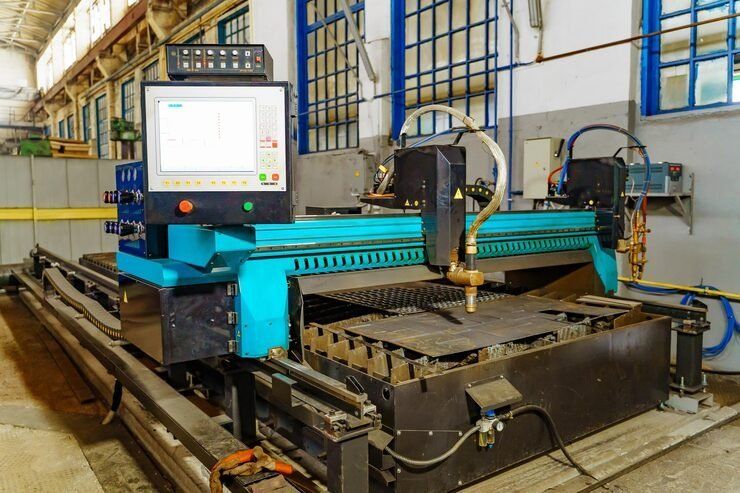
The machinery used in fabrication varies according to the metal type, sheet thickness, production volume, required accuracy, and final application. Small workshops may use manually operated shears, press brakes, and welding equipment, whereas larger factories may integrate several CNC machines into connected production lines.
Main categories of sheet metal machinery
Sheet metal fabrication involves several stages, and each stage may require different equipment.
Cutting machines: Guillotine shears, laser cutting machines, plasma cutters, and waterjet systems separate metal into required dimensions.
Bending machines: Press brakes and panel benders form sheet metal into angles, channels, boxes, and other shapes.
Punching machines: CNC punching machines create holes, slots, and shaped openings in sheet metal.
Rolling machines: Plate rolling equipment forms curved components, cylinders, and conical sections.
Stamping presses: Mechanical or hydraulic presses shape metal using dies and controlled force.
Joining equipment: MIG, TIG, resistance, and laser welding systems join metal components.
Finishing equipment: Deburring machines, grinding systems, and surface preparation equipment remove sharp edges and prepare components for further processing.
These categories frequently overlap in modern manufacturing facilities. A single component may pass through cutting, punching, bending, welding, and finishing before it becomes a finished product.
How sheet metal fabrication works
The fabrication process generally begins with a design or engineering drawing. The manufacturer selects suitable sheet material, determines the required dimensions, and prepares the cutting or forming instructions.
After the material is cut, it may undergo punching, bending, stamping, or rolling. Components requiring multiple parts are assembled through welding, fastening, or other joining methods. Inspection and finishing then help confirm dimensional accuracy, surface condition, and suitability for the intended application.
Computer-aided design (CAD) and computer-aided manufacturing (CAM) software can connect design information with CNC equipment. This allows production instructions to be prepared digitally and helps reduce manual programming errors when the software and machine are configured correctly.
Importance
Sheet metal and fabrication machinery plays a significant role in modern industrial production because many products depend on accurately formed metal components. Equipment manufacturers, construction companies, vehicle producers, electrical equipment manufacturers, and infrastructure contractors all use fabricated parts in different ways.
The machinery also helps manufacturers manage common production challenges, including material waste, inconsistent dimensions, repetitive manual work, and delays between processing stages. Appropriate machine selection can improve process consistency, although results depend on equipment condition, operator skills, material properties, and production planning.
Industrial applications of fabrication machinery
Sheet metal machinery is used across several sectors.
Automotive manufacturing: Produces body panels, brackets, structural components, and metal housings.
Construction: Forms roofing panels, structural sections, cladding, ductwork, and architectural metal components.
Electrical manufacturing: Produces control panels, switchgear enclosures, cabinets, and equipment housings.
HVAC systems: Manufactures ventilation ducts, air-handling components, and protective covers.
Industrial equipment: Fabricates machine guards, frames, mounting plates, tanks, and support structures.
Aerospace manufacturing: Processes specified sheet alloys into aircraft panels, brackets, and other engineered components under strict quality requirements.
Consumer products: Forms metal furniture, appliance panels, kitchen equipment, and storage products.
The materials processed may include carbon steel, stainless steel, aluminum, copper, and specialized alloys. Each material behaves differently during cutting, bending, welding, and forming, so process settings and tooling must be appropriate for the material.
Benefits and operational challenges
Modern fabrication machinery can support consistent production and reduce dependence on certain manual operations. CNC systems can repeat programmed movements, while automated loading and unloading systems can reduce material-handling requirements. However, these technologies require suitable maintenance, trained operators, and reliable production data.
Common challenges include machine setup, tooling wear, material distortion, energy consumption, and the integration of equipment from different manufacturers. Fabrication facilities must also consider noise, moving machinery, laser radiation, welding fumes, and other workplace hazards when establishing operating procedures.
Comparison of common fabrication machines
Machine type | Primary function | Typical applications |
|---|---|---|
Laser cutting machine | Cuts sheet metal using a focused laser beam | Precision panels and intricate profiles |
CNC press brake | Bends sheet metal using a punch and die | Cabinets, brackets, and channels |
CNC punching machine | Creates holes and shaped openings | Electrical enclosures and perforated panels |
Plate rolling machine | Forms curved metal sections | Cylinders, ducts, and vessel shells |
Hydraulic press | Applies force for forming or pressing | Metal forming and industrial components |
Welding machine | Joins metal components | Frames, assemblies, and structural parts |
Deburring machine | Removes sharp edges and burrs | Prepared sheet metal components |
The appropriate machine depends on the required geometry, production volume, material thickness, dimensional tolerances, and finishing requirements.
Recent Updates
Sheet metal manufacturing continues to develop through improvements in automation, machine control, production software, and material handling. Recent industry trends emphasize greater process integration, data-based monitoring, and flexibility when manufacturing different component designs.
CNC automation and laser cutting
Fiber laser cutting technology is widely used for processing suitable metal sheets because it can cut complex profiles with limited mechanical contact. Advances in machine controls, beam delivery, and automated material handling have expanded its role in production environments. Actual cutting performance depends on material type, thickness, machine configuration, and required edge quality.
CNC press brakes have also developed through improved control systems, angle measurement, tool management, and automated backgauges. These features help operators manage bending sequences and maintain dimensional consistency across repeated components.
Robotics and connected production
Robotic systems are increasingly used for tasks such as welding, machine loading, unloading, and transferring sheet metal between processing stages. These systems can support repetitive production, but they require suitable programming, safety controls, and maintenance.
Digital manufacturing software can connect CAD drawings, production schedules, CNC programs, and inspection records. Some factories also use sensors to monitor machine conditions and identify unusual operating patterns. These developments are part of the broader movement toward smart manufacturing and Industry 4.0.
Energy efficiency and material utilization
Manufacturers are paying greater attention to electricity consumption, scrap generation, compressed air usage, and material handling. Sheet nesting software arranges component designs on a sheet to improve material utilization, subject to cutting clearances and production constraints.
Machine manufacturers are also developing systems with improved standby modes, process monitoring, and automated settings. The actual environmental and operational effects vary according to machine design, production practices, material selection, and maintenance.
Laws or Policies
Sheet metal and fabrication machinery is subject to requirements concerning workplace safety, electrical equipment, machine guarding, environmental protection, and, in some circumstances, product conformity. Applicable obligations depend on the country, facility, industry, and machinery involved.
Manufacturing regulations in India
In India, fabrication facilities must consider applicable occupational safety and factory regulations, electrical safety requirements, and environmental rules. The Occupational Safety, Health and Working Conditions Code, 2020, is part of the country's labour-law framework; its application depends on the relevant commencement provisions and implementing rules.
Factories may need appropriate machine guards, emergency stops, personal protective equipment, ventilation, and procedures for handling welding fumes and metal dust. Laser cutting and welding operations also require controls appropriate to the hazards involved.
Environmental requirements may apply to industrial emissions, wastewater, hazardous waste, and other manufacturing activities. The specific obligations depend on the process and the applicable central and state regulations.
International standards and machine safety
Several international standards provide frameworks for machine design and industrial safety.
ISO 12100: Addresses machinery safety principles, including hazard identification and risk reduction.
ISO 13849: Covers safety-related parts of machinery control systems.
IEC 60204-1: Addresses electrical equipment used in machinery.
ISO 9001: Establishes requirements for quality management systems.
These standards may be relevant to machine design, purchasing specifications, production operations, or customer requirements. They should not automatically be interpreted as mandatory legal requirements in every location. Manufacturers and facility operators must determine which regulations and standards apply to their specific circumstances.
Tools and Resources
Sheet metal fabrication involves both physical machinery and software tools that support design, production planning, machine operation, and quality inspection.
Common software and technical tools
CAD software: Creates two-dimensional drawings and three-dimensional component models.
CAM software: Converts design information into machine instructions for compatible CNC equipment.
Sheet nesting software: Arranges component profiles to manage material usage and cutting layouts.
CNC simulation software: Helps identify programming or tool-path problems before production.
Metrology equipment: Includes calipers, micrometers, gauges, and coordinate measuring machines for dimensional inspection.
Maintenance management systems: Track machine inspections, service intervals, breakdown records, and spare parts.
Examples of established industrial technology providers include TRUMPF, Bystronic, AMADA, Salvagnini, and Mazak. Their product portfolios span different machine categories, and available configurations vary by region and application.
Factors to consider when selecting machinery
A technical assessment commonly considers:
Material types and maximum sheet thickness.
Required cutting, bending, punching, or forming accuracy.
Production volume and expected operating frequency.
Tooling requirements and compatibility with existing equipment.
Floor space, electrical supply, ventilation, and safety provisions.
Software compatibility, operator training, and maintenance arrangements.
These factors help establish whether a machine is suitable for a particular production environment.
FAQs
What is sheet metal fabrication machinery?
Sheet metal fabrication machinery includes equipment used to cut, punch, bend, roll, weld, and finish metal sheets or plates to produce industrial components and finished products.
What is the difference between a laser cutting machine and a CNC punching machine?
A laser cutting machine uses a focused laser beam to cut material along programmed paths. A CNC punching machine uses a punch and die to create holes or shaped openings through mechanical force.
Which industries use sheet metal fabrication machines?
Automotive, construction, aerospace, HVAC, electrical equipment, industrial machinery, and consumer product manufacturing all use sheet metal fabrication equipment.
What is a CNC press brake used for?
A CNC press brake bends sheet metal according to programmed dimensions and sequences. It is commonly used to produce brackets, enclosures, channels, and other formed components.
What safety measures are important when operating fabrication machinery?
Important measures include suitable machine guarding, emergency stops, operator training, eye and hearing protection where required, appropriate ventilation, and documented procedures for handling specific machine hazards.
Conclusion
Sheet metal and fabrication machinery supports the production of metal components used in numerous industrial sectors. Laser cutting, CNC bending, punching, rolling, welding, and finishing equipment each perform different functions within the fabrication process. Automation and digital manufacturing technologies are changing how these machines are programmed, monitored, and integrated. Equipment selection and operation depend on material requirements, production objectives, worker safety, and applicable regulations.