
Thread is one of the most essential components in the textile and manufacturing industries. Although it appears simple, every high-quality garment, automotive interior, footwear product, medical textile, and industrial fabric depends on strong and reliable thread. Modern thread manufacturing combines advanced textile engineering, precision production techniques, and strict quality control to produce threads capable of meeting demanding industrial requirements.
As global manufacturing continues to evolve, the demand for durable, high-performance sewing threads has increased significantly. Industries now require threads that can withstand high-speed sewing machines, harsh environmental conditions, repeated washing, chemical exposure, and heavy mechanical stress while maintaining consistent performance.
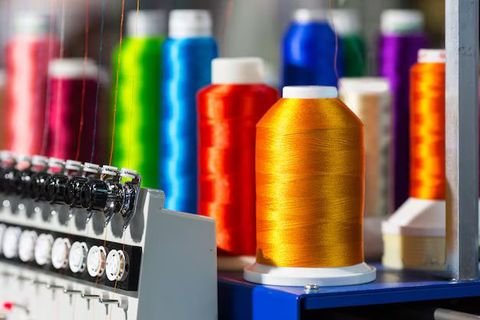
This guide explains how thread manufacturing works, the different types of industrial threads, production technologies, quality standards, and the industries that rely on these essential textile products.
What Is Thread Manufacturing?
Thread manufacturing is the process of converting natural or synthetic fibers into strong, uniform, and durable sewing threads through a series of controlled textile production stages. The process includes fiber preparation, spinning, twisting, finishing, quality inspection, and packaging.
Unlike ordinary yarn, sewing thread is specially engineered to provide higher strength, improved abrasion resistance, and smooth performance during stitching operations.
Modern manufacturers focus on producing threads that deliver consistent quality, excellent tensile strength, and reliable performance across various industrial applications.
Why Thread Manufacturing Is Important
High-quality thread directly influences the durability, appearance, and performance of finished products. Even when premium fabrics are used, poor-quality thread can reduce seam strength and shorten product life.
Today's industries require threads that perform consistently under demanding production environments.
Thread manufacturing supports numerous industries by providing solutions for:
- Apparel and fashion manufacturing
- Automotive interiors
- Technical textiles
- Medical textiles
- Upholstery and furniture
- Footwear manufacturing
As manufacturing standards continue to rise, thread quality has become a key factor in overall product reliability.
Raw Materials Used in Thread Manufacturing
The quality of a sewing thread begins with the selection of raw materials. Different fibers are chosen depending on the intended application, durability requirements, and environmental conditions.
Cotton Thread
Cotton remains one of the most widely used natural fibers in thread manufacturing.
Its softness, breathability, and compatibility with natural fabrics make it suitable for garments, quilting, embroidery, and home textiles.
Polyester Thread
Polyester thread has become the preferred choice for many industrial applications because of its excellent tensile strength and abrasion resistance.
It performs well under high-speed sewing conditions and offers good resistance to moisture, sunlight, and repeated washing.
Nylon Thread
Nylon thread provides exceptional flexibility and strength.
It is commonly used in products requiring heavy-duty stitching, including luggage, sports equipment, footwear, leather goods, and automotive components.
Specialty Fibers
Certain industries require advanced thread materials designed for specialized environments.
Examples include:
- Aramid fibers for heat-resistant applications
- PTFE threads for chemical resistance
- Kevlar® fibers for protective equipment
- Glass fiber threads for insulation products
These specialty materials support demanding industrial environments where conventional threads may not perform adequately.
Types of Industrial Threads
Different manufacturing sectors require different thread characteristics based on product performance and operating conditions.
Spun Thread
Spun thread is produced by twisting short fibers together to create a strong and flexible structure.
It is commonly used in garment production because it provides a natural appearance and good sewing performance.
Core-Spun Thread
Core-spun thread combines a continuous polyester filament core with an outer layer of staple fibers.
This construction provides excellent strength while maintaining an attractive stitched appearance.
It is widely used in premium apparel, denim, and workwear manufacturing.
Filament Thread
Filament thread is manufactured using continuous synthetic filaments that provide exceptional smoothness and uniformity.
Its low friction characteristics make it suitable for automated, high-speed production systems.
Bonded Thread
Bonded thread receives a protective coating that minimizes fraying while improving abrasion resistance.
It is commonly selected for heavy-duty industrial stitching applications such as upholstery, footwear, leather products, and automotive interiors.
Thread Manufacturing Process
Modern thread production combines traditional textile knowledge with highly automated manufacturing technologies.
Fiber Preparation
Production begins by selecting and cleaning raw fibers.
The fibers are carefully processed to remove impurities before entering the spinning stage.
High-quality fiber preparation improves consistency throughout the manufacturing process.
Spinning
Spinning converts loose fibers into yarn by aligning and twisting them into continuous strands.
The quality of spinning directly influences thread strength, uniformity, and durability.
Twisting and Plying
Individual yarns are twisted together to achieve the required strength and flexibility.
Different twist levels produce threads suitable for various industrial sewing applications.
This stage also improves resistance to breakage during high-speed stitching.
Dyeing and Finishing
Threads are dyed using controlled processes that ensure color consistency and durability.
Additional finishing treatments may improve:
- Abrasion resistance
- Lubrication
- Heat resistance
- Chemical resistance
These treatments enhance sewing performance while extending product lifespan.
Winding and Packaging
After final inspection, threads are wound onto cones or spools using automated winding equipment.
Consistent winding ensures smooth thread delivery during industrial sewing operations.
Quality Standards in Thread Manufacturing
Quality control is one of the most important aspects of thread manufacturing.
Manufacturers conduct rigorous testing throughout production to ensure consistent performance.
Tensile Strength Testing
Thread strength is evaluated to determine its ability to withstand sewing tension without breaking.
Higher tensile strength is particularly important in automotive, industrial, and heavy-duty textile applications.
Uniformity Inspection
Manufacturers monitor thread diameter, twist consistency, and surface quality throughout production.
Uniform threads produce cleaner seams and improve sewing efficiency.
Color Fastness Testing
Industrial threads must maintain color stability after repeated washing, sunlight exposure, and environmental conditions.
Testing helps ensure long-term appearance and product quality.
Abrasion Resistance
Many industrial applications require threads capable of resisting continuous friction and wear.
Abrasion testing helps determine durability under demanding operating conditions.
Manufacturing Technologies Driving Modern Production
Technology has significantly improved thread manufacturing efficiency and product quality.
Computer-controlled production systems continuously monitor machine performance, fiber alignment, and thread consistency throughout manufacturing.
Automation has also reduced production variability while improving overall efficiency.
Many facilities now integrate smart manufacturing technologies that collect production data in real time, allowing operators to optimize machine settings and improve quality control.
These innovations support greater productivity while maintaining consistent product standards.
Industrial Applications of Thread Manufacturing
Thread manufacturing supports numerous industries beyond traditional clothing production.
Apparel and Fashion
Garment manufacturers depend on high-quality threads for shirts, trousers, sportswear, uniforms, and premium fashion products.
Reliable thread improves seam durability and overall garment quality.
Automotive Industry
Modern vehicles contain thousands of stitched components.
Industrial threads are widely used in:
- Car seat upholstery
- Airbags
- Steering wheel covers
- Interior trim
- Safety restraints
These applications demand exceptional strength and durability.
Medical Textiles
Medical manufacturers require specialized threads for surgical textiles, protective garments, hospital bedding, and healthcare products.
Precision and consistency are especially important in these environments.
Footwear and Leather Products
Footwear manufacturers rely on durable threads capable of withstanding continuous movement and heavy mechanical stress.
Leather goods, travel bags, and sports equipment also depend on high-performance sewing threads.
Technical and Industrial Textiles
Advanced industrial fabrics used in filtration systems, protective clothing, geotextiles, and composite materials often require specialized threads engineered for demanding conditions.
Sustainability in Thread Manufacturing
Sustainability has become an important focus within the textile industry.
Many manufacturers are adopting environmentally responsible production practices, including energy-efficient machinery, water conservation technologies, recycled polyester fibers, and waste reduction initiatives.
These improvements help reduce environmental impact while maintaining product quality.
Growing demand for sustainable textile manufacturing continues to encourage innovation throughout the industry.
Future Trends in Thread Manufacturing
The future of thread manufacturing is being shaped by automation, advanced materials, and digital production technologies.
Manufacturers are investing in artificial intelligence, smart quality inspection systems, robotics, and predictive maintenance to improve operational efficiency.
Research into biodegradable fibers, recycled materials, antimicrobial threads, and high-performance technical textiles is also expanding rapidly.
As industries continue to demand stronger, lighter, and more sustainable materials, thread manufacturing will remain a critical part of global textile innovation.
Conclusion
Thread manufacturing is a highly specialized process that combines advanced textile engineering, quality control, and modern manufacturing technologies to produce reliable sewing threads for diverse industries. From apparel and automotive production to medical textiles and technical fabrics, high-quality threads play a vital role in product performance and durability.
With continuous advancements in automation, sustainable manufacturing, and material science, the thread manufacturing industry is well positioned to support the evolving needs of modern industrial production. Understanding these processes and quality standards highlights the importance of precision, innovation, and consistency in creating threads that meet today's demanding manufacturing requirements.