Waterfall rappelling is an outdoor adventure activity in which participants descend a rock face alongside or directly through a waterfall using ropes, harnesses, and specialized climbing equipment.
Also known as waterfall abseiling in some regions, the activity combines rope techniques with the natural challenges of moving water, wet rock, and uneven terrain.
Unlike conventional rappelling on a dry cliff, waterfall rappelling introduces additional environmental factors. Water can affect visibility, footing, body temperature, rope handling, and communication. The force of falling water may also make it difficult to maintain a stable position or hear instructions.
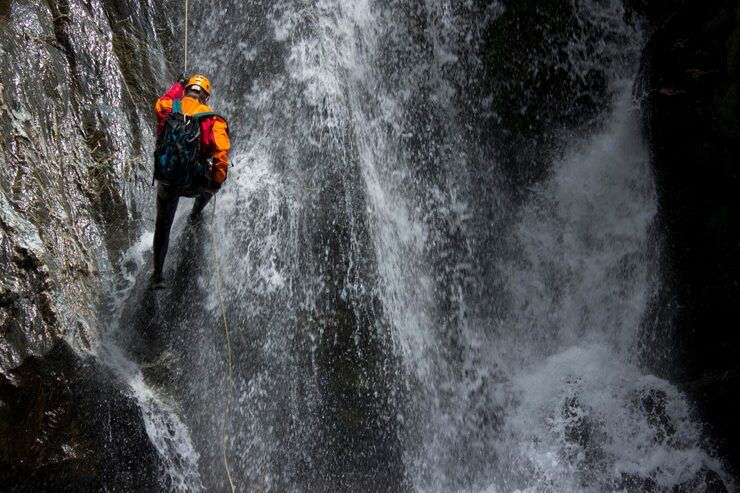
The activity is generally conducted under the supervision of trained guides who assess the route, establish suitable anchors, inspect equipment, and explain the descent procedure. Participants are connected to a rope system designed for the particular location and conditions. Depending on the route, they may descend beside the main flow or pass through sections of falling water.
Waterfall rappelling is commonly associated with canyoning, a broader outdoor activity involving movement through river canyons using walking, swimming, scrambling, climbing, jumping where appropriate, and rope descents. Not every canyoning route includes a waterfall, and not every waterfall descent requires the same technical skills.
The difficulty of a waterfall rappel depends on several factors, including the height of the descent, water volume, rock conditions, weather, anchor placement, and the participant's experience. Some guided routes are designed for beginners, while others require advanced rope skills and extensive canyoning knowledge.
Although waterfall rappelling can provide a memorable way to experience natural landscapes, it carries genuine risks. Appropriate training, suitable equipment, careful route selection, and continuous assessment of water conditions are essential parts of responsible participation.
Importance
Waterfall rappelling has recreational, educational, physical, and environmental significance. It provides a distinctive outdoor experience while requiring participants to develop awareness of natural hazards and technical procedures.
1. Encourages Physical Activity
Rappelling requires balance, coordination, and controlled body movements. Participants use their legs to maintain contact with the rock surface while managing their position through a rope system.
Approaching the waterfall may also involve hiking, scrambling over rocks, or moving through uneven terrain. The physical demands vary according to the location and length of the route.
People considering the activity should assess their fitness, mobility, and comfort with heights. Participants with relevant medical conditions should seek appropriate professional guidance before attempting a demanding descent.
2. Develops Confidence and Concentration
Moving down a wet cliff can feel unfamiliar, particularly for people who have never used ropes in an outdoor environment. Participants must listen carefully, follow instructions, and make controlled movements rather than rushing.
Completing a descent may help develop confidence in managing unfamiliar situations. However, confidence should always be supported by appropriate training and a willingness to stop when conditions become unsafe.
3. Builds Teamwork and Communication
Waterfall rappelling commonly involves guides, safety personnel, and participants coordinating their actions. Clear communication is necessary when checking harnesses, confirming rope connections, controlling movement, and responding to changing conditions.
Participants learn the importance of following established commands and confirming instructions before moving. Guides must also communicate environmental concerns, such as rising water levels or deteriorating weather.
4. Provides Access to Natural Landscapes
Waterfalls often occur in steep valleys, forested canyons, and remote mountainous areas. Rappelling can provide a different perspective on these environments, allowing participants to observe rock formations, vegetation, and flowing water at close range.
These landscapes may contain sensitive habitats. Visitors should avoid disturbing wildlife, damaging vegetation, or leaving waste behind. Some locations may also be within protected areas where access and activities are regulated.
5. Introduces Rope-Based Outdoor Skills
Under appropriate supervision, participants can learn about harness fitting, rope systems, controlled descent, anchor checks, and basic hazard awareness.
These introductory experiences may help people understand the technical foundations of canyoning and other rope-based activities. However, a supervised introductory descent does not qualify someone to conduct independent rappelling or rescue operations.
6. Supports Adventure Tourism
Waterfall rappelling can contribute to local outdoor tourism when organized responsibly. It may create opportunities for trained guides, local transport providers, accommodation operators, and nearby communities.
Long-term benefits depend on visitor management, environmental protection, fair participation by local communities, and appropriate safety practices. Operators should balance recreational access with the protection of natural sites.
Recent Updates
Waterfall rappelling remains part of the broader adventure tourism and canyoning sector. Developments during 2025 and 2026 have continued to emphasize participant safety, guide competence, environmental responsibility, and more informed outdoor trip planning. Specific developments vary by destination, and local conditions should always be checked before departure.
1. Increased Attention to Weather and Water Flow
Waterfall and canyoning conditions can change rapidly after rainfall. A route that appears manageable under low-flow conditions may become dangerous when water levels rise.
Expedition planning therefore requires attention to rainfall forecasts, upstream catchment conditions, local warnings, and the characteristics of the particular waterfall. Rainfall far from the descent site may also affect water flow.
Guides should postpone or cancel an activity when water levels, weather, or other conditions exceed acceptable limits.
2. Greater Emphasis on Equipment Inspection
Harnesses, ropes, connectors, helmets, and anchor systems require careful inspection before use. Wet environments can introduce additional concerns, including abrasion against rock, contamination, and difficulty handling equipment.
Participants should use equipment selected for the activity and follow the manufacturer's instructions. Equipment should not be used if its condition is uncertain or if it has sustained damage.
3. Better Access to Outdoor Weather Information
Weather applications, radar information, and official alerts can help travelers identify potential hazards before an expedition. However, forecasts may not fully capture conditions in narrow canyons or upstream areas.
Digital information should support, rather than replace, local knowledge and direct assessment by qualified guides.
4. Greater Awareness of Adventure Risk Management
Responsible operators increasingly emphasize pre-activity briefings, participant screening, emergency planning, and clear explanations of cancellation criteria.
A comprehensive safety briefing should explain the descent procedure, required equipment, communication signals, participant responsibilities, and what to do if a problem occurs.
5. Focus on Environmental Protection
Adventure destinations face concerns involving litter, erosion, habitat disturbance, and excessive visitor pressure. Responsible waterfall rappelling practices include following designated routes, minimizing damage to vegetation, and avoiding contamination of water sources.
Participants should respect seasonal closures and restrictions established to protect wildlife or sensitive environments.
6. More Interest in Guided Beginner Experiences
Some adventure destinations provide introductory waterfall rappelling for people with limited experience. These experiences may use shorter descents, suitable water conditions, and close supervision.
The term beginner-friendly should not be interpreted as risk-free. Participants should confirm the route's difficulty, the guide's qualifications, the equipment provided, and the physical requirements before taking part.
Laws or Policies
Waterfall rappelling may be affected by adventure tourism regulations, protected-area rules, land-access restrictions, environmental requirements, and workplace or occupational standards for guides. The applicable rules depend on the location and the nature of the activity.
1. Adventure Tourism Rules in India
In India, outdoor adventure activities may be governed by state tourism policies, local administration requirements, forest department rules, and restrictions applicable to protected areas.
Requirements vary among destinations. Before participating, travelers should check current guidance from the relevant state tourism department, district administration, forest authority, or other responsible agency.
An operator's presence at a destination does not automatically establish that every activity or route is permitted.
2. Guide Training and Operational Safety
Depending on the location, adventure operators may be subject to registration, qualification, equipment, or operational requirements. Relevant guidance may cover participant briefings, risk assessments, emergency planning, and the maintenance of technical equipment.
Participants should ask about guide experience, relevant technical training, rescue capability, and the procedures used to evaluate water conditions.
3. Protected Areas and Environmental Restrictions
Waterfalls may be located within national parks, wildlife sanctuaries, forest areas, or other protected landscapes. Activities may require permission or may be restricted entirely in certain zones.
Visitors should follow access rules, remain on permitted routes, and avoid disturbing wildlife or damaging natural features. Restrictions can change seasonally or in response to environmental conditions.
4. Equipment and Participant Requirements
Operators should select appropriate rope systems, harnesses, helmets, connectors, and anchors for the specific environment. Participants should receive equipment that fits properly and be told how it will be used.
Minimum ages, physical requirements, and participation conditions may vary. Travelers should disclose relevant medical limitations and follow instructions provided by qualified personnel.
5. Insurance and Liability
Adventure activities may be treated differently under travel insurance policies. Some policies exclude technical climbing, canyoning, or activities involving rope descents unless additional coverage is included.
Travelers should review policy definitions, exclusions, medical evacuation provisions, and geographical limitations before participating. A signed waiver does not remove the need for suitable equipment and responsible risk management.
Tools and Resources
Reliable information and appropriate equipment help participants prepare for waterfall rappelling and understand its hazards.
1. Official Weather Information
National and regional meteorological agencies provide forecasts, rainfall warnings, and severe-weather alerts. In India, the India Meteorological Department is an important source of official weather information.
Forecasts should be checked before departure and monitored when conditions may change. Local guides should also assess upstream rainfall and water flow.
2. Local Tourism and Forest Authorities
State tourism departments, district administrations, and forest authorities can provide information about access restrictions, permitted activities, seasonal closures, and local safety requirements.
These sources are particularly important when waterfalls are located in protected or remote areas.
3. Canyoning and Rope-Safety Education
Educational materials from recognized climbing and canyoning organizations can explain rope techniques, equipment inspection, anchor systems, and hazard assessment.
Online information is useful for understanding the activity, but written instructions or videos are not a substitute for practical training with qualified professionals.
4. Essential Equipment
Equipment requirements depend on the route and the operator's safety system. Common items include:
- A properly fitted climbing or canyoning harness.
- A suitable protective helmet.
- Ropes and descent equipment selected for wet conditions.
- Appropriate connectors and professionally established anchors.
- Footwear designed for wet, uneven terrain.
- A wetsuit or other thermal protection when needed.
- Communication and rescue equipment carried by the responsible team.
- Suitable drinking water and personal medication.
Participants should not independently assemble or modify a rope system without the relevant training and authorization.
5. Personal Preparation Checklist
Before the activity, confirm the meeting point, route difficulty, expected duration, weather conditions, equipment arrangements, age requirements, and emergency procedures.
Wear clothing appropriate for the temperature and water conditions. Secure loose objects, follow instructions about glasses and cameras, and avoid carrying items that could interfere with the harness or rope system.
Participants should also understand the cancellation policy and be prepared to withdraw if the conditions or safety arrangements are unsuitable.
Popular Waterfall Rappelling Destinations
Waterfall rappelling opportunities exist in several countries, although access, seasonal conditions, and the availability of guided activities differ.
Karnataka, India: The Western Ghats contain numerous waterfalls and forested landscapes. Certain locations may support guided waterfall-based adventure activities, subject to local permissions, weather, and seasonal restrictions.
Meghalaya, India: Known for heavy rainfall, deep valleys, and dramatic waterfalls, Meghalaya offers striking scenery for outdoor exploration. Waterfall access and rappelling opportunities depend on the specific location and current conditions.
Maharashtra, India: The Western Ghats contain waterfalls and rugged terrain that attract adventure travelers during suitable seasons. Rainfall can make routes hazardous, so local restrictions and guide assessments are important.
Costa Rica: The country's tropical landscape includes waterfalls, forested canyons, and guided canyoning experiences. Weather, flash-flood risks, and route-specific requirements should be evaluated before participation.
Iceland: Waterfalls and dramatic volcanic landscapes make Iceland attractive to outdoor travelers. Waterfall rappelling is a specialized activity rather than a standard attraction at every waterfall, and suitable professional arrangements are essential.
New Zealand: The country's mountainous terrain and canyoning environments support guided rope-based adventures in selected areas. Participants should choose routes according to their experience and confirm seasonal conditions.
These destinations are examples of regions with suitable natural environments or related adventure activities, not a guarantee that rappelling is permitted at every waterfall.
FAQs
1. What is waterfall rappelling?
Waterfall rappelling is a rope-based descent down a wet rock face beside or through falling water. Participants use a harness, rope system, and protective equipment under suitable supervision.
2. Is waterfall rappelling suitable for beginners?
Some guided routes are designed for beginners, but the activity still involves technical and environmental risks. Beginners should choose a suitable route and participate under the supervision of qualified professionals.
3. Do participants need climbing experience?
Some introductory activities do not require previous climbing experience because the guide manages the technical system. However, participants must be able to follow instructions and meet the route's physical requirements. Independent rappelling requires appropriate practical training.
4. What equipment is required?
Typical equipment includes a suitable harness, helmet, rope system, connectors, and footwear appropriate for wet rock. Thermal protection and additional equipment may be necessary depending on water temperature, weather, and route characteristics.
5. Is waterfall rappelling dangerous?
Yes, it can be hazardous. Potential risks include falling, equipment failure, rock movement, strong water flow, cold exposure, and sudden changes in weather. Professional supervision and careful planning reduce risk but cannot eliminate it.
6. Can waterfall rappelling take place during heavy rain?
Heavy rain can cause rapid increases in water flow and create dangerous conditions. Activities should not proceed when rainfall, water levels, or official warnings exceed the limits established by the responsible team.
7. What should someone wear for waterfall rappelling?
Clothing should suit the water temperature, weather, and route. Secure footwear, quick-drying layers, and suitable thermal protection may be needed. The operator should explain the required clothing before departure.
8. How physically demanding is waterfall rappelling?
The descent requires balance, coordination, and the ability to follow instructions. Access may also involve hiking or scrambling. The demands depend on the height of the waterfall, approach terrain, water conditions, and overall route length.
9. Can children participate?
Age limits vary according to the location, operator, route, and applicable regulations. Parents or guardians should confirm minimum-age requirements, supervision arrangements, and physical suitability before making plans.
10. What should someone check before choosing an operator?
Check the guide's technical experience, relevant qualifications, equipment inspection practices, anchor procedures, emergency arrangements, weather assessment, and applicable permissions. Ask whether the activity will be postponed when water conditions become unsafe.
Conclusion
Waterfall rappelling combines rope-based adventure with the natural challenges of moving water, wet rock, and steep terrain. It provides opportunities for physical activity, teamwork, confidence-building, and exploration of dramatic landscapes.
A successful experience depends on careful preparation, suitable equipment, competent supervision, and a clear understanding of the environmental risks. Water flow and weather can change rapidly, making local assessments and cancellation decisions especially important.