
Industrial pneumatics is a core technology in modern manufacturing that uses compressed air to power machinery, automate production processes, and control industrial equipment. From operating robotic grippers and assembly machines to controlling packaging lines and material handling systems, pneumatic technology provides a reliable, efficient, and flexible source of mechanical power for countless industrial applications.
Compressed air has become one of the most widely used utilities in factories because it is clean, readily available, and capable of delivering fast, repeatable motion. Modern pneumatic systems combine air compressors, intelligent control systems, precision valves, and high-performance actuators to support automated production while improving operational efficiency and workplace safety.
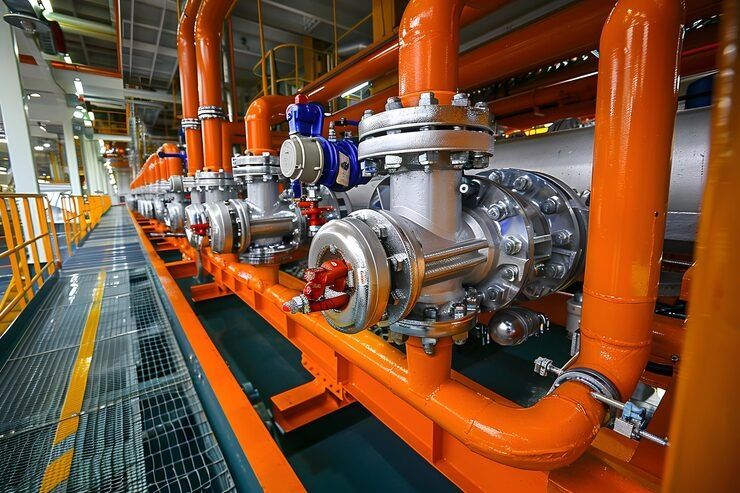
As Industry 4.0 and smart manufacturing continue to evolve, industrial pneumatics has advanced through digital monitoring, energy-efficient compressed air systems, and predictive maintenance technologies. This guide explains how industrial pneumatics works, the different pneumatic technologies available, compressed air systems, and their industrial applications.
What Is Industrial Pneumatics?
Industrial pneumatics refers to the use of compressed air to generate and control mechanical motion in industrial equipment and automation systems. Instead of relying on electrical or hydraulic power alone, pneumatic systems use pressurized air to operate cylinders, valves, actuators, tools, and production machinery.
Pneumatic systems are valued for their speed, simplicity, and reliability. They are widely used in manufacturing facilities where repetitive motion, rapid response, and clean operation are essential.
A typical industrial pneumatic system consists of several important components:
- Air compressor
- Air receiver tank
- Air filters
- Air dryers
- Pressure regulators
- Pneumatic valves
- Pneumatic cylinders
- Air distribution piping
- Control system
Together, these components create a continuous compressed air network that powers industrial equipment throughout a facility.
Why Industrial Pneumatics Are Important
Compressed air is often referred to as the fourth utility in manufacturing because of its widespread use alongside electricity, water, and natural gas. Pneumatic systems provide fast, reliable motion while requiring relatively simple mechanical designs.
Compared with many other power transmission methods, pneumatic systems are well suited for repetitive industrial operations, automated production lines, and environments where cleanliness is important.
Some important advantages include:
- Fast operating speed
- Reliable continuous performance
- Clean and safe operation
- Easy automation integration
- Simple maintenance
These benefits have made industrial pneumatics an essential part of modern manufacturing and automation.
Types of Pneumatic Systems
Different industries require different pneumatic configurations depending on production requirements and equipment design.
Centralized Compressed Air Systems
Centralized systems use one or more large air compressors to supply compressed air throughout an entire manufacturing facility.
These systems are commonly found in automotive plants, electronics factories, food processing facilities, and large industrial operations.
Decentralized Pneumatic Systems
Decentralized systems use smaller compressors positioned close to individual production areas or machines.
This arrangement reduces long air distribution lines while providing greater flexibility for specialized equipment.
Vacuum Pneumatic Systems
Vacuum pneumatic systems create negative air pressure for lifting, gripping, and transporting products.
They are widely used in packaging, electronics manufacturing, glass handling, and robotic pick-and-place applications.
Portable Pneumatic Systems
Portable systems power handheld pneumatic tools such as drills, grinders, impact wrenches, and spray equipment.
They provide flexibility for maintenance operations, construction projects, and field applications.
Key Components of Pneumatic Systems
Reliable pneumatic operation depends on properly designed system components.
Air Compressors
Air compressors generate compressed air by increasing air pressure through mechanical compression.
They serve as the primary power source for the entire pneumatic system.
Air Treatment Equipment
Compressed air passes through filters, dryers, and separators to remove moisture, dust, and oil contamination.
Clean compressed air improves equipment reliability and extends component life.
Pneumatic Cylinders
Pneumatic cylinders convert compressed air into linear mechanical motion.
They are commonly used for lifting, pushing, clamping, positioning, and automated assembly operations.
Pneumatic Valves
Valves regulate airflow, pressure, and direction within the pneumatic system.
Modern valves may be manually operated, electrically controlled, or integrated into automated production systems.
Air Preparation Units
Air preparation units combine filters, regulators, and lubricators to ensure compressed air reaches equipment at the proper pressure and quality.
How Industrial Pneumatics Work
Although pneumatic systems vary in complexity, most operate using the same basic principles.
Air Compression
Atmospheric air enters the compressor, where it is compressed to the required operating pressure.
The compressed air is then stored in an air receiver tank.
Air Conditioning
Before distribution, compressed air passes through filters and dryers that remove contaminants and moisture.
This improves equipment performance and prevents damage to pneumatic components.
Air Distribution
Compressed air travels through pipelines to various production machines and workstations.
Pressure regulators ensure that each application receives the appropriate operating pressure.
Motion Generation
Pneumatic cylinders, actuators, or tools receive compressed air and convert it into mechanical movement.
This motion powers industrial machinery, automated equipment, and production systems.
Exhaust and Cycle Repeat
After completing the operation, used compressed air is safely released through exhaust ports, allowing the cycle to repeat continuously.
Pneumatic Technologies
Modern industrial pneumatics incorporates several advanced technologies that improve efficiency and system reliability.
Electro-Pneumatic Control
Electro-pneumatic systems combine electrical control with pneumatic actuation.
Programmable controllers activate solenoid valves that precisely control pneumatic devices.
Proportional Pressure Control
Proportional regulators automatically adjust air pressure according to production requirements.
This improves precision while reducing unnecessary energy consumption.
Smart Pneumatic Sensors
Pressure, flow, and temperature sensors continuously monitor compressed air systems.
Real-time monitoring helps detect leaks, pressure fluctuations, and equipment faults before they affect production.
Energy-Efficient Air Management
Modern pneumatic systems optimize compressed air usage through intelligent controls, leak detection, and automatic pressure management.
These technologies reduce operating costs while improving overall efficiency.
Comparison of Common Pneumatic Components
Different pneumatic components perform specialized functions within compressed air systems.
| Component | Primary Function | Typical Applications | Operating Role |
|---|---|---|---|
| Air Compressor | Generates compressed air | Entire facility | Air supply |
| Pneumatic Cylinder | Produces linear motion | Assembly, material handling | Actuation |
| Pneumatic Valve | Controls airflow | Automation systems | Flow control |
| Air Filter | Removes contaminants | Air preparation | Air quality |
| Pressure Regulator | Controls pressure | Production equipment | Pressure management |
| Vacuum Generator | Produces vacuum | Packaging, robotics | Material handling |
Automation Technologies in Pneumatic Systems
Modern pneumatic systems integrate seamlessly with intelligent manufacturing technologies.
Programmable Logic Controllers
Programmable Logic Controllers (PLCs) coordinate pneumatic cylinders, valves, sensors, and production equipment.
This synchronization improves automation accuracy while reducing manual intervention.
Industrial Internet of Things
IIoT platforms collect operational data from pneumatic equipment and compressed air systems.
Manufacturers can monitor pressure, airflow, energy consumption, and equipment status remotely.
Robotic Integration
Industrial robots frequently use pneumatic grippers, vacuum cups, and end-of-arm tooling to handle products efficiently.
Pneumatic technology provides fast response times for automated assembly and packaging operations.
Digital Monitoring Systems
Cloud-based monitoring platforms continuously analyze compressed air performance and maintenance requirements.
These systems help improve operational efficiency while minimizing downtime.
Industrial Applications
Industrial pneumatics supports numerous manufacturing sectors.
Manufacturing Industry
Factories use pneumatic systems for assembly equipment, machine automation, material positioning, and production line control.
Automotive Manufacturing
Vehicle manufacturers rely on pneumatic tools, robotic grippers, welding fixtures, and automated assembly equipment throughout production.
Food and Beverage Processing
Pneumatic systems support hygienic packaging, product handling, filling machines, and automated processing equipment.
Pharmaceutical Manufacturing
Clean compressed air operates filling systems, packaging equipment, laboratory automation, and sterile production machinery.
Packaging Industry
Packaging facilities use pneumatic cylinders and vacuum systems for sealing, labeling, sorting, carton handling, and palletizing operations.
Material Handling
Warehouses and logistics centers use pneumatic devices for lifting, positioning, sorting, and conveyor automation.
Benefits of Industrial Pneumatics
Modern pneumatic systems provide several operational advantages.
Some important benefits include:
- Fast and accurate motion
- Reliable automation
- Clean operation
- Flexible equipment design
- Lower maintenance requirements
These advantages help manufacturers improve productivity while maintaining consistent production quality.
Challenges in Pneumatic Systems
Although pneumatic systems are highly dependable, maintaining efficiency requires careful system design and routine maintenance.
Compressed air leaks, pressure losses, moisture contamination, clogged filters, and improper system sizing can reduce performance and increase energy consumption.
Regular inspections, leak detection, filter replacement, and compressor maintenance help ensure reliable long-term operation.
Recent Developments (2024–2026)
Recent advancements have significantly improved industrial pneumatic technology.
Manufacturers are increasingly adopting smart compressed air management systems equipped with artificial intelligence to optimize airflow and detect leaks automatically. Digital pressure monitoring now provides real-time system diagnostics that help reduce energy losses and improve equipment reliability.
Energy-efficient variable-speed air compressors have become more common, automatically adjusting output according to production demand. Wireless sensors and Industrial Internet of Things (IIoT) platforms are also enabling predictive maintenance by continuously monitoring compressor performance, air quality, and pneumatic equipment health.
Modular pneumatic control units and compact electro-pneumatic systems are further improving manufacturing flexibility while simplifying equipment installation.
Safety Standards and Industry Guidelines
Industrial pneumatic systems operate under recognized machinery and workplace safety standards designed to ensure safe compressed air operation.
Important safety practices include:
- Pressure relief devices
- Regular air leak inspections
- Proper hose and fitting maintenance
- Emergency shut-off systems
- Scheduled compressor servicing
Manufacturers generally design pneumatic equipment to comply with international machinery safety requirements. In India, industrial installations also consider applicable Bureau of Indian Standards (BIS) guidelines together with workplace safety regulations governing compressed air equipment.
Tools and Resources
Several technologies help improve pneumatic system performance and maintenance.
Common resources include:
- Compressed air monitoring software
- Leak detection equipment
- Air quality testing instruments
- PLC programming software
- Predictive maintenance platforms
- Compressor performance analyzers
These tools help manufacturers reduce energy consumption, improve equipment reliability, and maintain efficient compressed air systems.
Frequently Asked Questions
What is industrial pneumatics?
Industrial pneumatics uses compressed air to power machines, actuators, tools, and automated equipment in manufacturing and industrial facilities.
What are compressed air systems used for?
Compressed air systems operate assembly equipment, packaging machines, robotic grippers, pneumatic tools, material handling equipment, and automated production lines.
What is the difference between pneumatic and hydraulic systems?
Pneumatic systems use compressed air, while hydraulic systems use pressurized liquid. Pneumatics generally offers faster operation and cleaner working conditions, whereas hydraulics is better suited for very high-force applications.
Why is air treatment important in pneumatic systems?
Filters, dryers, and regulators remove moisture and contaminants that could reduce equipment performance or damage pneumatic components.
Which industries use industrial pneumatics?
Industrial pneumatics is widely used in manufacturing, automotive production, food processing, pharmaceutical manufacturing, packaging, electronics, logistics, and material handling.
Future Trends in Industrial Pneumatics
Industrial pneumatics continues to evolve through digital connectivity, intelligent automation, and sustainable energy management.
Future pneumatic systems are expected to incorporate advanced artificial intelligence for automatic pressure optimization, self-diagnosing components, and predictive maintenance capabilities. Increased integration with collaborative robots, digital twins, and cloud-based production platforms will further improve manufacturing efficiency.
As industries continue embracing smart factories and energy-efficient production, industrial pneumatics will remain a key technology supporting reliable automation, flexible manufacturing, and intelligent industrial operations.
Conclusion
Industrial pneumatics has become an essential technology for modern manufacturing by providing clean, reliable, and efficient mechanical power through compressed air systems. From assembly automation and packaging equipment to robotic handling and material transport, pneumatic technologies support countless industrial processes with speed and precision.
As compressed air systems continue to advance through intelligent controls, digital monitoring, and energy-efficient innovations, industrial pneumatics will remain a cornerstone of smart manufacturing. Its ability to integrate with automated production systems and Industry 4.0 technologies ensures that pneumatic solutions will continue supporting efficient, safe, and sustainable industrial operations across the globe.