
Plasma cutting machines are advanced metal processing systems that use a high-temperature plasma arc to cut electrically conductive materials with speed and precision. They have become an essential part of modern manufacturing, metal fabrication, construction, shipbuilding, automotive production, and heavy engineering because they deliver clean cuts, high productivity, and excellent versatility across a wide range of metal thicknesses.
Modern plasma cutting systems combine high-performance plasma power sources, Computer Numerical Control (CNC) technology, precision motion systems, and automated controls to produce accurate components while reducing material waste and production time. Compared with many conventional metal cutting methods, plasma cutting offers faster processing speeds, lower operating costs for certain applications, and the ability to handle complex cutting profiles.
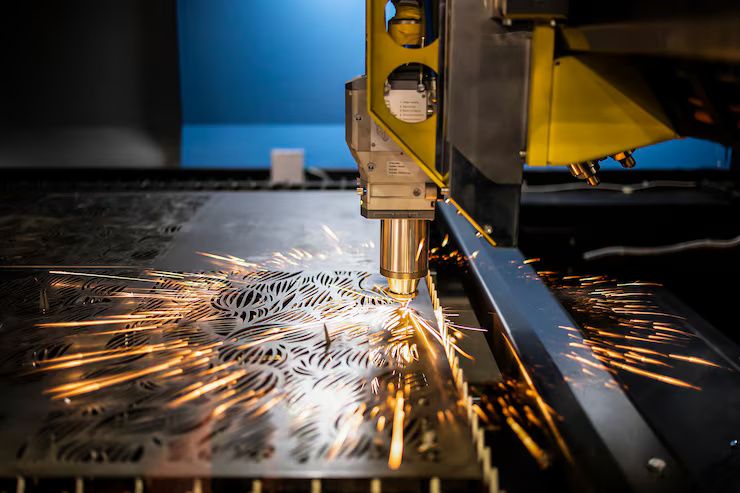
As Industry 4.0 continues to transform manufacturing, plasma cutting machines are becoming increasingly automated, digitally connected, and energy-efficient. This guide explains plasma cutting machines, their types, working principles, CNC technology, and metal fabrication applications.
What Are Plasma Cutting Machines?
Plasma cutting machines are industrial cutting systems that use a high-velocity jet of electrically conductive plasma to melt and remove metal from the cutting area. The plasma is generated by passing compressed gas through an electrically charged arc, producing temperatures that can exceed 20,000°C.
These machines are designed to cut conductive metals such as carbon steel, stainless steel, aluminum, copper, brass, and other conductive alloys.
A typical plasma cutting system consists of several important components:
- Plasma power supply
- Plasma torch
- Electrode
- Nozzle
- Gas supply system
- CNC controller
- Motion control system
- Cutting table
- Height control system
Together, these components provide accurate, efficient, and reliable metal cutting performance.
Why Plasma Cutting Machines Are Important
Manufacturers require cutting technologies that combine speed, precision, and flexibility while maintaining productivity across different material thicknesses.
Plasma cutting satisfies these requirements by producing accurate cuts with relatively small heat-affected zones and excellent production efficiency.
Some important advantages include:
- High cutting speed
- Excellent productivity
- Accurate metal cutting
- Ability to cut thick materials
- Reduced production time
These benefits make plasma cutting a preferred technology for numerous industrial applications.
Types of Plasma Cutting Machines
Different plasma cutting systems are designed for various production requirements.
Conventional Plasma Cutting Machines
Conventional plasma systems are widely used for general industrial fabrication and maintenance operations.
They provide reliable cutting performance for a broad range of conductive metals.
CNC Plasma Cutting Machines
CNC plasma machines use computer-controlled motion systems to produce highly accurate and repeatable cutting paths.
They are commonly used in industrial manufacturing and large-scale fabrication.
High-Definition Plasma Cutting Machines
High-definition plasma systems produce narrower kerf widths, smoother edges, and improved dimensional accuracy compared with conventional plasma systems.
Portable Plasma Cutters
Portable plasma cutting units are designed for field maintenance, construction projects, repair work, and mobile fabrication.
Robotic Plasma Cutting Systems
Industrial robots equipped with plasma torches automate complex cutting operations while improving consistency and productivity.
How Plasma Cutting Machines Work
Although designs vary, most plasma cutting systems follow a similar operating process.
Design Preparation
Engineers create component designs using Computer-Aided Design (CAD) software.
The design is converted into cutting instructions through Computer-Aided Manufacturing (CAM) software.
Material Positioning
The metal workpiece is placed securely on the cutting table.
Automatic positioning systems improve cutting accuracy.
Plasma Generation
Compressed gas passes through the plasma torch while an electrical arc ionizes the gas.
The ionized gas becomes high-temperature plasma capable of melting metal.
Cutting Operation
The plasma jet melts the metal while the high-speed gas stream removes molten material from the cutting path.
The CNC system controls torch movement throughout the cutting process.
Finished Component
Completed parts are removed for inspection or further manufacturing operations.
Working Principles of Plasma Cutting
The plasma cutting process relies on several important operating principles.
Plasma Arc Formation
Electrical energy transforms compressed gas into conductive plasma.
This plasma carries extremely high thermal energy.
Metal Melting
The concentrated plasma arc rapidly melts the metal surface along the programmed cutting path.
Material Removal
The high-velocity plasma stream blows molten metal away from the cut, producing a narrow kerf.
Continuous Motion
The cutting torch moves continuously under CNC control to produce precise shapes and profiles.
CNC Technology in Plasma Cutting
Computer Numerical Control systems provide precision and automation for modern plasma cutting operations.
Motion Control
CNC controllers synchronize torch movement with cutting speed for accurate results.
Automatic Nesting
Nesting software arranges multiple components efficiently on metal sheets to reduce material waste.
Torch Height Control
Automatic height control maintains the correct distance between the torch and the workpiece throughout the cutting process.
Production Monitoring
Modern CNC systems monitor machine performance, cutting parameters, and production data in real time.
Comparison of Common Plasma Cutting Machines
Different plasma cutting technologies provide unique advantages depending on production requirements.
| Machine Type | Main Applications | Advantages | Suitable Materials |
|---|---|---|---|
| Conventional Plasma | General fabrication | Reliable performance | Conductive metals |
| CNC Plasma | Industrial manufacturing | High accuracy | Steel, aluminum |
| High-Definition Plasma | Precision fabrication | Superior cut quality | Stainless steel, alloys |
| Portable Plasma | Field maintenance | Mobility | Various metals |
| Robotic Plasma | Automated production | High productivity | Industrial components |
Automation Technologies in Plasma Cutting
Modern plasma cutting systems increasingly integrate advanced automation technologies.
Programmable Logic Controllers
Programmable Logic Controllers (PLCs) coordinate plasma systems with conveyors, material handling equipment, and production machinery.
Industrial Robots
Robotic cutting cells automate complex cutting operations while improving repeatability and reducing manual handling.
Machine Vision Systems
Vision systems inspect material positioning and cutting accuracy before and after processing.
Industrial Internet of Things
IIoT platforms collect machine performance data, enabling remote monitoring, predictive maintenance, and production optimization.
Metal Fabrication Applications
Plasma cutting supports a wide range of industrial sectors.
Structural Steel Fabrication
Steel fabricators use plasma cutting to produce beams, plates, brackets, and structural components.
Automotive Manufacturing
Vehicle manufacturers use plasma cutting for chassis components, brackets, frames, and fabrication assemblies.
Shipbuilding
Shipyards rely on plasma cutting to process large steel plates used in hull construction and marine structures.
Heavy Equipment Manufacturing
Construction and mining equipment manufacturers produce precision metal components using plasma cutting technology.
Metal Service Centers
Service centers use CNC plasma systems to process custom metal parts for industrial customers.
General Engineering
Engineering companies manufacture machine frames, industrial equipment, and fabricated assemblies using plasma cutting.
Benefits of Plasma Cutting Machines
Modern plasma cutting systems provide numerous manufacturing advantages.
Some important benefits include:
- Fast cutting speeds
- High production efficiency
- Excellent versatility
- Accurate component production
- Lower material waste
These advantages help manufacturers improve productivity while maintaining consistent product quality.
Challenges in Plasma Cutting Operations
Although plasma cutting offers excellent performance, maintaining high-quality results requires proper equipment setup and maintenance.
Torch wear, improper gas selection, incorrect cutting speed, nozzle damage, material contamination, and inadequate height control can affect cutting quality.
Routine inspection, timely replacement of consumables, calibration, and preventive maintenance help maintain reliable operation.
Recent Developments (2024–2026)
Recent years have brought significant improvements in plasma cutting technology.
Artificial intelligence is increasingly being integrated into CNC systems to optimize cutting parameters automatically based on material type and thickness. High-definition plasma systems continue to improve cut quality while reducing secondary finishing requirements.
Automated material handling, robotic plasma cutting cells, and intelligent nesting software are improving productivity across fabrication industries. Cloud-connected production monitoring platforms now provide real-time performance analysis, predictive maintenance alerts, and digital production reporting.
Manufacturers are also developing more energy-efficient plasma power supplies and environmentally responsible fume extraction technologies to improve workplace sustainability.
Safety Standards and Industry Guidelines
Plasma cutting involves extremely high temperatures, electrical energy, and metal fumes, making safety procedures essential.
Important safety practices include:
- Protective eye and face equipment
- Heat-resistant protective clothing
- Proper ventilation and fume extraction
- Routine torch inspection
- Electrical safety procedures
Manufacturers generally design plasma cutting equipment to comply with recognized international machinery and electrical safety standards. In India, installations also consider applicable Bureau of Indian Standards (BIS) guidelines together with occupational health and workplace safety regulations.
Tools and Resources
Several technologies support efficient plasma cutting operations.
Common resources include:
- CAD software
- CAM programming software
- CNC controllers
- Nesting optimization software
- Production monitoring systems
- Predictive maintenance platforms
These tools improve cutting accuracy, production efficiency, and equipment reliability.
Frequently Asked Questions
What are plasma cutting machines used for?
Plasma cutting machines are used to cut electrically conductive metals such as steel, stainless steel, aluminum, copper, and brass with high speed and precision.
What is the difference between plasma cutting and laser cutting?
Plasma cutting uses a high-temperature plasma arc to cut conductive metals, while laser cutting uses a focused laser beam. Plasma cutting is often preferred for thicker conductive materials and high-speed fabrication.
What materials can plasma cutting machines process?
They can process conductive metals including carbon steel, stainless steel, aluminum, copper, brass, and several industrial alloys.
How does CNC technology improve plasma cutting?
CNC technology automates torch movement, improves cutting accuracy, optimizes material utilization, and enables repeatable production.
Which industries commonly use plasma cutting machines?
Plasma cutting is widely used in structural steel fabrication, automotive manufacturing, shipbuilding, heavy equipment production, metal fabrication, and industrial engineering.
Future Trends in Plasma Cutting Machines
Plasma cutting technology continues to evolve through artificial intelligence, automation, and smart manufacturing.
Future plasma systems are expected to incorporate AI-assisted process optimization, adaptive torch control, digital twin simulations, and advanced robotic integration. Improved plasma power supplies, intelligent sensor systems, and fully connected Industry 4.0 manufacturing platforms will further increase productivity, precision, and operational efficiency.
As manufacturers continue demanding faster production, greater flexibility, and higher quality, plasma cutting machines will remain one of the most important technologies supporting modern metal fabrication worldwide.
Conclusion
Plasma cutting machines have become an essential technology for modern metal fabrication by providing fast, accurate, and efficient cutting of conductive materials. Through advanced plasma generation, CNC technology, intelligent automation, and precision motion systems, these machines help manufacturers improve productivity while producing high-quality components.
As Industry 4.0 technologies continue advancing, plasma cutting systems will become even more intelligent, connected, and energy-efficient. Their integration with digital manufacturing platforms, predictive maintenance systems, and automated production environments ensures they will remain a cornerstone of industrial metal fabrication for years to come.